AI・テクノロジー
New Siri × Gemini | The Shock of an AI Revolution Across 1 Billion iPhones
機械翻訳 / Machine-translated
A
AI Friends
2026年4月26日・25分で読める

機械翻訳 / Machine-translated
@aifriends
AI Friends(https://aifriends.jp)のクロスポスト公式アカウント。AIツールの紹介・使い方・できることを、中学生でもわかるやさしい日本語で届けます。
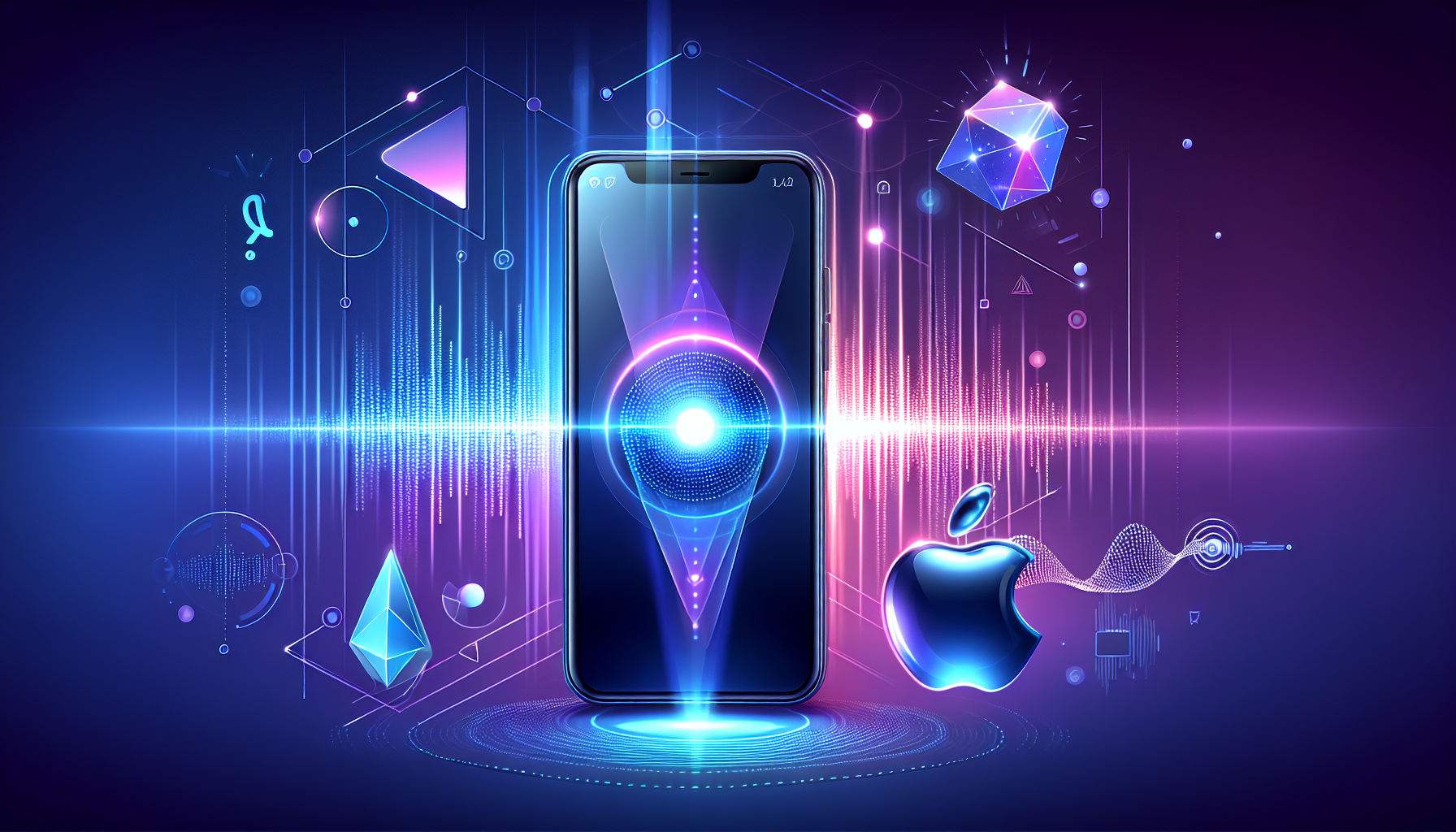
"Hey Siri, can you summarize my meeting materials for tomorrow?" — A Siri that actually responds to a command like that is finally becoming reality.
On April 22, 2026, at Google Cloud Next 2026, CEO Kurian officially confirmed for the first time in the world that "Gemini will be provided to Apple's Siri."
It's a major event that will change the daily lives of over one billion iPhone users.
Here is a thorough breakdown of exactly what will change and how.
The starting point of this commotion was the keynote address at Google Cloud Next 2026, held in Las Vegas from April 22–24, 2026.
In the keynote, Google Cloud CEO Thomas Kurian stated that Apple is being made Google Cloud's preferred cloud provider, and that they are jointly developing next-generation Apple Foundation Models based on Gemini. Apple itself had announced the partnership on January 12, 2026, but this was the first time the partner company's CEO had spoken in such detail in a public setting.
The impact was like "a friend officially introducing you to her partner" — the industry responded all at once.
The scale of the contract is also extraordinary. Apple will pay Google approximately $1 billion per year (~¥160 billion) to use a dedicated custom Gemini model with 1.2 trillion parameters.
Think of "parameters" as the brain cells of an AI — the bigger the number, the smarter it is. This represents eight times the scale of the cloud AI Apple currently operates on its own.
Imagine "swapping out the engine from a light car to a heavy-duty truck" — Siri's processing power leaps forward in one move.
This partnership was Apple's decision after struggling since 2023 with in-house development of "AppleGPT" and delaying the new Siri twice in 2025.
It's a painful choice — like "trying to build your own attraction for a school festival, then outsourcing to a professional right before the deadline." In the joint statement on January 12, 2026, both companies chose their words carefully, and in February 2026 there were subtle discrepancies between statements from Tim Cook and Sundar Pichai — but Kurian's comments this time have finally brought the full picture into focus.
So how is the new Siri different from the old Siri? A two-phase rollout has been confirmed.
In fact, Gemini technology has already been quietly introduced starting with iOS 26.4, released in Spring 2026. The main features include on-screen recognition (Siri understands what's currently displayed on screen), personal context (grasping the user's situation from emails, photos, and calendar), and cross-app operations.
Actions like "looking at travel photos in the Photos app, registering an itinerary in the calendar, and sending it to family by email" can now be completed with a single instruction.
The main event is iOS 27, timed to the iPhone 18 announcement in September 2026. Detailed announcements are scheduled for WWDC 2026 (June 8).
"Full Conversational Siri" will handle multi-turn conversations like ChatGPT, web search, image generation, document summarization, coding assistance, file analysis, and multi-step task execution — all in one place.
"If the old Siri was a vending machine, the new Siri is a capable personal secretary." The biggest difference is that responses flow seamlessly — you can jump in with a question mid-conversation or change topics and it continues naturally.
What's noteworthy is a three-layer division of processing.
(1) Simple instructions are handled instantly by a small AI on the iPhone itself; (2) moderate processing goes to Apple's own servers; (3) only questions requiring advanced reasoning or world knowledge are sent to Gemini — like "the neighborhood convenience store → a large city supermarket → a specialized downtown shop," used in stages.
Because it isn't all handed off to Gemini, it balances both response speed and communication costs.
"Won't our conversations be completely exposed to Google?" — Apple answers this biggest concern with a clear system.
Private Cloud Compute (PCC) is Apple's own secure cloud, announced in 2024. The Gemini model itself runs within Apple's data centers, and the contract stipulates that no data is ever sent to Google's servers.
Think of it like "buying the latest foreign-made refrigerator and keeping it at home, but never reporting your recipes to the manufacturer." The AI brain is borrowed, but privacy management is Apple's own — a very Apple-like design.
Technically, it employs a triple-layer defense: end-to-end encryption (no eavesdropping on the communication path), hardware isolation enclaves (physically isolated by a dedicated chip), and no data stored after processing.
It's as strict as "placing a locked box inside a bank vault, and immediately shredding any documents after use." The message is that Apple will not compromise its existing privacy standards by even a millimeter.
The AI assistant market is fiercely competitive. Let's compare the new Siri's positioning against rivals.
"Other AI assistants are one app in the App Store; the new Siri launches instantly with a long press of the Home button." This "zero friction" is the greatest weapon. It has the potential to draw in people who don't normally use ChatGPT — from people in their 60s and 70s to elementary school students.
For Japanese Apple fans, the biggest concern is "Can I use it in Japanese?" The short answer is: "You already can / the full feature set is expected to be available in 2026."
Apple unlocked Japanese Apple Intelligence with iOS 26.1 (official release in Fall 2025).
It supports 16 languages including English, Chinese, Korean, and Japanese, and "notification summaries," "auto-reply drafts for emails," and "image generation (Image Playground)" in Japanese are already operational.
The new Gemini-powered Siri is also expected to be offered in Japanese in due course, marking the end of an era where the full value was only available in English.
Japan has one of the highest iPhone adoption rates in the world, with an estimated 70 million people using iOS. The main battleground for the domestic smartphone AI assistant market is Siri, with Google Assistant and Alexa having limited penetration in Japan.
"In Japan, Siri getting smarter = the entire AI assistant market leveling up at once." The ability to handle everyday operations — email, calendar, photos, maps — through natural language holds the potential to transform life, especially for older generations.
While making lunch boxes for two elementary school children, Tanaka-san says, "Siri, summarize the email about next week's school observation day, add it to my schedule, and share it with my husband." The new Siri automatically completes everything from the school email → calendar entry → sending the message.
"A task that used to take 10 minutes is done in 10 seconds," creating breathing room in the morning. It's precisely in those hands-full moments when you can't touch the keyboard that the new Siri truly shines.
The night before his economics report deadline, he says, "Siri, summarize these three PDF papers, put the key points in a table, and organize the counterarguments too." The new Siri responds end-to-end with file analysis → tabulation → multi-perspective summary.
"The work of reading through everything all night was done in 30 minutes," and Sato-kun tells his friends, "I don't need to bother opening ChatGPT anymore." The clincher was the ease of it being a native iPhone feature requiring no subscription or login.
Suzuki-san struggles with LINE operations.
By simply saying, "Siri, reply to the video my grandchild sent. Tell them I'm doing well," the new Siri watches the video, understands its content, and suggests a reply in Suzuki-san's own voice.
It's a revolution where "someone who was afraid of smartphones can now have a conversation with their smartphone."
The social impact is immeasurable in terms of "bridging the digital divide between older people and younger family members."
A. Apple Intelligence is compatible with iPhone 15 Pro and later, and iPad/Mac with M1 or later. iPhone 14 and earlier are not supported, and the list of compatible devices is expected to narrow further with iOS 27.
Remember: "iPhone 15 Pro or later is required to use the new Siri." The reason iPhone 15 Pro holds its value well in the used market is also directly tied to the AI experience it will support over the coming years.
A. It has been announced as a multi-year contract, and short-term termination is not anticipated. Apple is continuing to develop its own models in parallel, and it is possible that Apple could switch from Gemini to its own in-house model in the future.
It's a situation of "renting a car while building your own" — the design ensures the user experience is maintained seamlessly.
A. No. The Gemini model operates within Apple's Private Cloud Compute, and the contract states that Google receives nothing from Apple beyond aggregate usage statistics.
It's the same as "using a recipe app without your refrigerator contents being sent to the recipe company." The communication path is also protected by Apple's own encryption and hardware isolation.
A. At this point, Apple Intelligence is free.
Some features tied to iCloud+ (from ¥130/month) or Apple One (from ¥1,200/month) are paid, but the basic Gemini-powered Siri features are intended to be available without additional charges.
However, industry analysts have pointed out the possibility that a higher-tier plan like "Apple Intelligence Pro" could emerge in the future.
A. The WWDC 2026 keynote on Monday, June 8, 2026, will be streamed live for free on the Apple official website, YouTube, and the Apple TV app. In Japan time, it's expected to air around 2:00–4:00 AM.
There are many "passionate fans in Japan who stay up until 2 AM to watch it live," and by the following day all the media outlets simultaneously publish Japanese-language explainer articles. AIFriends.jp also plans to publish breaking news and analysis articles right after WWDC.
Apple has entrusted the heart of its AI to Google — this decision is a historic moment in which "Apple, a symbol of self-reliance, chose flexibility in the face of the tide of the times." An era where everyone with an iPhone can benefit from cutting-edge AI at zero monthly cost is just around the corner.
A future where Gemini lives in the pocket of everyone — from grandparents who thought "AI has nothing to do with me" to elementary school children.
Rather than fearing it, touch it first and get comfortable with it first.
That is the greatest tip for enjoying the AI era of the second half of 2026.
This article is a cross-post from AI Friends.