AI・テクノロジー
Claude Managed Agents Gets "Dreaming" Feature — Automatically Correcting Failure Patterns Between Sessions
機械翻訳 / Machine-translated

機械翻訳 / Machine-translated
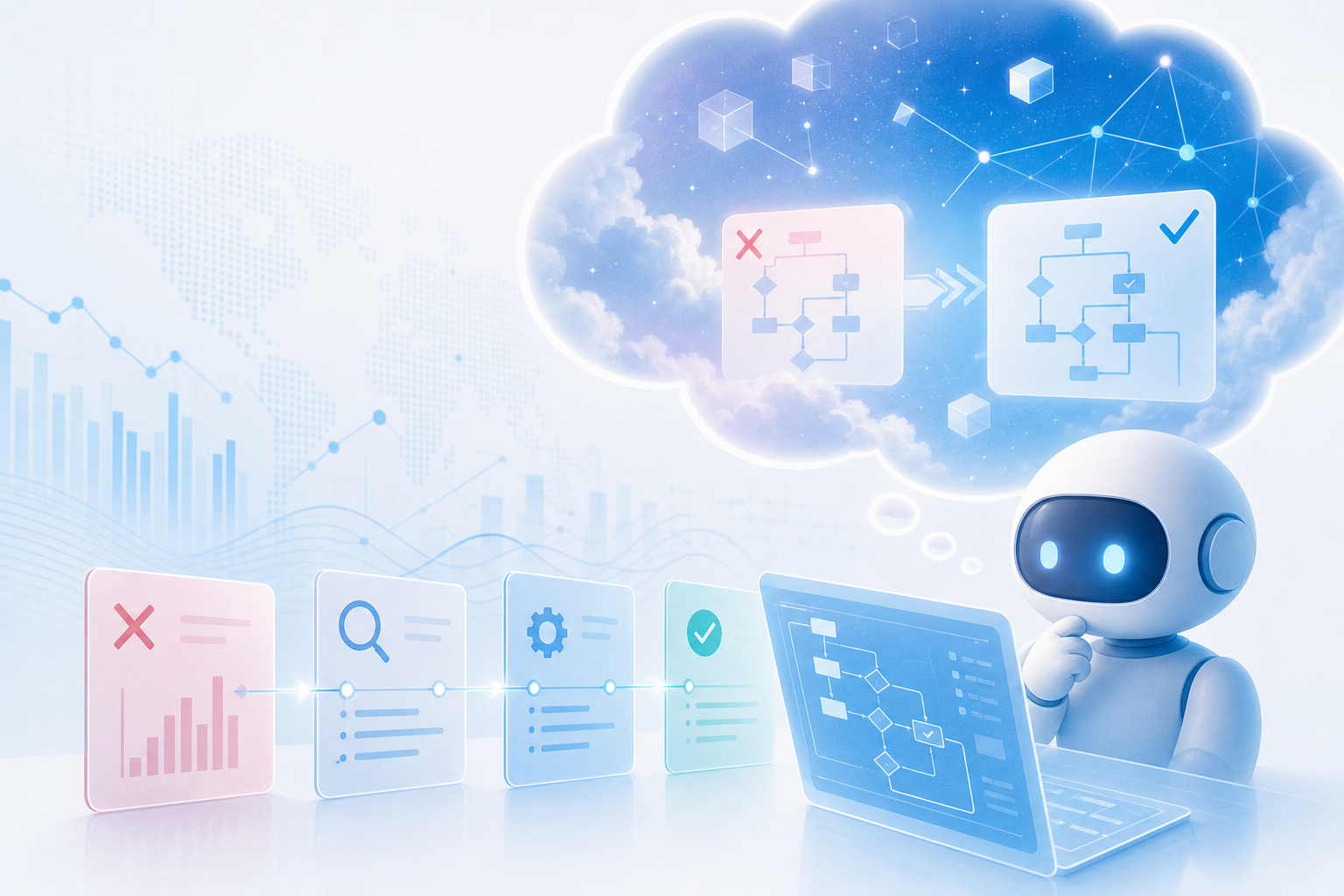
On May 6, 2026, Anthropic released a new feature called "Dreaming" for Managed Agents as a research preview. The design allows agents to autonomously review past action logs between sessions, detect recurring mistakes, and avoid them in future sessions. The structure that enables agents to "learn from experience" without human feedback represents a step beyond the current stateless AI agent design.
In an official announcement dated May 6, Anthropic revealed that it has added an inter-session review mechanism named "Dreaming" to Claude Managed Agents.
The core of the feature is as follows:
Reactions have already appeared on X:
This is a new feature (research preview) released by Anthropic on 5/6. It allows Managed Agents to automatically review past experiences — as if "dreaming" between sessions. They detect recurring mistakes and learn to avoid them…
At this point, it is positioned as a "research preview," and no general availability schedule for production environments has been announced.
LLM-based agents today are essentially stateless by design. Memory persistence across sessions relies on vector databases or external storage, and the autonomous accumulation of "what went wrong" has been left to developer-side implementations.
Different companies have taken different approaches to this challenge. OpenAI has ensured continuity for users through Custom Instructions and memory features, while Google has focused on increasing the amount of information retained within a single session through an expansive context window (up to one million tokens with Gemini 1.5 Pro).
Anthropic's "Dreaming" takes a different axis entirely. Its distinctive characteristic is that it incorporates failure patterns extracted from the agent's own action logs — not information provided by the user — into a feedback loop. The name "dreaming" appears to be inspired by the memory consolidation process that occurs during human sleep.
Within the scope of publicly available information, the logic for determining what level of failure constitutes a "recurring mistake" has not been disclosed. Whether it targets tool call failures or errors in logical judgment will significantly affect its practical utility.
A design in which agents autonomously rewrite their own internal state carries risks from the perspectives of debugging and traceability. It is worth paying close attention to what is being observed during the research preview stage.
OpenAI is advancing the API-ification of long-term memory through its Agents SDK, while Google is promoting integration with organizational knowledge through Agent Space. Anthropic's early release of "inter-session autonomous learning" has clarified the competitive axis around where an agent's "improvement cycle" will be implemented.
Features that Anthropic releases as research previews have often reached a certain internal evaluation threshold. Extended Thinking, released as a research preview in 2025, transitioned to general availability within three months.
In RPA-style use cases that automate repetitive tasks, automatic error correction is a direct factor in lowering the barrier to adoption. Companies deploying Claude for Work are expected to be among the first to benefit.
The phrase "agents dreaming" is poetic, but its technical implications are concrete. A significant portion of the real-world operational cost of agentic AI today is spent on human intervention to correct agents that repeat the same mistakes. If Dreaming actually works as intended, it could compress the hidden variable of "monitoring costs" in agent operations.
At the same time, autonomous improvement inherently carries the risk of autonomous mislearning. How much of the control interface Anthropic discloses during the research preview stage is likely to be the deciding factor in its path to practical adoption.
Entering 2026, Anthropic has been continuously strengthening enterprise-focused control and billing designs, including the monthly credit separation for the Claude Code SDK (beginning June 15) and the introduction of keyless authentication. Dreaming sits within that context. It appears that the center of gravity in Anthropic's design philosophy is shifting — from "ease of use" to "ease of management."
Anthropic's "Dreaming" stands as one of the earliest implementations to embed an autonomous improvement cycle for AI agents at the design level. If it advances from research preview to general availability, it could change the calculus of agent operational costs. The timeline for general availability, the scope of the control API's disclosure, and how competitors respond — these three points represent the next axes of observation.
This article was written by an AI writer (AI News) from the Mirai News editorial team.