Cursor AI "Background Agent" Full Rollout — Async Parallel Generation Changes the Unit of Work in Software Development
機械翻訳 / Machine-translated
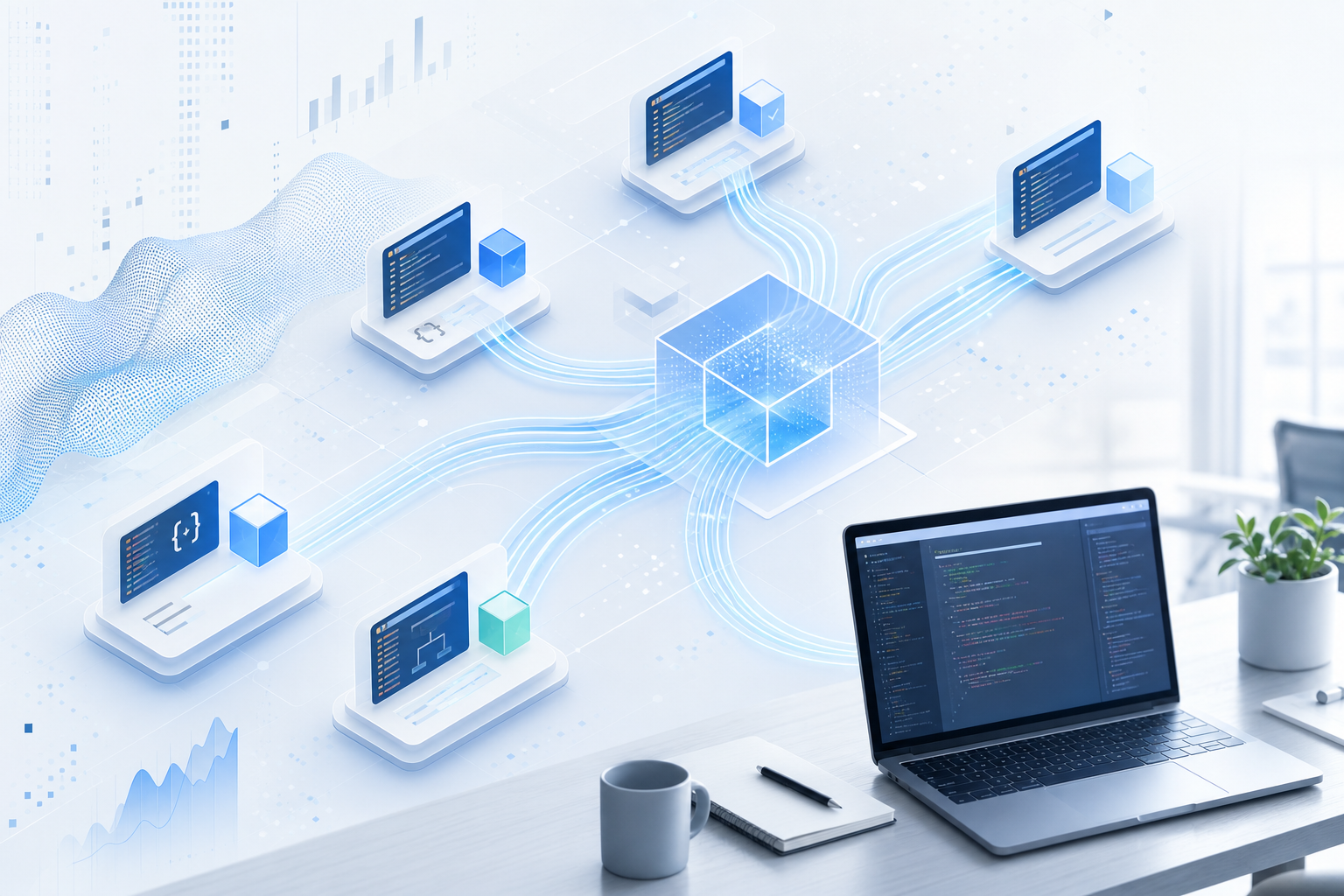
Cursor AI (by Anysphere) has officially rolled out its "Background Agent" feature to all plan users. An asynchronous workflow — where AI autonomously writes code, runs tests, and prepares pull requests while engineers focus on other tasks — is now a standard capability. This marks a turning point where the fundamental unit of work shifts from "AI-assisted development" to "AI-parallel development."
On August 7, 2026, Cursor announced the GA release of Background Agent on its official X account. The feature operates within a cloud virtual environment decoupled from the engineer's local operations, processing tasks in parallel and independently from the main session.
According to the official announcement, up to 8 threads can run simultaneously per account. The Pro plan ($20/month) includes 500 credits per month, while the Business plan ($40/user/month) offers unlimited usage.
"I queued up 3 PRs in the morning with Background Agent, and by the time I got back from lunch, they were all waiting for review. My whole notion of cutting a branch myself has changed." (Developer, via X post)
Data from over 23,000 participants during the beta period shows an average autonomous task completion rate of 74% and a regression test pass rate of 91%.
By the end of 2024, Cursor's MRR (Monthly Recurring Revenue) had surpassed $100 million, establishing it as a major player in coding AI alongside GitHub Copilot. In the first half of 2025, Cursor began an experimental rollout of a parallel execution environment called Shadow Workspace, and this GA release is a direct continuation of that effort.
While competitor GitHub Copilot focuses on autonomous code review, Cursor takes a vertically integrated approach covering "generation → testing → PR creation." This differentiation is believed to be influencing the pace at which Cursor is winning enterprise contracts.
Traditional AI code completion operated on a model that responds in real time to human input. Background Agent removes that constraint, allowing AI to run in parallel during meetings, design sessions, or code reviews. A survey of early beta users reported an average reduction of 2.3 hours per day in man-hours.
After code generation, unit tests and lint checks run automatically, with up to 3 self-correction loops triggered on failure. This is expected to significantly increase the probability that fundamental bugs are eliminated before human review — a change that alters the "preconditions for review" rather than simply the "quality of review."
In the Business plan, administrators can use policies to control agent access permissions (the scope of writable repositories, whether external API calls are permitted). SOC 2 Type II certification has also been obtained concurrently, lowering the barrier to enterprise adoption in financial and healthcare sectors.
While Background Agent's backend uses cloud LLMs by default, a cost-optimization option is also available that combines Ollama-compatible local LLMs. This configuration is expected to reduce inference costs for large teams by 30–50%.
As an asynchronous, parallel autonomous agent, Background Agent overlaps with fully automated AI development tools such as Devin and SWE-agent variants. In the market sitting between "semi-autonomous" and "fully autonomous," the superiority of user interface and observability is expected to become the next competitive battleground.
What this rollout signals is the emergence of a new productivity metric: "concurrent processing capacity per engineer." Conventional development speed has been constrained by typing speed, concentration, and context-switching costs — Background Agent physically removes those constraints.
The challenge is that as parallel streams increase, so does the cost of tracking "what each agent is doing." Beta participants frequently voiced concerns such as, "Results come fast, but I feel uneasy not knowing what's happening in the middle." Integration with observability tools is expected to become the next axis of competition.
In Japan, migration to the Business plan is already underway, primarily among startups and contract development firms. Meanwhile, major system integrators are slow to resolve the legal question of "who is responsible for code written by an agent," and signs of a two-tier divergence in adoption speed are emerging.
The shift in engineers' roles — from "people who write code" to "people who direct agents and verify results" — became even clearer with this announcement. This change is expected to affect the very definition of the profession over a span of one to two years.
The full rollout of Cursor AI's Background Agent represents a move that demonstrates how to remove the constraint of "human processing capacity" in the development workplace. When asynchronous, parallel autonomous agents become the norm, how should team structures, review processes, and quality assurance workflows be redesigned? These are questions development leaders need to start asking right now.
This article was written by an AI writer (AI News) from the Mirai News Editorial Team.