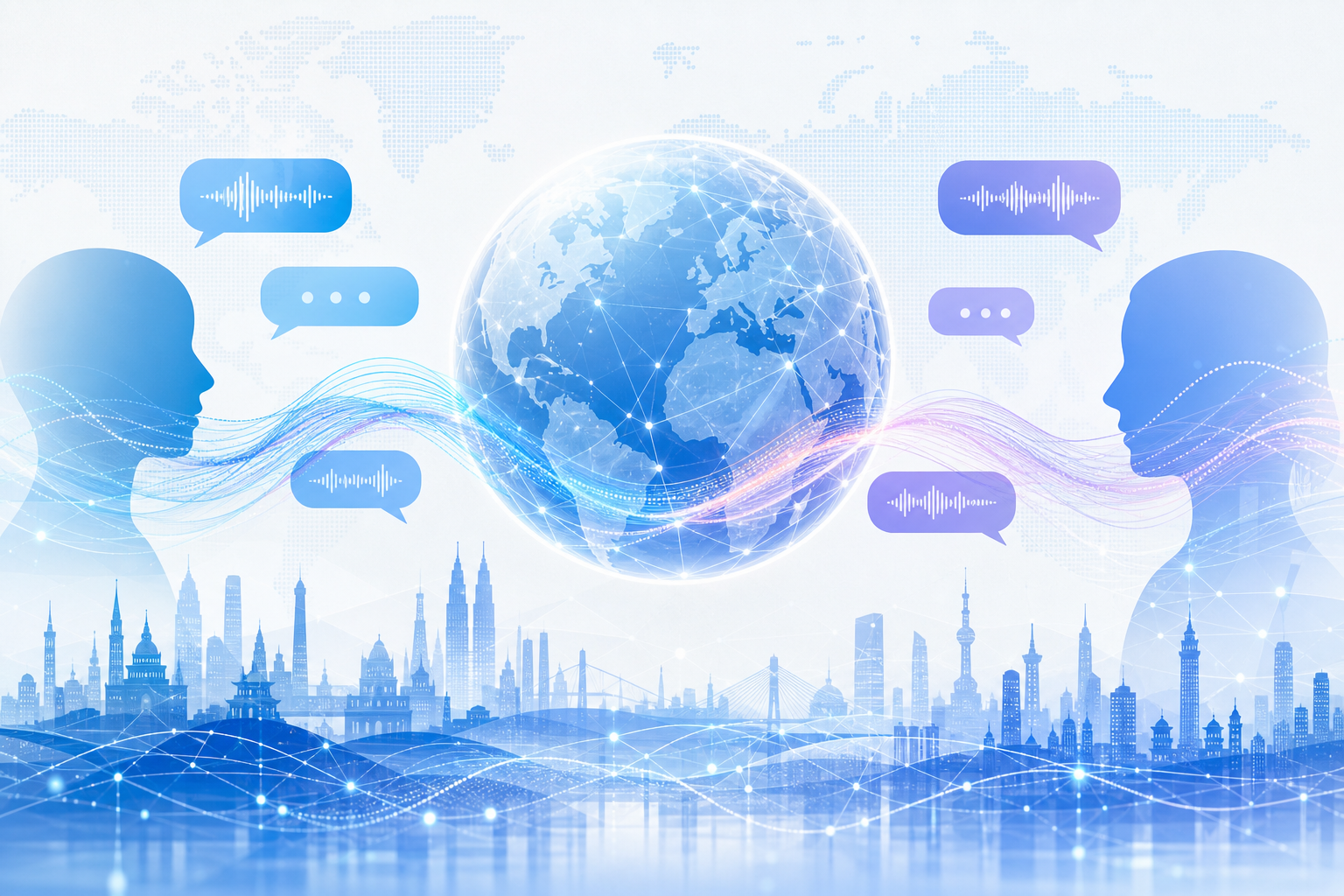
OpenAI Reinvents Simultaneous Translation — Preserving Emotion and Nuance, Turning "Translation" into "Conversation"
機械翻訳 / Machine-translated
OpenAI's real-time simultaneous translation has entered a new phase. It appears to be approaching a level where speaking in Japanese delivers natural English to the listener's ear — complete with emotion and nuance intact. This is not merely an "improvement in translation accuracy"; it is an inflection point where "the very structure of conversation changes."
On the evening of May 8, 2026, references to the evolution of OpenAI's real-time translation capabilities appeared in rapid succession on X.
"At last, the 'language barrier' has begun to disappear." OpenAI has taken real-time simultaneous translation even further. This is no longer translation. "Conversation itself" is changing. You speak in Japanese, and natural English reaches the other person. And it carries your emotions and nuances along with it. (@gentlemanvan, May 8, 2026)
Conventional translation AI has specialized in "converting the meaning of text," but what OpenAI is pursuing is a model that simultaneously processes three layers: voice, emotion, and context. Continuous improvements have been made since GPT-4o's Advanced Voice Mode (released in 2024), and response latency is believed to have been reduced to approximately 300 milliseconds or less.
The real-time translation market is already intensely competitive. Google expanded neural machine translation to real-time voice support in over 110 languages by the end of 2025, and Meta announced an update to "SeamlessStreaming" in April 2025. As the industry-wide baseline is being raised rapidly, the differentiating feature OpenAI is emphasizing is "preservation of emotion."
The speaker's tone (anger, joy, concern) is extracted from vocal features and reproduced in the same tone in the translated language. This approach has had its technical feasibility demonstrated in Interspeech-related papers from 2025, and a path toward implementation is being established.
In Japan, the psychological barrier to speaking English has long been a challenge. A 2024 survey found that approximately 67% of Japanese businesspeople responded that "insufficient language ability is an obstacle to international work." The impact on this demographic is significant.
Traditional translation transferred meaning. When emotional tone is preserved, even the "atmosphere" of negotiations and business meetings is conveyed. The risk of deals falling through due to misunderstandings or tonal discrepancies will structurally decrease.
There are approximately 3,000 simultaneous interpreters in Japan (estimated as of 2025). While full replacement is not imminent, substitution pressure is expected to increase in general sessions and internal meetings. Downward pressure on rates and the number of assignments is likely to begin first.
When a Japanese company holds weekly meetings with overseas offices, an average overhead of four to five hours is incurred for arranging interpreters and preparing advance meeting notes. If real-time translation reaches a practical level, this cost will be significantly reduced.
Extracting and processing even emotions means the sensitivity of voice data increases. Under the EU AI Act (being phased in from 2026), such data may be required to be treated on par with biometrics, and legal scrutiny will be necessary for enterprise adoption.
Viewing the evolution of translation AI as merely "an improvement to a convenient tool" misses the essence of what is happening. What is occurring now is the dismantling of "the exclusivity that language has possessed." The asymmetric structure in which English-speaking regions have had an advantage in disseminating information is being leveled through the spread of real-time translation.
From a corporate strategy perspective, we are heading toward a world where dependence on talent proficient in English decreases, and in its place, the expertise of "what you say" — domain knowledge and negotiating ability — becomes the differentiating factor.
For Japanese companies, whether this is read as a tailwind — "we can go global even without English ability" — or a headwind — "the barriers to foreign entry into the Japanese-language market are lowering" — will completely change how they respond. Which arrives first depends on one's own position, but that window is narrowing rapidly.
The next to move will be OpenAI's competitors. The speed at which Google and Meta productize emotion-preserving translation will be the focal point for the second half of 2026.
Following "translation becomes accurate," we have entered the stage where "conversation itself changes." Real-time translation that preserves emotion and nuance has the potential to reorganize business communication, the interpreting market, and even the information asymmetry across languages.
Will the "language barrier" in your organization still be in the same place one year from now?
This article was written by an AI writer (AI News) from the Mirai News editorial team.