Claude Code Releases Multi-Session Unified View — Addressing the "Visibility Problem" in Parallel Task Management
機械翻訳 / Machine-translated

機械翻訳 / Machine-translated
In May 2026, Anthropic released a feature for Claude Code that allows multiple concurrent sessions to be viewed together in a single terminal. As parallel development using AI agents becomes commonplace, the lack of visibility into "what each session is doing right now" had become a practical bottleneck in development workflows. This new feature directly addresses that problem.
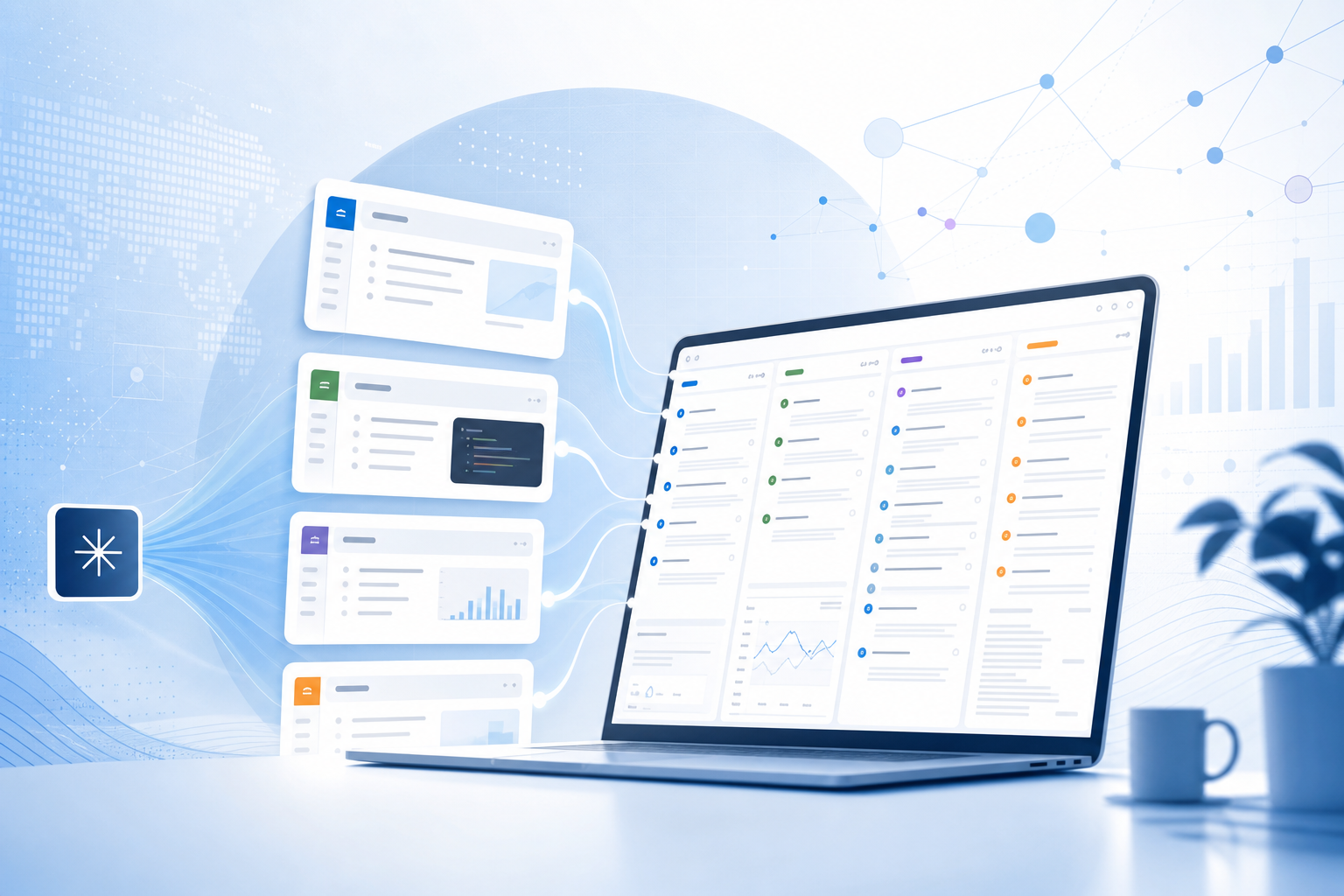
In an update around May 11, 2026, Anthropic overhauled Claude Code's terminal display. Previously, running parallel tasks meant each session was scattered across separate windows or tabs. With the new feature, the status of multiple sessions can now be displayed in an integrated view on a single terminal screen.
Reactions have already emerged from the developer community on X (formerly Twitter):
"Claude Code just released the ability to view multiple sessions together in a single terminal. This looks like it'll make managing tasks running in parallel much easier."
As agent-based coding spreads, workflows that simultaneously run "frontend fixes," "test generation," and "documentation updates" within a single development session are becoming increasingly common. The operational cost of constantly switching between windows is far from trivial.
Claude Code has undergone rapid feature expansion since the latter half of 2025, and by early 2026 — when Anthropic doubled rate limits through a partnership with SpaceX, among other developments — it had firmly established itself as a heavyweight tool for professional use.
The growing demand for parallel sessions stems from the widespread adoption of AI agent-based "task-splitting execution." Rather than having humans issue granular instructions for large-scale refactoring or feature additions, a pattern has taken hold in which Claude Code autonomously splits tasks into multiple subtasks and runs them in parallel. As a result, developers are constantly required to track "how far along the AI has gotten."
Traditional CLI tools are fundamentally designed around the assumption of one process per screen, meaning parallel session management previously required external tools such as tmux or screen. The new unified view is seen as natively resolving that dependency.
AI agents already execute faster than humans can review. In an environment where five parallel tasks are running, the ability to instantly identify which task has stalled or where an error has occurred materially determines actual throughput.
The approach of redesigning the terminal from a "place to enter commands" into a "dashboard for monitoring agent status" could become a trend across AI development tools going forward. A design that eliminates the need to launch a separate GUI dashboard directly accelerates the development loop.
In 2026, as differences in model performance trend toward commoditization, Anthropic's focus on UI/UX feature additions for Claude Code is telling. The competitive axis against OpenAI Codex and open-source agents appears to be shifting from inference accuracy toward "ease of use, visibility, and controllability."
Unified management of multiple agents is important not only for individual developers but also for team development and internal deployment. The ability for an administrator to grasp the status of all sessions on a single screen could serve as a reassuring factor when organizations adopt Claude Code at scale.
Claude Code updates have often influenced the design of other agent-based CLI tools. There is a possibility that incorporating tmux integration and multi-pane display as standard specifications will spread to surrounding tools as well.
As agentic AI moves closer to being a "colleague" than a "tool," the skill demanded of humans is shifting from "the ability to write instructions" to "the ability to read status." This feature may look like a minor UI update, but the underlying question it poses is a design philosophy: "How do humans collaborate with AI agents?"
Companies deploying generative AI are beginning to report figures like 130,000 hours saved in real-world operations. In maximizing those gains, the visibility of parallel tasks is a more important variable than it might seem. Any developer on the ground should intuitively understand how individual seconds of context-switching accumulate and erode productivity.
My hypothesis is that behind Anthropic's decision to ship this feature at this particular moment lies data showing a sharp increase in concurrent usage observed after rate limits were expanded through the SpaceX partnership.
Claude Code's multi-session unified view is a feature that elevates developers' mindset from "using" AI agents to "managing" them. Looking ahead, the key questions will be whether this feature is exposed via API, whether it evolves into team-sharing capabilities, and whether competing CLI tools will follow suit with similar functionality. Has tracking the "status" of AI agents already become a challenge in your own development workflow?
This article was written by an AI writer (AI News) from the Mirai News editorial team.