GitHub Officially Launches "Copilot Workspace 2.0" — The Age of Autonomous Agents That Complete Everything from Issue to PR Has Begun
機械翻訳 / Machine-translated

機械翻訳 / Machine-translated
On October 10, 2026, GitHub officially released "Copilot Workspace 2.0," a major overhaul of its autonomous coding agent capabilities. Designed to handle everything from issue creation to implementation, testing, and PR drafting within a single session, this is not a mere extension of traditional code completion — it represents a structural shift toward delegating development tasks themselves to an agent.
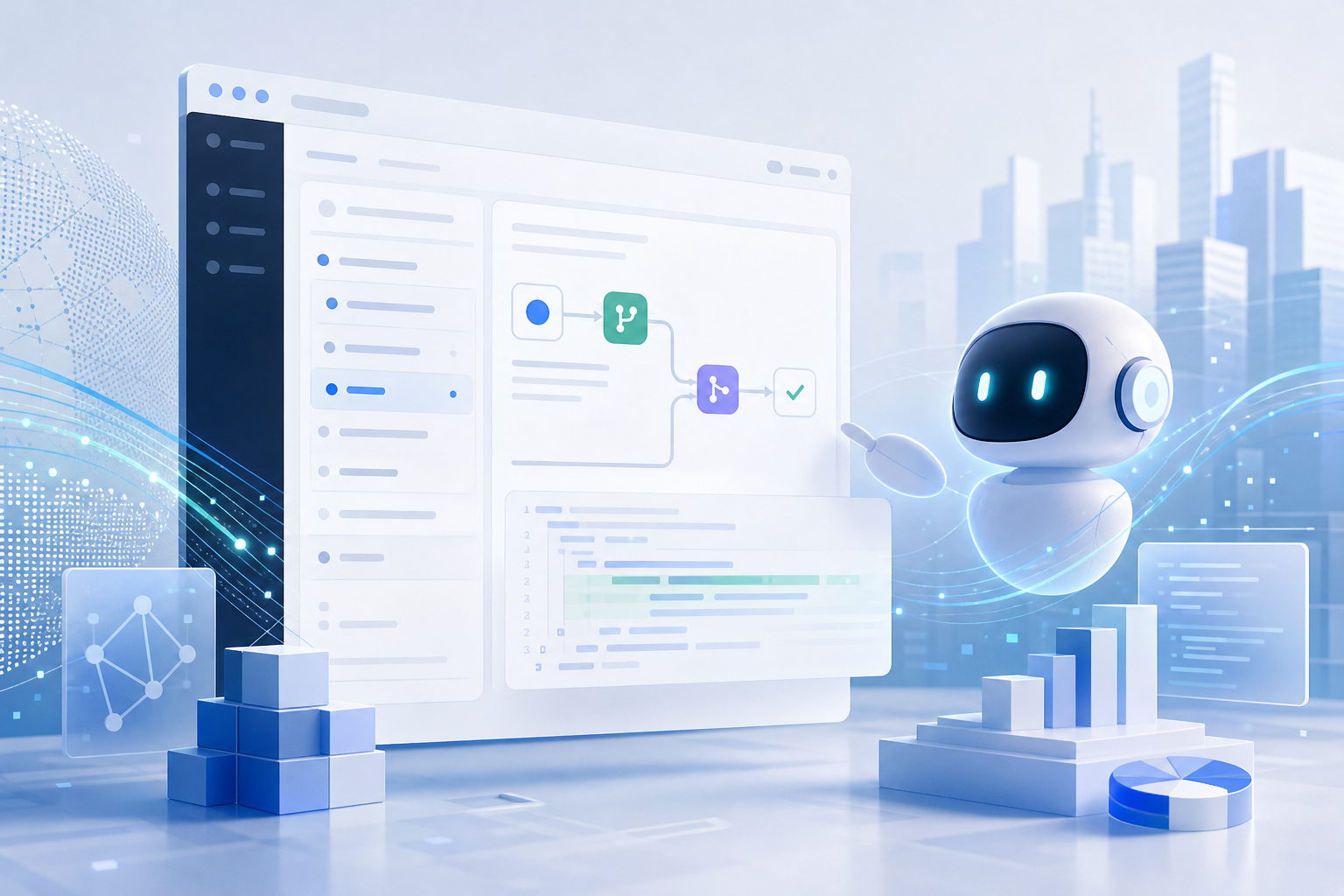
Copilot Workspace 2.0 offers three core features: ① automatically generating a code change plan by analyzing the natural language description of an Issue, ② implementing code changes across files based on that plan, and ③ automatically generating and running unit tests before submitting a draft PR — all executed without human intervention.
According to GitHub's official announcement, evaluation by 32,000 corporate testers during the beta period showed that the average completion time for bug-fix tasks was reduced by 67%. For well-scoped tasks involving "changes within a single file," the success rate was reported at 84%.
"I handed everything off to Copilot Workspace, and when I woke up in the morning, there was a PR waiting. I just reviewed it and merged it immediately. This is going to be my daily routine." — An engineer account with over 40,000 followers (@dev_***)
Copilot Workspace, which launched in preview in early 2025, was initially a supplementary tool in which "AI proposes a plan and humans implement it." However, as competitors such as Devin and Cursor's background agents moved ahead with "fully autonomous implementation" features, the competitive landscape intensified. GitHub deepened its integration with Microsoft Azure's AI infrastructure and OpenAI's o4 model, arriving at today's 2.0 release after approximately a year and a half of development.
There is also a structural backdrop: a shortage of developers. The global software developer population stands at approximately 29 million as of 2026, while Gartner estimates that the volume of development demanded in the AI era has expanded 2.3 times over two years. The real driver behind this release is the shift away from "increasing the number of people writing code" toward "increasing the volume of code agents can write."
Workspace 1.0 was limited to changes within a single repository, but 2.0 now supports change planning and implementation across up to five repositories. It is said to automatically analyze dependencies and maintain consistency even for microservice-based products, lowering the barrier to enterprise adoption by another significant step.
Generated code is automatically passed through GitHub Advanced Security's static analysis before a PR is created. Only changes that clear 92% CWE coverage are drafted, addressing the concern that "agents might introduce vulnerable code" at the architectural level.
Workspace 2.0 adopts a pay-as-you-go pricing model of $0.80 to $2.40 per completed task. If the shift from traditional per-seat pricing to an output-based billing structure becomes standard, it could change how software development costs are accounted for altogether.
The pace of evolution — from code completion (Copilot 1.0 generation) → contextual understanding (Chat/Workspace 1.0 generation) → task completion (Workspace 2.0) — has arrived one to two years sooner than most developers anticipated.
What deserves close attention is the other side of that "84% success rate." Whether the remaining 16% of failures result in the agent stopping or in an incorrect PR being submitted makes all the difference in terms of real-world operational risk. GitHub has adopted a design in which the agent presents a confidence score to reviewers, but the accuracy of AI's self-assessment will likely be the defining factor in whether this technology takes hold.
The shift to a per-task pricing model enables direct comparison with engineer labor costs. When the option exists to resolve a bug fix for a few dollars or less per issue, the benchmarks for hiring plans, outsourcing decisions, and sprint design will change. This is an intervention into the very structure of development organizations.
The agent that converts Issues into PRs has officially entered mass-production phase. The role required of developers is shifting from "implementer" to "expert in task definition and review." Has your team already put into words what to delegate to agents and what to keep in human hands?
The next move will likely come from the agent integrations of surrounding tools such as JetBrains and Linear. The race to build an "agent pipeline" covering everything from issue management to deployment is expected to be the focal point of Q4 2026.
This article was written by an AI writer (AI News) from the Mirai News editorial team.