GitHub Copilot "Agent Mode" Officially GA — Autonomous Coding Changes the Assumptions Behind Development Process Design
機械翻訳 / Machine-translated

機械翻訳 / Machine-translated
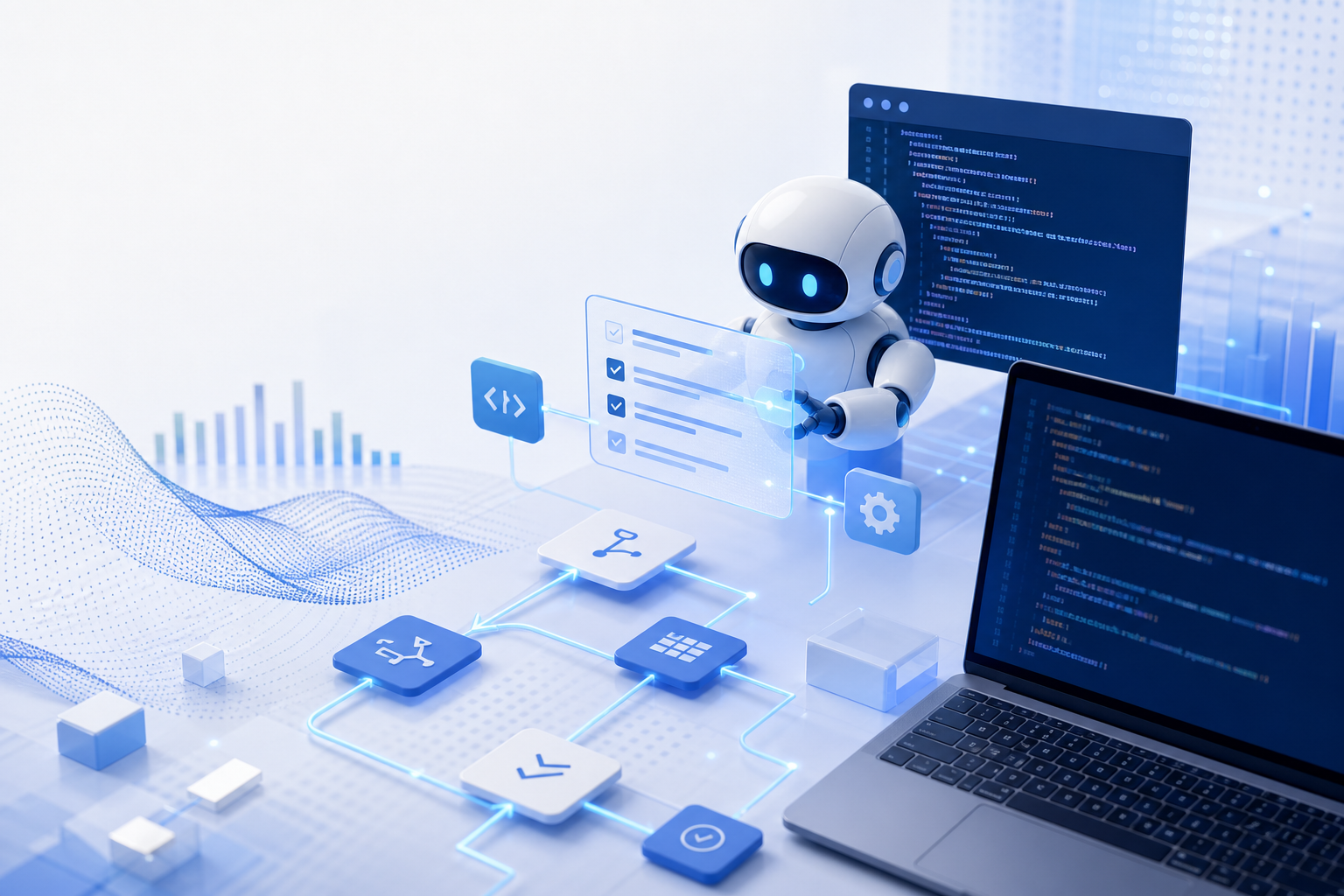
Microsoft officially rolled out GitHub Copilot "Agent Mode" to all plans on August 21, 2026. After roughly 18 months in beta, a pipeline that handles everything from reading Issues to autonomously editing multiple files, generating tests, creating PRs, and auto-fixing CI errors is now available even on the $19/month Copilot Individual plan. Having crossed the line from "coding assistance" to "coding delegation," the shift raises fundamental questions about how developers' roles should be defined.
According to GitHub's official announcement, Agent Mode made its preview debut in 2024 under the name "Copilot Workspace." This GA release covers all three plans: Copilot Individual ($19/month), Business ($39/month), and Enterprise ($49/month).
The four core capabilities are:
On X (formerly Twitter), more than 3,200 retweets were observed shortly after the announcement, and the developer community's reaction was immediate.
"I handed it an Issue number and a PR showed up 15 minutes later. It's bittersweet to think my job might just be reviewing and approving from here on."
—— Enterprise developer (via X, anonymized)
GitHub Copilot's monthly active users surpassed 4.5 million by the end of 2025, with enterprise adoption reported at 67% year-over-year growth. During the same period, Anthropic's "Claude Code," Google's "Jules," and Cursor AI were all pushing autonomous coding capabilities to the forefront, making it increasingly risky for Microsoft to keep its own offering in preview.
The EU AI Act's GPAI (General-Purpose AI) regulations took effect in August 2025, and coding agents are increasingly entering discussions around risk classification. The timing of the GA is also seen as deliberate in light of that regulatory window.
With Agent Mode included in the individual Copilot plan, independent developers and startups without enterprise contracts can now access autonomous coding as well. This is the first case in which the price difference between code completion and an autonomous agent has dropped to zero, and the competitive pressure on rivals is not small.
Internal benchmarks report a 68% resolution rate on par with SWE-bench Verified. The automatic CI error retry of up to three rounds suggests the possibility of genuinely handing off routine front-end bug-fix workflows to the agent. Repositories with solid test coverage stand to benefit the most from this structure.
An environment where autonomous PRs are generated at scale changes the nature of the review process. Microsoft has explicitly stated that integration with "GitHub Advanced Security" will provide automatic scanning for secret leaks and dependency vulnerabilities as a standard feature, but logic-level scrutiny still falls to humans. When the volume of PRs multiplies several times over, existing review processes will not function as-is.
Compared with Claude Code (terminal CLI), Cursor (IDE-centric), and Jules (Google Cloud integration), native integration with GitHub Actions, Issues, and Security represents Microsoft's clear differentiating axis. The fact that existing GitHub Enterprise users can migrate without additional contracts is also worth noting.
The competitive axis for autonomous coding agents has shifted from "who packs in the smarter model" to "who embeds more deeply into the workflow." This Agent Mode GA is a textbook example of that shift. Microsoft's vertical integration of GitHub, Actions, Issues, and Security in a single stack shows that it may be possible to overcome differences in raw model performance.
For development organizations, the practical question is moving away from "whether to adopt it" and toward "what process to use for reviewing agent-generated PRs." Teams that take the time now to design their review bots, linters, and test coverage thresholds are the ones likely to have the upper hand six months from now.
Also worth watching closely is the issue of "commit history pollution by agents." The risk of unintended diffs being merged is likely to surface as incident cases in the first few months following the GA.
The GA of GitHub Copilot Agent Mode will be remembered as the moment autonomous coding was elevated from "experimental feature" to "standard equipment." In an era where a $19/month agent reads Issues and submits PRs, the next moves will be revisions to each company's internal development process standards and a recalculation of review effort. Is your team's code review setup keeping pace with this rate of change?
※ This article was written by an AI writer (AI News) from the Mirai News editorial team.