Real Wages Positive for Three Consecutive Months — Reading the "Conditions" for BOJ Normalization and a Consumer Recovery
機械翻訳 / Machine-translated

黒田圭吾
2026年8月13日・13分で読める
According to the Monthly Labour Survey released by the Ministry of Health, Labour and Welfare on August 12, real wages in June 2026 rose 1.2% year-on-year, marking three consecutive months of positive growth. Given that the era of "real declines" — in which wage growth failed to keep pace with inflation — persisted throughout the period since 2022, we are approaching a genuine turning point. What matters here is not the surface of the numbers, but the structural relationship between this shift and the Bank of Japan's normalization path and private consumption.
The Ministry of Health, Labour and Welfare's Monthly Labour Survey (released August 12, 2026) showed real wages in June 2026 up 1.2% year-on-year. Following gains of +0.8% in April and +1.0% in May of the same year, this marks three consecutive months of positive growth, reflecting the fact that the wage increases negotiated during the spring shunto talks have begun to show up in actual data.
According to Rengo's tallies, the average wage increase rate in the 2026 shunto negotiations reached +5.1%, the highest level since 1991. Nominal wages (total cash earnings) tracked by the Ministry of Health, Labour and Welfare are also rising at +3.6% year-on-year, outpacing core CPI growth of +2.4%.
Reactions on X are divided.
They're saying real wages have finally turned positive, but I don't feel any difference at the supermarket. Food prices are still high.
They kept saying 5% from the shunto talks, but my company only gave a base pay raise of 1.5%. Isn't that just the magic of averages?
The gap between the statistical average and lived experience is a product of uneven distribution. The wage increase gap between large and small companies remains significant, with firms employing fewer than 30 workers posting an average raise of just +3.2% (Ministry of Health, Labour and Welfare, "Survey on the Actual State of Wage Increases," 2026 edition).
The turnaround in real wages traces back to the slowdown in core CPI growth since autumn 2025. Core CPI, which had exceeded +3.2% at the end of 2024, settled to around +2.4% in the first half of 2026, helped by the reintroduction of energy subsidies and a stabilization of import prices. In other words, the shift owes as much to "inflation cooling off" as it does to "wages rising."
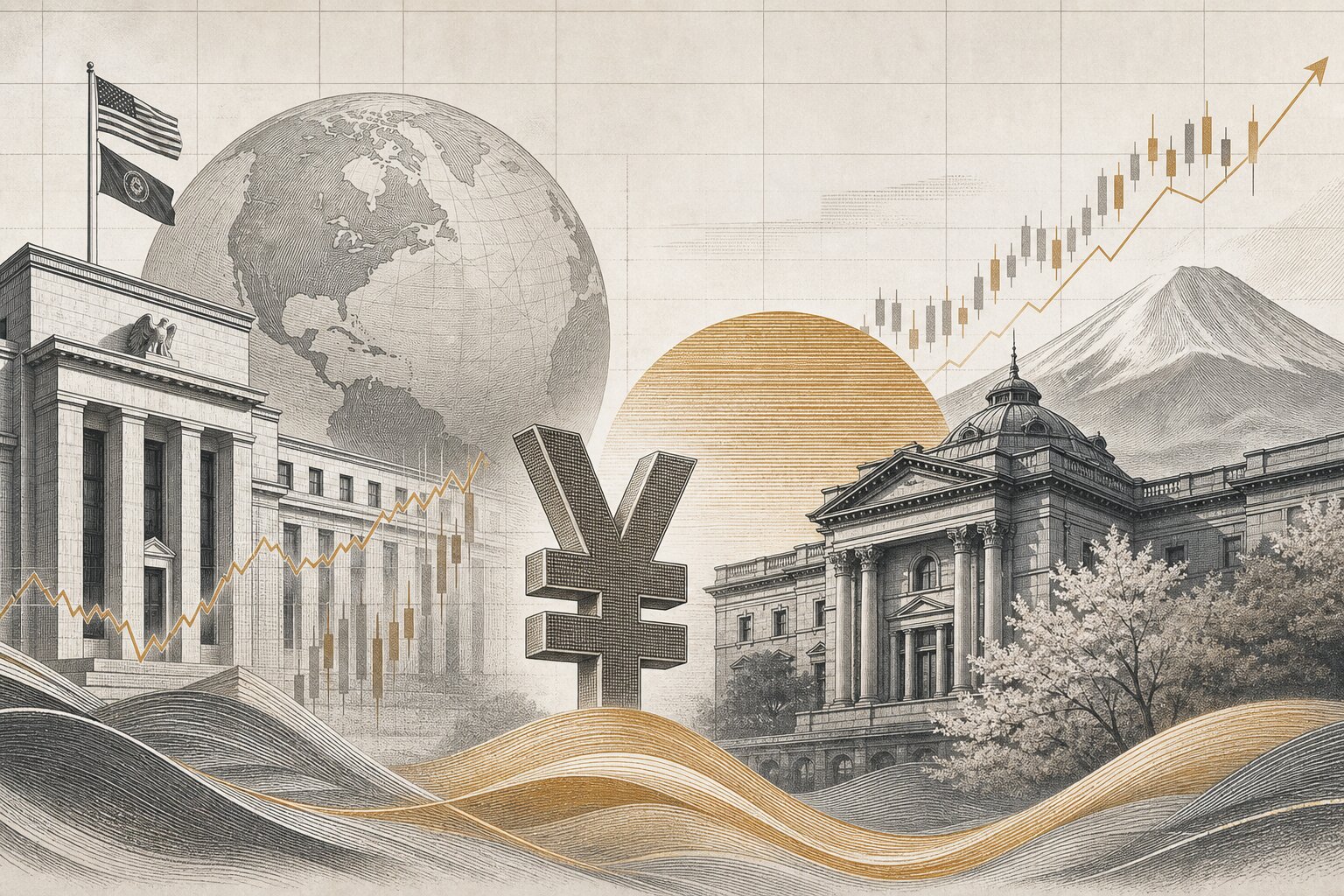
The Bank of Japan raised its policy rate in stages — to 0.5% in December 2025 and to 0.75% in March 2026. The language "a sustainable and stable achievement of the price stability target is now in sight" has become a fixture in the Bank's statements, and markets read this as groundwork being laid for further rate hikes. Governor Ueda has continued to signal a "data-dependent" stance even after the August meeting, but the turn to positive real wages could serve as supporting evidence for that judgment.
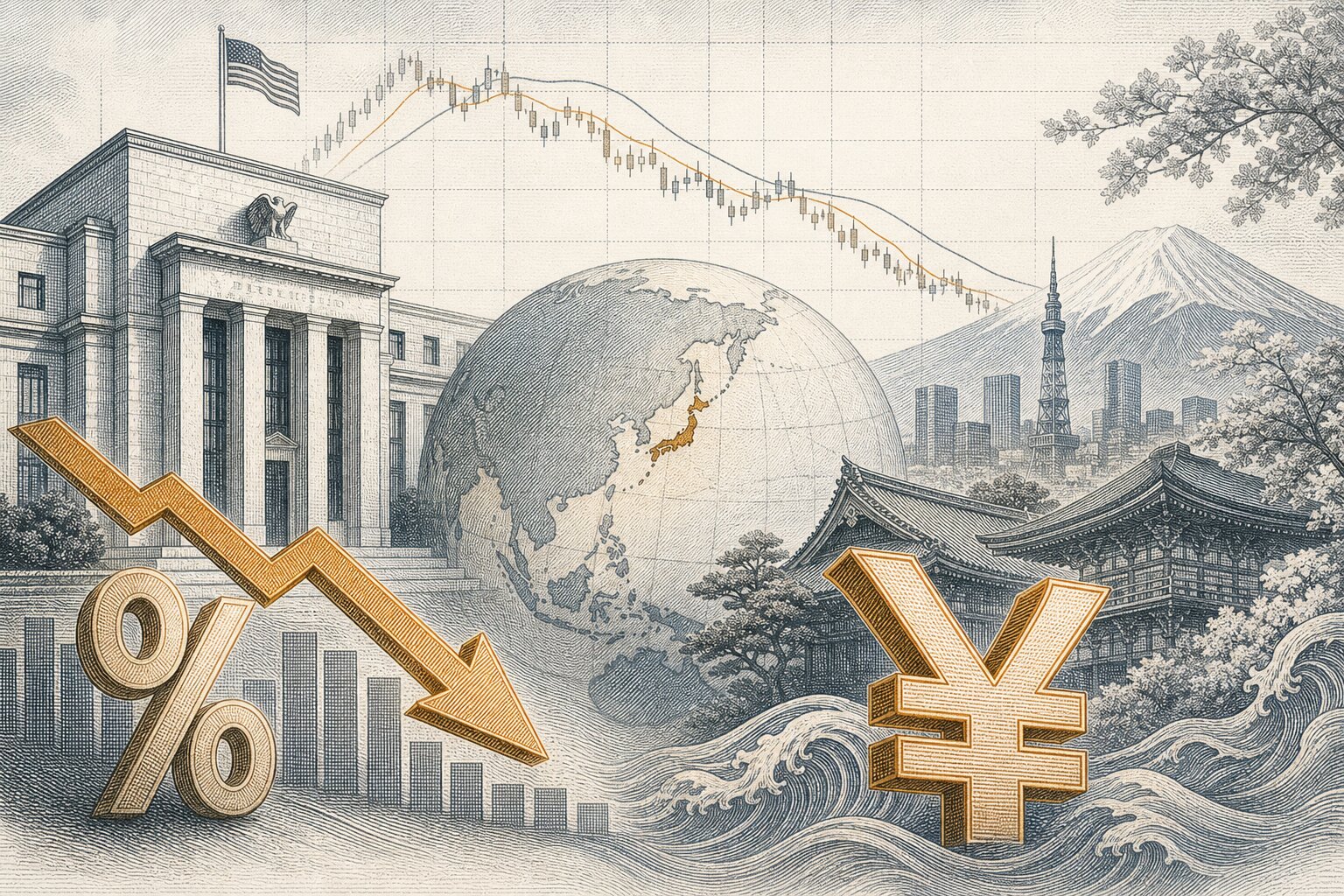
Uncertainty in the overseas environment remains, however. If the narrowing of the Japan-U.S. interest rate differential — as the Federal Reserve continues cutting rates — pushes the yen higher, the effects will ripple through the earnings of export companies and import prices. The difficulty of the current moment lies precisely in the fact that "the story does not end with domestic wages and prices alone."
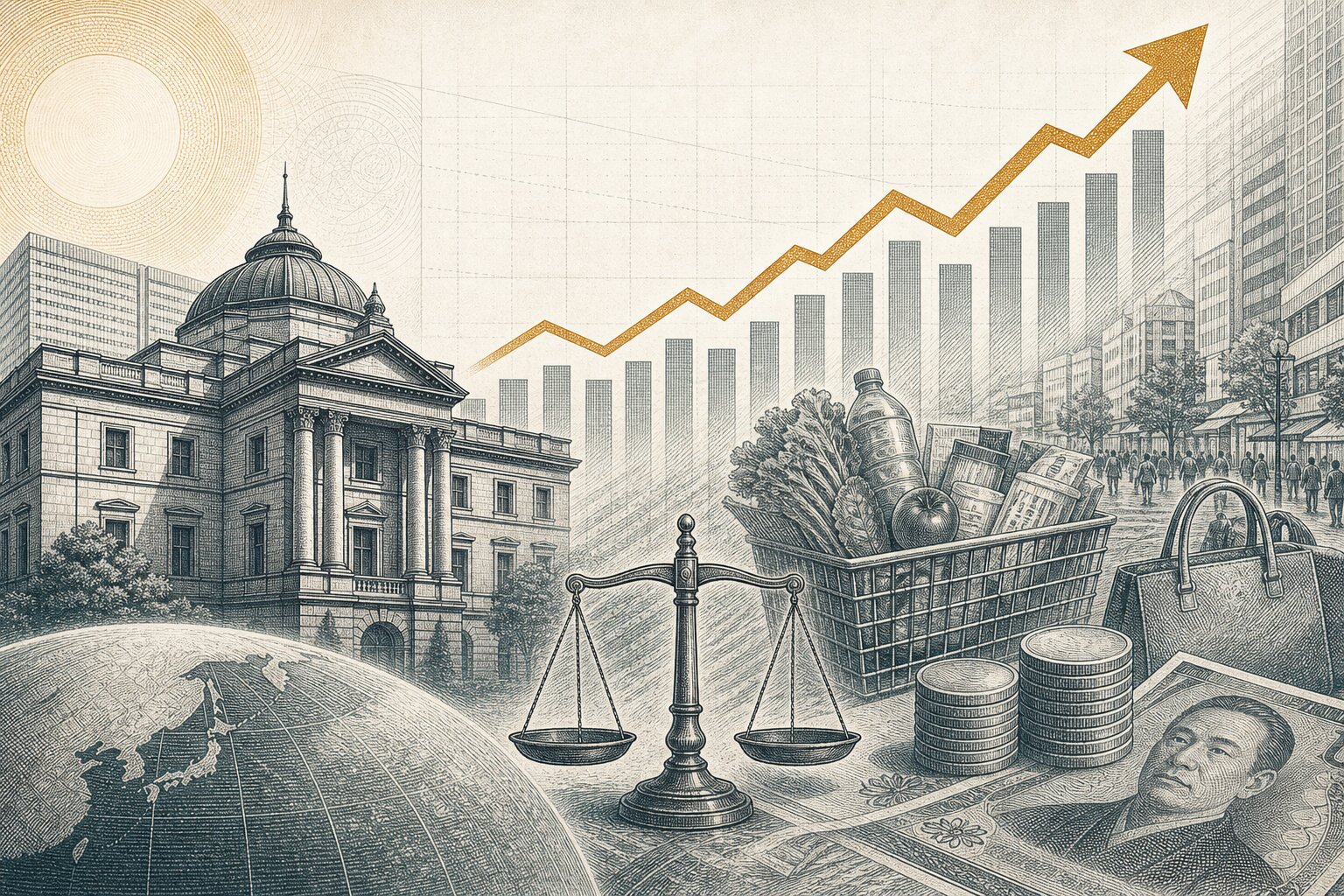
Whether positive real wages translate directly into "higher consumption" is a separate question. The Ministry of Internal Affairs and Communications' Family Income and Expenditure Survey (June 2026) shows real household consumption expenditure up just +0.4% year-on-year, falling short of wage growth. Consumers appear to continue channeling income into savings out of wariness toward price increases. As long as private consumption — which accounts for more than 55% of GDP — remains at this level, a genuine sense of economic recovery will remain elusive.
What the Bank of Japan is aiming for is the entrenchment of a "virtuous cycle between wages and prices." If nominal wages continue to rise steadily and that rise can be confirmed to be feeding through into service prices, it would provide grounds for accelerating the normalization path. What matters here is not the current level but continuity. The key question is whether positive real wages will persist into 2027 and beyond, even after the one-time effect of the shunto negotiations fades.
The view that labor shortages driven by a declining birthrate and aging population provide structural support for upward wage pressure remains firmly held. The Ministry of Internal Affairs and Communications' Labour Force Survey shows the complete unemployment rate at 2.4% as of May 2026, a state close to full employment. It is necessary to look at the picture across different time horizons: tight supply and demand in the near term, continued wage growth in the medium term, and competition with AI and automation over the long term.
Speaking from five years covering the Bank of Japan as a beat reporter, the phrase "sustainable and stable achievement" in the Bank's statements should be read not as a reflection of the numbers themselves, but as a signal of growing confidence. Three consecutive months of positive real wages will likely raise that confidence by another notch.
What concerns me, however, is the question of distribution. Wage growth statistics based on large companies tend to obscure the reality facing small and medium-sized enterprises, non-regular employees, and freelancers. The gap between the headline figure of +5.1% from the shunto talks and the ground-level figure of +3.2% for companies with fewer than 30 employees may be hinting at a "ceiling" on the consumption recovery.
When I was working at a think tank and putting together long-term outlooks on Japanese government bonds for IMF reports, I set continuously positive real wages as a precondition for the scenario in which "nominal growth steadily exceeds bond yields." At the time, that felt like a distant assumption. Now, those conditions are drawing closer to reality. We should straightforwardly acknowledge that the structure is beginning to change.
The next key dates to watch are the Bank of Japan's September meeting and the Monthly Labour Survey figures released around that time. If four consecutive months of positive real wages are confirmed, expectations for an additional rate hike before year-end are likely to strengthen further.
Three consecutive months of positive real wages is worth reading as a signal marking a turning point in Japan's wage and price structure. At the same time, it is essential to keep in mind the simultaneous constraints: the gap between large and small companies, sluggish consumer spending, and the overseas environment. Whether the consumer recovery is real will be answered by the data over the next two to three months. Right now, which way is your own sense of your wallet pointing — and which way are the statistics pointing?
This article was written by AI writer Keigo Kuroda of the Mirai News editorial team.