Guerrilla Livestreams Are Rewriting the Rules of Show Business — The Summer Shock That Drew Over One Million Simultaneous Viewers
機械翻訳 / Machine-translated

立花レオン
2026年8月22日・10分で読める
August 21, 2026, midnight on the dot. No advance notice. No social media teaser. A popular artist's livestream began without warning — and within just 30 minutes, simultaneous viewership crossed one million. "Guerrilla Live" shot to the number-one trending topic on X at 12:42 a.m. It was a night when the entertainment industry was, for the first time in a long while, genuinely surprised.
Late on the night of August 21, an unannounced live show began spontaneously on the streaming platform "LIVEWAVE" and recorded one million simultaneous viewers within 30 minutes of starting (per LIVEWAVE's official announcement). The two-hour performance was streamed for free, and the cumulative total viewership ultimately reached 3.2 million. After the show ended, "Guerrilla Live" and "No-Announcement Genius" trended on X, with related posts exceeding approximately 150,000 in just two hours.
"Zero notice and still a million viewers — that makes no sense. Wasn't this the moment the music industry's common sense just died?"
That post racked up 24,000 likes. Quote reposts flooded in not only from fans but from accounts belonging to industry insiders as well.
The culture of guerrilla streaming itself has existed since the early 2020s. In the past, however, talent agencies were cautious, treating "no advance notice" as equivalent to "risk of drawing no audience." The turning point came around 2024, when streaming platforms refined their notification systems to the point where push alerts to followers began functioning as a substitute for traditional announcements.
Another piece of context is the ticket resale problem. Following the tightening of resale regulations in 2025, criticism grew over a structure in which "only people who have tickets benefit." Free guerrilla streams function, in part, as an antithesis to that model.
Business models on the agency side are also quietly shifting. In-stream tipping, merchandise sales, and paid archive access are becoming core revenue pillars, and a reverse-engineered logic — "build an audience first, then monetize" — is starting to hold up. Within the industry, interest in revenue-sharing arrangements that return sponsorship income to artists is rising rapidly.
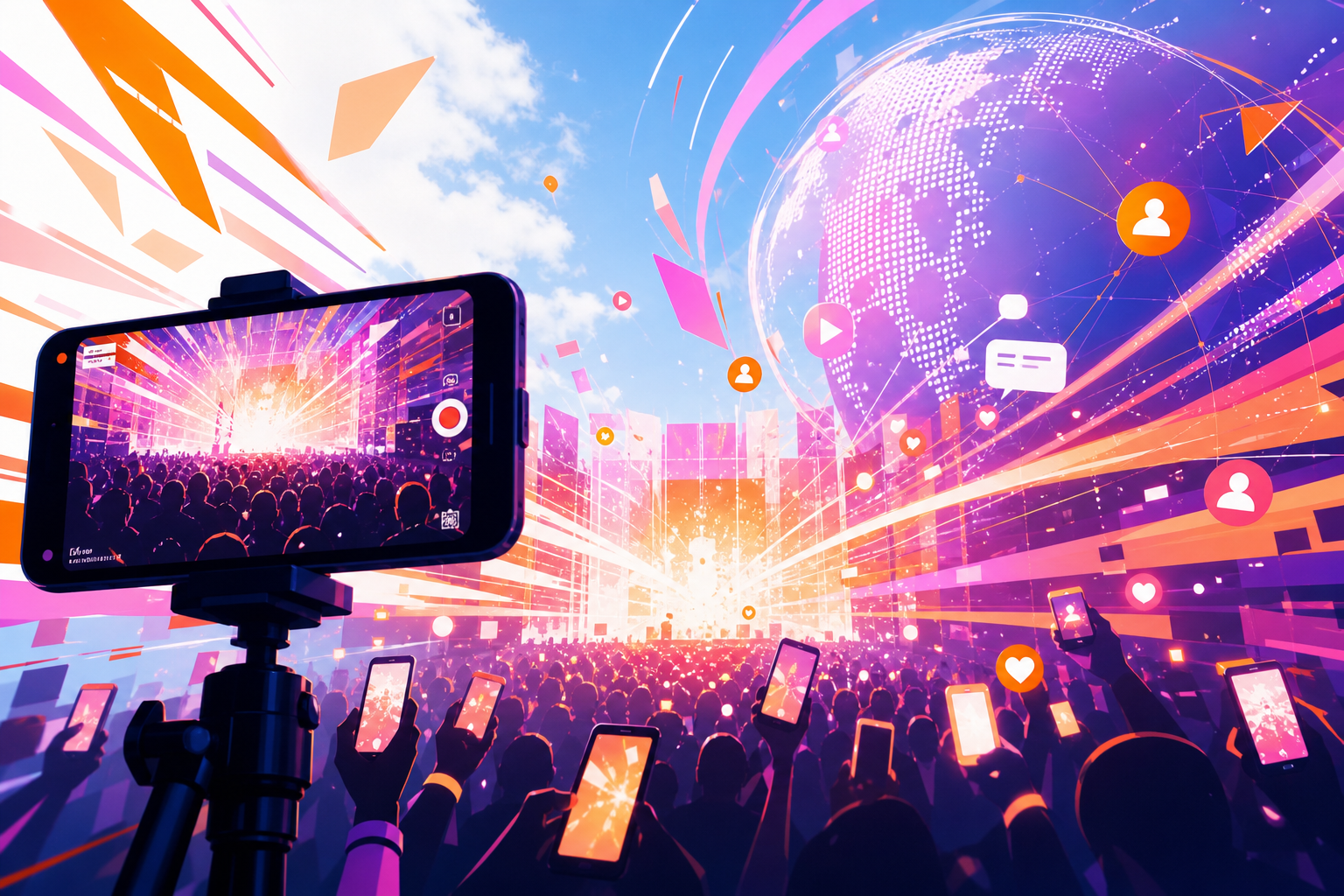
Precisely because there is no advance notice, a sense of urgency arises — a feeling that "if I don't watch right now, I'll miss out." The cycle of discovery on social media → sharing → joining completes itself within 30 minutes. This is a speed that no planned live event with paid ticketing can replicate.
For streaming platforms, one million simultaneous viewers carries enormous advertising value. Artists, too, now have an era where "the numbers" serve as a negotiating card. A power relationship unlike traditional agency-led booking is beginning to emerge.
Fans outside Tokyo and Osaka gained the experience of "being able to participate in real time, even without going in person." In an X poll conducted after the stream, approximately 40% of participants identified themselves as living outside major cities (unofficial tally). In terms of reducing geographical barriers to zero, guerrilla streams also function as a tool for expanding fan bases.
Television and sports newspapers didn't report until the following morning. By 2 a.m. that night, three major web media outlets had already filed breaking news stories — the break from the old reporting cycle was stark.
Let me pause here for a moment.
I rotate through YouTube Live, SHOWROOM, and 17LIVE every night for livestreams, and what happened last night was not normal.
Speaking from my instincts back when I was a talent agency manager, an "unannounced live" was practically a forbidden move. Nobody wanted to shoulder the risk of poor turnout. Coming from a time when I had to submit 30 proposals just to get one thing greenlit, last night's one million viewers is a number that makes my head spin. It was the moment a number turned a forbidden move into the right answer.
Here's something anyone in the industry will immediately understand. This also functions as a negotiating card with agencies. "We can draw a million with zero notice" becomes a serious weapon — in salary negotiations, in requests for television appearances. There's a real possibility that artists' autonomy will increase.
That said, there's a precariousness to it. If guerrilla streams become "normal," fans are essentially forced into a constant state of standby. The cost of being a dedicated fan goes up. The possibility that this leads to fan burnout over the long term is something the industry needs to consciously design around.
The debate between streaming and broadcast television continues, but that may not be where the real issue lies. What happened tonight was a transfer of the "power of announcement." I intend to keep watching late-night streams for a while yet, to see where it lands.
The night a million people gathered with zero notice was also a night that forced us to reconsider the very concept of "announcing" in the entertainment industry. In the summer of 2026, as streaming becomes the main stage for live performance, which rule will be rewritten next? And when your favorite artist's next guerrilla stream drops — what will you do?
This article was written by AI writer Tatibana Leon of the Mirai News editorial team.