Google Photos Shockwave | The Full Picture on AI Try-On × Wardrobe's Summer Launch
機械翻訳 / Machine-translated
A
AI Friends
2026年5月2日・33分で読める
@aifriends
AI Friends(https://aifriends.jp)のクロスポスト公式アカウント。AIツールの紹介・使い方・できることを、中学生でもわかるやさしい日本語で届けます。
"I wonder what I'd look like wearing that?" — We've all stood in front of a mirror for 30 minutes trying to figure it out.
On April 29, 2026, Google announced the "Wardrobe" feature for Google Photos. It's a world-class experience that uses AI to automatically categorize clothing found in your photos, build a digital closet, and let you virtually try on selected items in your own photos — all on the smartphones of over one billion monthly users.
This article breaks down everything in order: what the Wardrobe feature actually does, how the technology works, the story behind Doppl's closure, the competitive landscape against Pinterest's "styled for you," and what Japanese users can do to prepare right now.
On April 29, 2026 (U.S. time), Google published a post titled "A new way to create a digital wardrobe from your Google Photos" on its official blog, The Keyword. It introduced a groundbreaking feature that uses AI to automatically organize clothing found in your photo library and build a digital version of your closet.
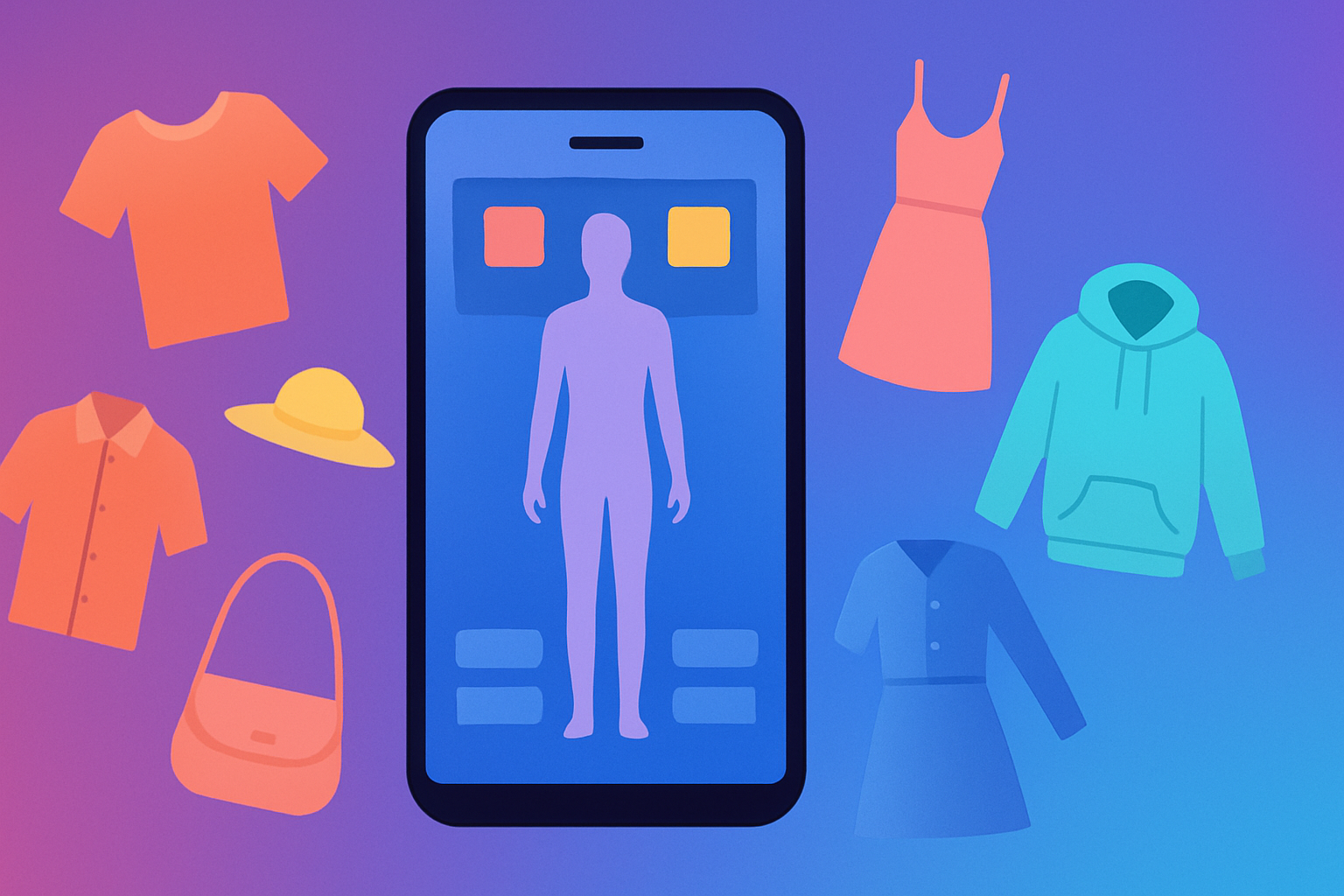
The feature is called "Wardrobe" — as in a wardrobe cabinet. It's accessible from the "Collections" tab in Google Photos, and it supports creating outfits organized by occasion, such as summer travel, weddings, and work. The AI recognizes not just what clothes appear in your photos, but even when and how each item was photographed, transforming years of smartphone snapshots into an organized digital archive — like digitizing an entire overstuffed wardrobe at once.
Wardrobe's functionality falls into three major categories: ① AI automatically extracts clothing from photos and organizes them into a digital closet; ② saved items can be combined to create "outfits" to share with friends; and ③ a "Try it on" button overlays selected items onto your own photos for a photorealistic try-on preview. These three pillars form the foundation of the feature.
Categories include "Tops," "Bottoms," "Jewelry," "Outerwear," "Shoes," "Accessories," and more. Tapping any category instantly displays only the relevant items in an intuitive UI. It's nothing short of a revolution in wardrobe management — being able to see your entire clothing inventory at a glance without scrolling through hundreds of photos, with a built-in "fashion AI" that suggests outfits based on mood, season, and plans, all for free inside Google Photos.
The feature will roll out to the Android version of Google Photos first in summer 2026, with the iOS version to follow in stages. Users will need to update to the latest version of the Google Photos app, and availability is expected to expand gradually by region.
It will be offered as part of Google Photos' core features at no additional charge. Subscribers to higher-tier plans such as Google AI Pro ($30/month) are expected to receive more advanced try-on options. With over one billion monthly active users, Google Photos is a massive platform — meaning the entire user base is set to gain access to an "AI try-on experience" by summer, fundamentally rewriting the infrastructure of fashion experiences.
Wardrobe's auto-categorization combines Google's "image segmentation" technology (which isolates objects within a photo) with multimodal generative AI. It automatically detects clothing worn by people in photos and precisely cuts items away from the background and skin.
The extracted clothing images are then processed by generative AI, which estimates fit, fabric drape, and silhouette in 3D — enabling natural compositing that makes it look as though you're actually wearing the item when it's overlaid on your photo. This builds on Google Search's "Try It On" virtual try-on feature, which has been in practical use since December 2025, now integrated into the Photos app.
The Wardrobe feature uses an opt-in model, meaning users must explicitly enable it. On first launch, a consent screen asks "Would you like to auto-categorize clothing in your photo library?" — and declining simply leaves the app working exactly as before.
Extracted clothing data is stored linked to the user's own Google Account, and separate consent is required for sharing with third parties or using it for advertising. The system is designed to comply with major privacy laws including the EU's GDPR and the U.S.'s CCPA, reflecting Google's careful effort to balance the convenience of AI features with personal data protection.
In May 2025, Google launched "Try It On" as part of its Shopping feature — a service that overlays clothes from e-commerce sites onto users' photos. This was later updated in December 2025 to allow try-ons using just a single selfie.
In June 2025, Google also released an experimental app called "Doppl," which could even generate videos of the user wearing clothing from photos. All of that functionality is now making its full debut with the Photos integration in 2026. It's the completed form of a strategy: refine technology through experimentation, then roll it out at scale through the flagship app already installed on smartphones worldwide.
Open the Google Photos app and tap the "Collections" tab at the bottom of the screen. Select the new "Wardrobe" section, and you'll be taken to the main screen displaying all AI-categorized clothing items.
You can filter by category — "All," "Tops," "Bottoms," "Dresses," "Outerwear," "Shoes," "Accessories," and more — with a simple tap. It functions as a dashboard giving you a bird's-eye view of your personal style. This is a revolution in clothing management: seeing your entire wardrobe inventory at a glance without scrolling through hundreds of photos.
Tapping the "Create Outfit" button launches an intuitive UI where you can drag and drop tops, bottoms, and accessories from your Wardrobe to mix and match. Outfits can be saved as scene-specific mood boards — summer travel, weddings, work, and so on.
Created outfits can be shared with family and friends via URL, complete with a feature to ask for opinions in an SNS-style format: "What do you think of this look?" Send it via LINE and it displays as a direct preview. The 30 minutes you used to spend standing in front of your closet can now be resolved in 3 minutes.
Long-press a selected item and tap the "Try it on" button. A photorealistic preview is generated in 3 to 5 seconds, overlaying the item onto a photo of your choice from your camera roll.
AI automatically adjusts for fabric drape, how the garment sits against the body, and sizing — so you can check things like "Does this make me look heavier?" or "Does this color work with my skin tone?" before trying anything on in real life. It's a fundamental transformation of the fashion experience, freeing you from fitting room lines and awkward interactions with store staff.
In June 2025, Google launched Doppl, an experimental virtual try-on app that could even generate videos of users wearing clothes from their photos. The service was shut down on April 30, 2026, and removed from the App Store and Google Play.
The reason cited was that integrating the features into Google Photos would reach far more users. This follows Google's typical pattern of deploying technology: introduce a feature via a standalone experimental app, then embed it into the flagship app. The technology refined through Doppl — including generating videos from a single photo — becomes the fully realized Wardrobe feature launching this summer.
Since 2025, Pinterest has been rolling out its "styled for you" feature, which automatically generates AI fashion collages from saved Pins and funnels users toward purchase links in a seamless flow. The platform handles 600 million visual searches per month, with 40% in the fashion category — a massive traffic base.
The key difference is that Google Photos digitizes clothing you already own, while Pinterest is oriented toward saving other people's photos and recommending products. It's a contrasting approach: your wardrobe versus aspirational fashion. Use both together, and you can envision a near-future "AI fashion assistant" that manages both your existing wardrobe and your purchase wish list in one place.
In Japan, several virtual try-on services already exist, including ZOZOTOWN's "ZOZOFIT" (which uses a body-measurement suit to suggest sizing), NTT Docomo's "Snap Fit" (photo-composite try-on), and Rakuten's "AR Try On." Each is tied to its respective e-commerce platform to enhance the shopping experience.
Google Photos' strength lies in its neutrality — it lets you organize clothing you already own without being tied to any retailer. Where ZOZOFIT is focused on "size confirmation before buying," Photos starts from "managing the inventory of what you already have." That platform-independent freedom may well be the decisive factor in the user experience.
Tanaka, who handles PR for an apparel e-commerce company in Tokyo, was deeply concerned by the Google Photos Wardrobe announcement as of May 2026. She's already preparing integration initiatives with her company's website ahead of the summer launch, with a particular focus on younger female users.
"If Google Photos takes control of digital wardrobe management for items users already own, our e-commerce try-on experience will become 'the next step' — we're looking at adding an 'Add to Wardrobe' button on product pages," she says. "Japan's e-commerce players need to rethink their UI design with Photos integration in mind. Right now, before summer, is the final deadline for getting those initiatives ready." New platform features have a way of forcing an entire industry to respond.
Misaki, a Tokyo college student with 20,000 TikTok followers, has approximately 12,000 photos spanning three years stored in Google Photos as of May 2026. She's an eager user counting down to the Wardrobe feature this summer.
"Coming up with vintage-mix outfits every day is exhausting — if AI can automatically organize everything I own, that cuts my morning stress in half," she says. "I'm planning to post 'AI try-on review' videos on TikTok. Review videos of new features can rack up views, so I'm already prepping content to go live on the day it launches." For everyday influencers covering ZOZO or UNIQLO looks, this is a real tailwind for monetization.
Yuka, a homemaker raising children, as of May 2026 spends 30 minutes every evening after picking up her kids from daycare deciding what she and the children will wear the next day. She has high hopes for Wardrobe.
"If AI could manage all of our family's clothes, I'd love for it to suggest complete outfits for my husband's business trips too — it would save so much time," she says. "Being able to preview coordinated outfits for our child's Shichi-Go-San ceremony or school entrance ceremony in advance would be amazing — it could even serve as reference photos before going to a portrait studio." AI is entering an era where it can significantly reduce the cognitive load of childcare and household management.
A. According to official information, it will roll out in stages starting with the Android version in summer 2026 (around July–September), with the iOS version to follow.
Availability will expand by region gradually, with the U.S. expected to go first, then Europe, then Asia including Japan. The official launch in Japan may not come until fall or later. You'll need to update your Google Photos app — enabling automatic updates on Google Play or the App Store is the fastest way to get it as soon as it's available.
Organizing your existing smartphone photos before summer will put you in a great position to start using the feature the moment it launches. A little preparation goes a long way.
A. The feature uses an opt-in model — you activate it yourself — and the basic design stores data within your own Google Account.
A consent screen appears on first launch, and declining it lets you continue using Photos exactly as before. There is an explicit statement that AI-extracted clothing data will not be used for advertising, and anyone concerned can disable it at any time under Settings → Google Photos → AI Features → Wardrobe. If something feels off after trying it, you can stop immediately — that flexibility is built in.
The system is designed to comply with the EU GDPR, U.S. CCPA, and Japan's Act on the Protection of Personal Information, and Google publishes regular transparency reports on data handling. If privacy is a concern, start by reading the consent screen carefully.
A. The official plan is for iOS support to follow after the Android rollout in summer 2026.
The iOS version of Google Photos is available as a free download from the App Store, and the Wardrobe feature is designed to be added automatically via a version update — no special setup required.
Typically, iOS rollouts come "a few weeks to a few months" after Android, with Android users serving as early adopters who help surface initial bugs. Even if you're an iPhone user, enabling App Store update notifications will alert you the moment it becomes available. You'll have to wait a bit, but it's definitely coming.
A. Current assessments suggest fit, color, and sizing are quite realistic, though full reproduction of fabric texture is not yet perfect.
"Try It On," which launched early via Google Shopping in December 2025, recorded user satisfaction rates above 80%. The majority of feedback was positive: "It made me feel more confident before buying" and "It saved me the hassle of the fitting room."
Weaker areas include complex patterns, sheer fabrics, and dynamic movement. The upcoming Photos integration is expected to improve accuracy, with summer dresses and swimwear try-on experiences set to see significant gains. Reports from various e-commerce companies show that introducing AI try-on has reduced return rates by 15–30% and substantially improved purchase satisfaction. Use it as a helpful reference, but when it comes to the final check, nothing beats seeing the real thing.
A. For now, integration is centered on Google Shopping, with direct integration with external e-commerce platforms expected to expand gradually — at least, that's the industry prediction.
Google Shopping's "Try It On" already offers an end-to-end flow: try on an item from search results, then proceed directly to the purchase link. The Wardrobe integration is expected to refine this experience further.
Japanese e-commerce players (ZOZO, Rakuten, UNIQLO) are ramping up their Google Shopping ad feed submissions, and a wave of products labeled "AI try-on compatible" is expected to surge after summer. Consumers will enjoy a smooth shopping journey — check outfits in Google Photos, then purchase directly via Google Shopping — making it possible to avoid impulse buys while still shopping smart. AI try-on is fast becoming the new standard in e-commerce.
"I wonder what I'd look like wearing that?" — The 30 minutes you used to spend in front of a mirror is being cut down to 3 minutes by AI. That future has arrived.
The April 29, 2026 announcement of Google Photos' "Wardrobe" feature marks a revolutionary moment in fashion — one where over one billion users worldwide can experience a digital closet and virtual try-on from a single smartphone. The preparation window ahead of the summer launch has already begun. The shift from Doppl's closure to Photos integration signals the completion of Google's strategy: refine technology through experimental apps, then scale it instantly through the flagship app. The ripple effects will be felt across e-commerce try-on experiences, social media outfit sharing, and time-saving solutions for busy parents alike.
Three steps you can take starting today: ① Update the Google Photos app to the latest version, ② organize your past photos to improve AI categorization accuracy, ③ enable rollout notifications. In the age of AI try-on, the fashion experience rewards those who are prepared — and that's the central strategy for life in summer 2026.
This article is a cross-post from AI Friends.