Ads Are Coming to ChatGPT | Rollout Begins in 5 Countries Including Japan
機械翻訳 / Machine-translated
A
AI Friends
2026年5月10日・24分で読める

機械翻訳 / Machine-translated
@aifriends
AI Friends(https://aifriends.jp)のクロスポスト公式アカウント。AIツールの紹介・使い方・できることを、中学生でもわかるやさしい日本語で届けます。
"Sponsored ads appearing alongside answers you get from ChatGPT" — that day is finally about to arrive in Japan.
On May 7, 2026, OpenAI officially announced the expansion of ChatGPT ad display testing to five countries, including Japan. This is not a minor UI tweak — it marks a major shift in the business model of an AI service used by over 800 million people worldwide.
On May 7, 2026 (US time), OpenAI announced on its official blog the expansion of ChatGPT ad testing to five countries.
The five countries are Japan, the UK, Brazil, South Korea, and Mexico.
The rollout is described as happening "within weeks," and ads are expected to begin appearing in Japan as early as late May to early June.
OpenAI has stated that "advertising is an important source of revenue to support the free plan."
In fact, ad testing in the US began back in January 2026.
It has since expanded to Canada, Australia, and New Zealand, and this announcement represents the second wave — a full-scale global expansion.
ChatGPT's MAU (monthly active users) surpassed 800 million as of 2026, making it one of the largest information gateways after Google Search.
Ads will be shown to users on the following two plans:
The only requirement is that users must be "logged in and 18 years of age or older." Anonymous users will not see ads.
The following higher-tier plans will not show any ads:
It's a classic freemium business model — "upgrade to Plus or higher if you don't want ads." The same concept as YouTube Premium.
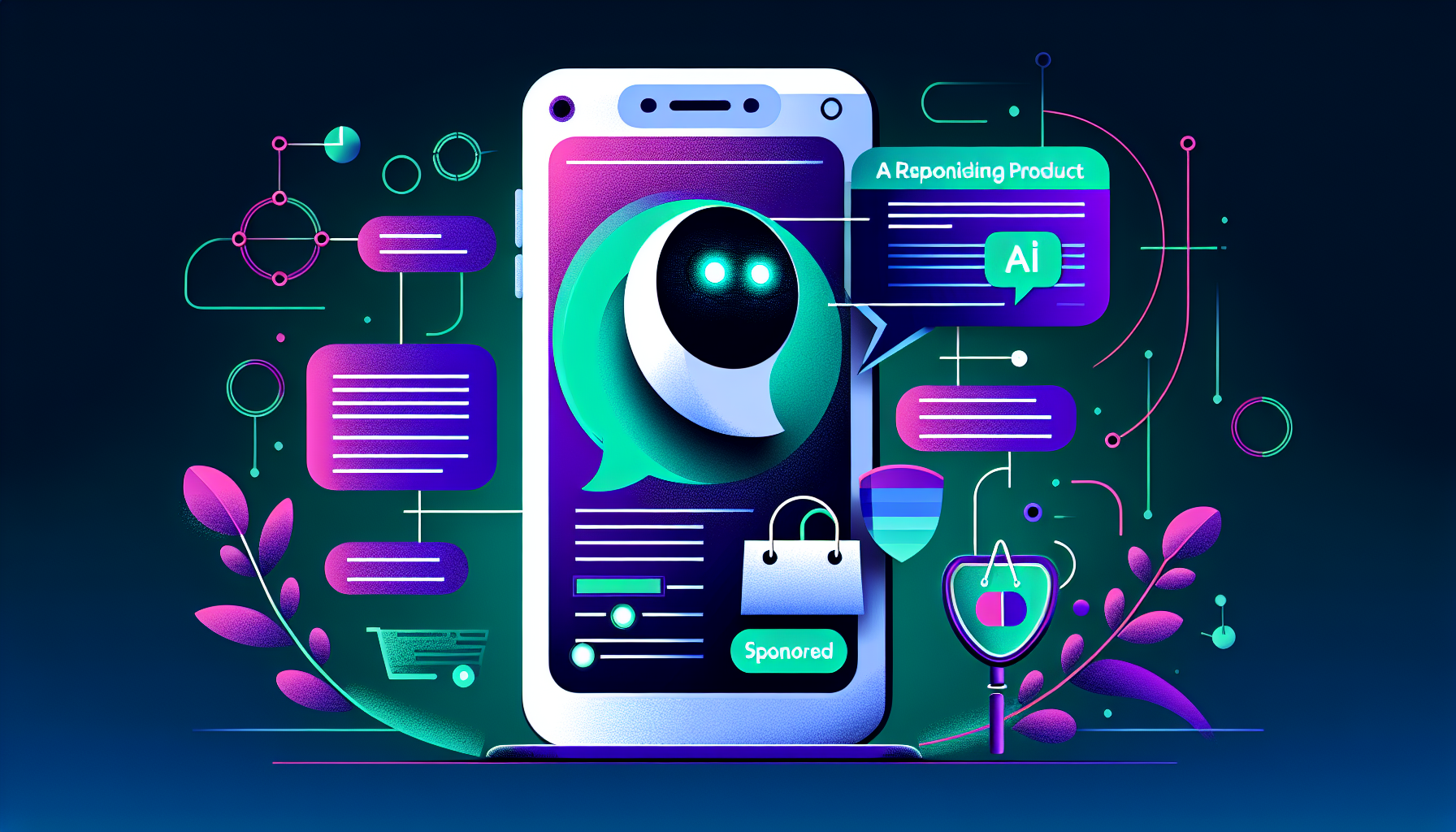
Ads will appear at the bottom of ChatGPT's responses.
They will be clearly labeled "Sponsored" and visually distinguished from organic responses (answers purely generated by the AI).
For example, if you ask "I'm looking for affordable running shoes in Tokyo," the AI might explain what to look for, and a partner sports shop's ad would appear below — that's the general idea.
The system works by matching relevant products and services based on the context of the conversation.
A concern for many users is whether their conversation content might leak to advertisers.
OpenAI has drawn a clear line on this:
In other words, OpenAI says you won't end up in a situation where "that company knows about my personal troubles."
Another key commitment is that "the content of responses will not be affected by advertising."
For instance, if you ask "What smartphone do you recommend?", the models recommended in the response will not change based on how much an advertiser has paid.
OpenAI's official position is that the AI's response logic and the ad delivery logic are completely separate.
The cost of running ChatGPT's free service is on a scale that's hard to imagine.
The inference cost (electricity and GPU usage) for a single query is estimated at a few to tens of yen, and with 800 million users each chatting dozens of times a month, the annual costs run into the hundreds of billions to trillions of yen.
Revenue from ChatGPT Plus at $20/month alone is nowhere near enough to cover that.
That's the background behind the need for advertising as a second revenue stream.
This structure is a pattern that has repeated itself throughout internet history.
Google provides free search and earns money through ads; YouTube offers free video viewing in exchange for ads.
ChatGPT has now joined this "free + ads" model, and understanding it that way makes the significance of this shift easier to grasp.
In February 2026, an advertising partnership with Adobe was announced.
This move to integrate with creation and management tools on the advertiser side signals that ChatGPT advertising is not a "one-off test" but part of a long-term strategy.
Some may be thinking, "Isn't this basically the same as Google ads?" Here's a breakdown of the differences:
The biggest difference is "the ability to suggest relevant products at the very moment a user is consulting the AI about a problem."
For example, you could show a toy ad to a user who is consulting the AI because they "can't decide on a birthday present for my child." This is an extremely deep level of contextual matching that is difficult to achieve with search ads.
On the other hand, "the conversation content is a black box for advertisers," which presents its own challenges. With Google, you can analyze in detail "what keywords triggered how many impressions," but with ChatGPT, only aggregated data is available.
Japanese users on the free ChatGPT plan are likely to start seeing ads below responses from late May onward.
Scenarios might include a restaurant reservation site ad appearing while searching for a place to eat, or a job listing service ad appearing during a career consultation.
It will feel strange at first, but since it's already commonplace on Google Search and YouTube, it may just become part of the scenery within six months.
For businesses, a new customer touchpoint is being created.
For example, a small online shop may be able to have its products shown to users consulting ChatGPT with queries like "what's a good [product]?"
Ad agencies will also urgently need to adapt to a new category called "AI search advertising (AIO advertising)."
According to someone at a Japanese ad agency, three major firms are already in the process of launching dedicated "AI assistant advertising teams."
Until now, SEO (search engine optimization) aimed at ranking highly in Google Search has been the dominant approach.
With ChatGPT advertising going full scale, the importance of content designed to be easily cited and recommended by AI — known as AIO (AI Optimization) — is set to surge dramatically.
Web media and corporate site managers are likely to face a major strategic pivot over the next six months.
In the US pilot tests, user reactions have been divided.
While some accept it with comments like "it's only natural since we're using it for free" or "it feels the same as YouTube," there is also strong criticism that "showing ads even to Go users paying $8 a month feels wrong."
In December 2025, cases of ChatGPT recommending apps unrelated to the question (such as Peloton and Target) spread online and caused a significant backlash. Even users on the $200/month Pro plan were caught up in it, and the post on X (formerly Twitter) was viewed approximately 460,000 times.
OpenAI's Chief Research Officer, Mark Chen, officially apologized, saying "Things that felt like advertising needed to be handled with more care. We fell short," and the feature in question was suspended.
Drawing on that experience, this formal ad test prioritizes transparency with features like a clear "Sponsored" label and a fixed position below responses.
A. Following the May 7, 2026 announcement, the rollout is planned to begin "within weeks."
Ads are expected to begin rolling out to Japanese users on free and Go plans from late May to early June. It is anticipated to be a gradual rollout rather than a simultaneous one.
A. No, ads will not be shown on Plus or higher paid plans.
Only the free plan and the ¥1,400/month Go plan are subject to ads. If you want to avoid ads entirely, the option to upgrade to Plus or higher is available. All plans — Plus, Pro, Business, Enterprise, and Education — are ad-free.
A. OpenAI has officially stated that "chat history, memory, and personal information will not be provided to advertisers."
Advertisers only receive aggregated data such as impressions and click counts. That said, OpenAI itself, which operates ChatGPT, is in a position to analyze conversations, so caution is still warranted when entering confidential information.
A. As of May 2026, there is no setting to "turn off ads only" for free or Go plan users.
Upgrading to a paid plan (Plus or higher) is the only option to eliminate ads entirely. In the US pilot tests, many users called for a settings option, so there is a possibility one may be added in the future.
A. As of May 2026, placing ads on ChatGPT is handled through OpenAI's screening process and has not been opened to the public yet.
In the initial phase, it is expected to be primarily through partnerships via Adobe or major agencies. Pricing structures, bidding mechanisms, and minimum spend requirements have not yet been disclosed. It is anticipated that a self-serve platform similar to Google Ads will be built out over the coming months.
A. OpenAI has explicitly stated that "response content is not influenced by advertising."
The AI's reasoning logic and the ad delivery logic are said to be completely separated. However, if users ever feel that a response seems off, it is a good habit to report it using the feedback feature.
The first thing to check is whether the plan you're using is subject to ads. If you're curious, open ChatGPT in a few weeks and see whether a sponsored slot appears below the responses. For those who want to avoid ads, upgrading to Plus or higher is currently the only way.
This article is a cross-post from AI Friends.