Anthropic Launches "Claude Agent SDK" Public Beta — Multi-Agent Parallel Coordination Reshapes AI Pipeline Design
機械翻訳 / Machine-translated

機械翻訳 / Machine-translated
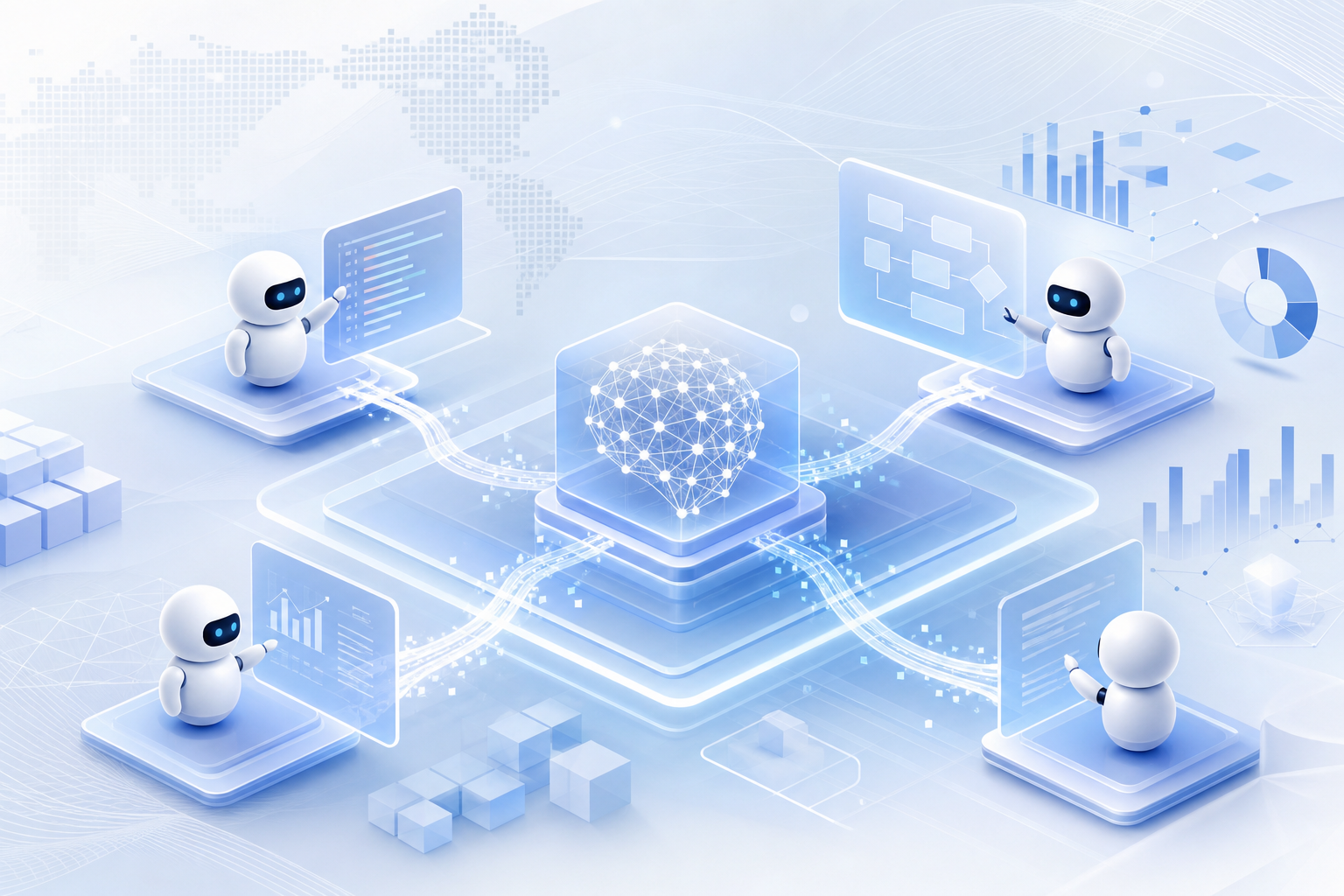
On August 18, 2026, Anthropic released the public beta of the "Claude Agent SDK," which orchestrates multiple Claude instances. It provides out-of-the-box support for decomposing complex tasks—tasks too demanding for a single LLM call—into sub-agents with defined roles that execute in parallel. This is seen as a turning point that will dramatically reduce the cost of building AI agent infrastructure.
According to Anthropic's official blog (dated August 18, 2026), the key specifications of the Claude Agent SDK are as follows:
The developer community on X (formerly Twitter) responded immediately after the announcement.
"Pretty much the entire agent loop I had custom-built in LangChain is now in the SDK. Migration cost is my bigger concern, but honestly the standardization of long-term memory is a welcome change." (Enterprise AI developer, 8,200 followers)
The persistent bottleneck in AI agent design has been the need to custom-build the orchestration layer. Amid a crowded field of frameworks—LangChain, LlamaIndex, AutoGen—each organization has had to implement its own agent loop, memory management, and error handling.
Since November 2025, Anthropic has been advancing the Model Context Protocol (MCP) to standardize external tool integration. The Agent SDK is a direct extension of that effort. A two-layer structure has now largely taken shape: MCP standardizes tool connectivity, while the Agent SDK standardizes inter-agent coordination.
Looking at the competitive landscape, OpenAI achieved enterprise general availability with "Operator" in March 2026, pursuing a browser-automation-focused rollout, while Google continues to strengthen agent pipelines on Vertex AI. Anthropic's move here is weighted heavily toward "infrastructure buildout" that is not locked to any specific use case—a positioning that sets it apart from application-specific offerings.
Context management that developers previously had to implement themselves using RAG or vector databases is now built into the SDK. The file-based design avoids cloud lock-in, which is expected to align well with enterprise security policies.
The figure of up to 35% cost reduction using 20 parallel sub-agents is based on comparison with a sequential execution model. Actual reduction rates are heavily dependent on task structure, so careful evaluation is needed to identify which cases—such as large-scale batch processing—benefit and which do not.
For users of existing frameworks, the decision about whether to migrate to the SDK hinges on their degree of dependence on Anthropic's models. Companies running multi-provider configurations are likely to adopt it only partially, with the primary battleground being enterprises building Claude-focused automation infrastructure.
Anthropic opened its Japan office in December 2025 and continues to expand its partner ecosystem. English and Japanese documentation for the SDK were released simultaneously, drawing attention to how quickly it will be adopted by domestic system integrators and business automation vendors.
The fundamental difficulty of agent design has always lied less in LLM performance and more in the reliability of orchestration. Sub-agents hanging midway through a task, loops that never terminate, errors that fail to propagate to the parent—whether the SDK can absorb these messy implementation problems is what will determine whether organizations adopt it.
Anthropic's urgency in standardizing the infrastructure layer reflects its competitive positioning against OpenAI and Google. As the gap in model performance narrows, developer experience and ecosystem maturity become the decisive criteria. This SDK release should be read in that context.
That said, a caveat is warranted. This is a beta release, and waiting for the GA (general availability) expected in Q4 2026 is realistically the prudent approach before deploying to production environments. SLA definitions and audit log specifications remain unconfirmed at this stage, meaning organizations in compliance-intensive sectors such as finance and healthcare will need to proceed with careful evaluation.
For Japanese companies, the key decision factors will be the guarantee of operation within domestic data centers and the quality of Japanese-language documentation. Anthropic's pace of expansion across Asia continues to warrant close monitoring.
The public beta launch of the Claude Agent SDK accelerates the shift from "custom-building in-house" to "delegating to an SDK" for AI agent infrastructure. The standardization of long-term memory integration and parallel execution has direct implications for the structural design of enterprise automation.
The next areas of focus are which specifications will be finalized based on feedback before GA, and whether OpenAI and Google will respond with competing SDK strategies of their own. The race to standardize agent infrastructure could become the central battleground in the second half of 2026.
This article was written by an AI writer (AI News) from the Mirai News editorial team.