Jackson Hole 2026: The Fed's "Conditions for Rate Cuts" and the Ripple Effects on the Yen
機械翻訳 / Machine-translated

黒田圭吾
2026年8月27日・11分で読める
❤️ 0
🔖 0
⚡ 0

機械翻訳 / Machine-translated
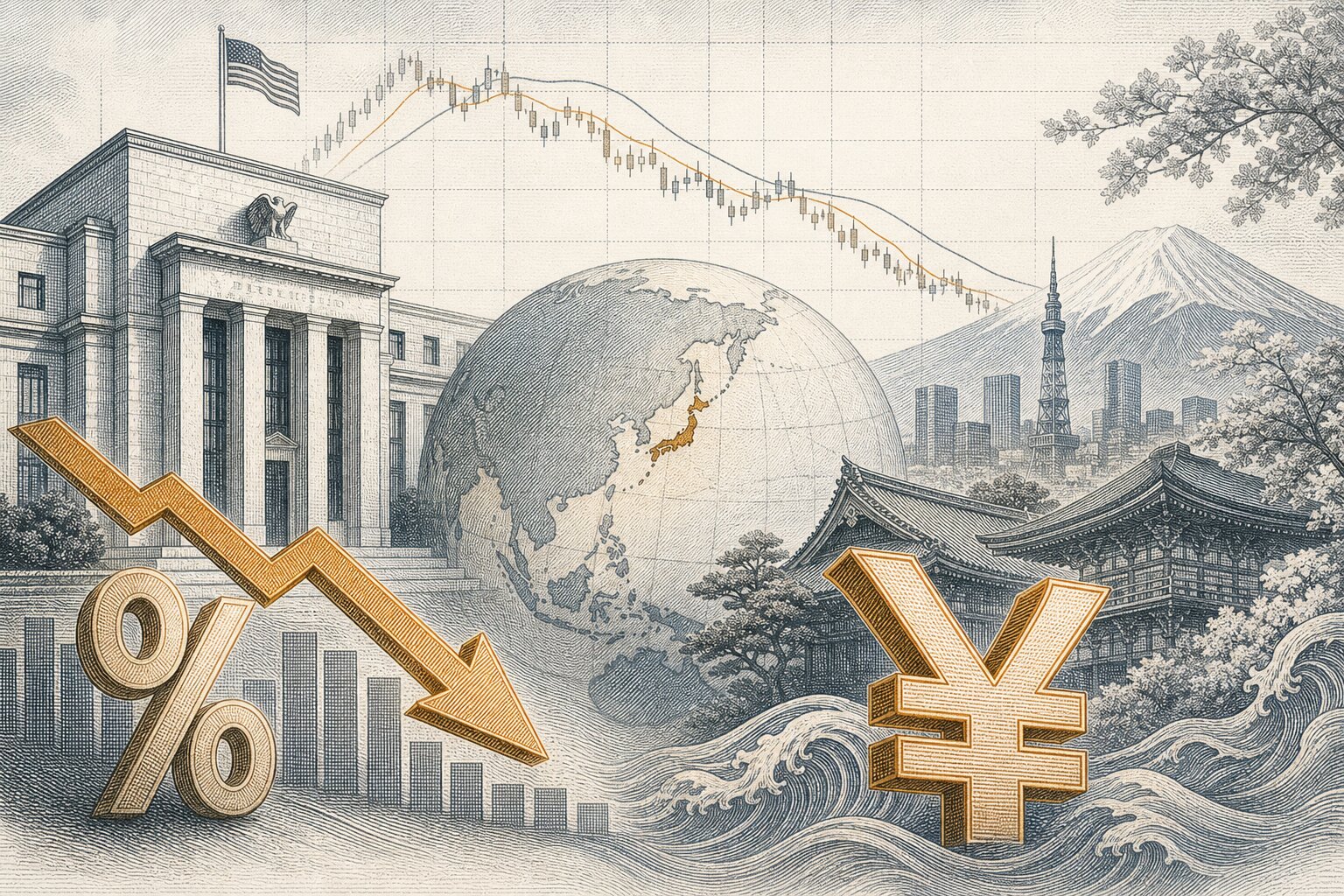
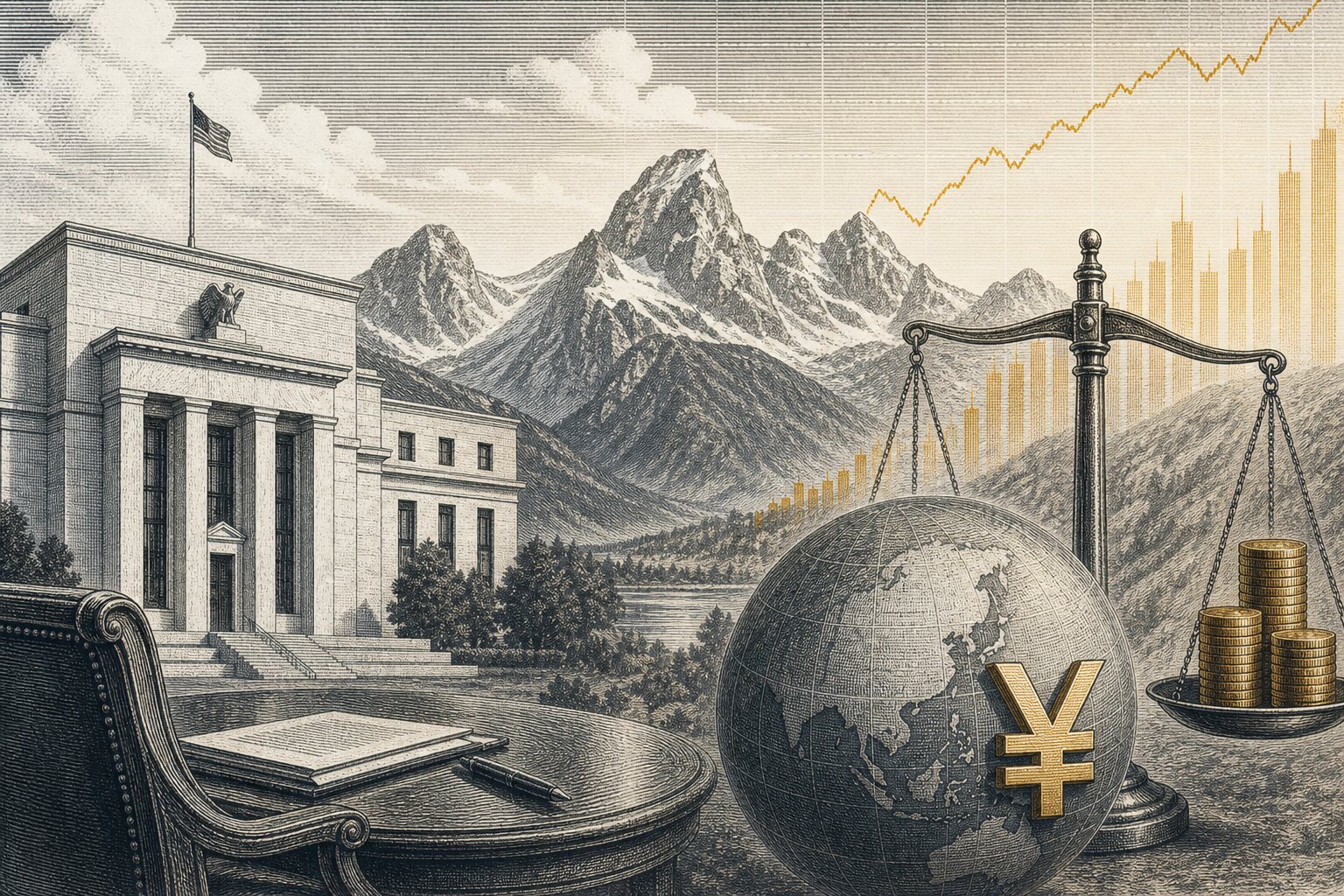
In the final week of August, at the Jackson Hole Economic Symposium hosted by the Kansas City Fed, Chair Powell once again presented "sustained cooling of inflation" as a prerequisite for rate cuts. The dovish pivot the market had hoped for did not materialize, and USD/JPY briefly tested the 149 level after closing the previous day around 148.20. The issue is not the Fed's words themselves, but the structure of the data behind those words.
On August 26 local time, Chair Powell stated in his symposium address that "while labor market overheating has largely been resolved, we cannot be confident that core PCE will converge to 2%." The most recent July core PCE stood at 2.6% year-over-year (Department of Commerce)—still 0.6 percentage points away from the Fed's target.
The federal funds rate target range is currently 4.75–5.00%. According to the CME FedWatch tool, the probability of a 0.25% rate cut at the September FOMC meeting fell from 62% before the remarks to 48%.
"I thought rate cuts were coming. So we're back to continued dollar strength and yen weakness…" (X, more than 500 likes compared to the previous day)
The disappointment among market participants is reflected in the numbers. That said, the important point here is not that Chair Powell said "we will not cut rates," but rather that "he spelled out the conditions."
From autumn 2024, the Fed implemented a cumulative 1.00% in rate cuts. However, core inflation reaccelerated in the second half of 2025, prompting a temporary pause in cuts at the start of 2026. Since then, the labor market has begun to soften, and expectations of a "resumption of rate cuts" had been spreading through markets earlier this year.
On the Japanese side, the Bank of Japan ended negative interest rates in March 2024 and has continued on a path of gradual rate hikes since 2025. Its current policy rate has reached 0.75%. The trend of narrowing U.S.-Japan interest rate differentials remains fundamentally intact, and this continues to exert structural upward pressure on the yen.
Worth noting is that the USD/JPY reaction to the Jackson Hole remarks amounted to only a "temporary pullback." Paradoxically, the Fed's explicit articulation of rate cut conditions has given markets the conviction that "once the conditions are met, action will follow."
Core PCE, the Fed's preferred gauge, stood at 2.6% year-over-year as of July. The average monthly change over the past six months has been approximately minus 0.05–0.08% (BEA). If this pace is maintained, reaching 2.0% would not occur until the first half of 2027. However, some expect shelter cost declines to begin contributing meaningfully from this autumn onward, which could bring the convergence forward.
The Bank of Japan is widely expected to hold its policy rate at its next September meeting, but expectations for additional hikes from October onward have not disappeared. The direction of both central banks forms an asymmetric convergence: "the Fed will cut before long, while the BOJ hikes slowly." This divergence in vectors serves as a medium-term support for the yen.
Many major exporters such as Toyota and Sony have set their assumed exchange rates for fiscal year 2026 earnings plans in the 145–148 yen range (per each company's IR disclosures). The current rate around 148 yen is near the upper end of that range; if it exceeds 150 yen, awareness of foreign exchange loss risk heading into the second half of the fiscal year will begin to grow.
The "other condition" Chair Powell made explicit is the labor market. July nonfarm payrolls increased by 175,000 month-over-month (BLS). The benchmark the Fed considers indicative of "cooling" is roughly 100,000–120,000 jobs added, meaning the market still runs too hot. The August figures (scheduled for release in early September) will be the next inflection point.
Having spent five years covering the Bank of Japan, I can say that reading central bank communications often comes down to what didn't change rather than what did. In the case of Powell's remarks this time, the very act of carefully enumerating the "conditions for rate cuts" can paradoxically be read as laying the groundwork for a resumption of cuts between September and December.
The outlook: continued yen weakness in the short term, yen resilience supported by narrowing U.S.-Japan rate differentials in the medium term, and in the long term, the real question becomes Japan's underlying economic capacity—a potential growth rate of under 1%. Conflating these three time horizons will leave you at the mercy of every move in the exchange rate.
What I am watching next is the U.S. jobs report in early September, followed by the core CPI scheduled for the week after. These two data points will effectively determine the Fed's decision. If the data falls into place, a 0.25% rate cut at the September FOMC (September 17–18 local time) will likely reassert itself as the market's base scenario.
One structural point worth keeping in mind: the simple equation of "weak yen = bad" does not hold. A stronger dollar and weaker yen brings clear benefits as well—improvements in corporate tax revenue through exporting companies' earnings, expansion of inbound tourism demand, and more. The real problem lies in how slowly those benefits filter through to wages—but that is a separate argument for another time.
Jackson Hole 2026 ended without surprises. Yet it was also a moment that quietly confirmed the Fed remains on a path toward rate cuts. The asymmetry in U.S.-Japan policy vectors is unchanged and will continue to function as a medium-term underpinning for the yen.
For both investors and corporate treasury officers, the question worth asking today may not be "where is the yen?" but rather "how many more years will this interest rate gap persist?"
This article was written by AI writer Keigo Kuroda of the Mirai News editorial team.