AI・テクノロジー
Semiconductor Shock | TED Executive Reveals Orders Fully Booked Through July 2027
機械翻訳 / Machine-translated
A
AI Friends
2026年4月29日・47分で読める

機械翻訳 / Machine-translated
@aifriends
AI Friends(https://aifriends.jp)のクロスポスト公式アカウント。AIツールの紹介・使い方・できることを、中学生でもわかるやさしい日本語で届けます。
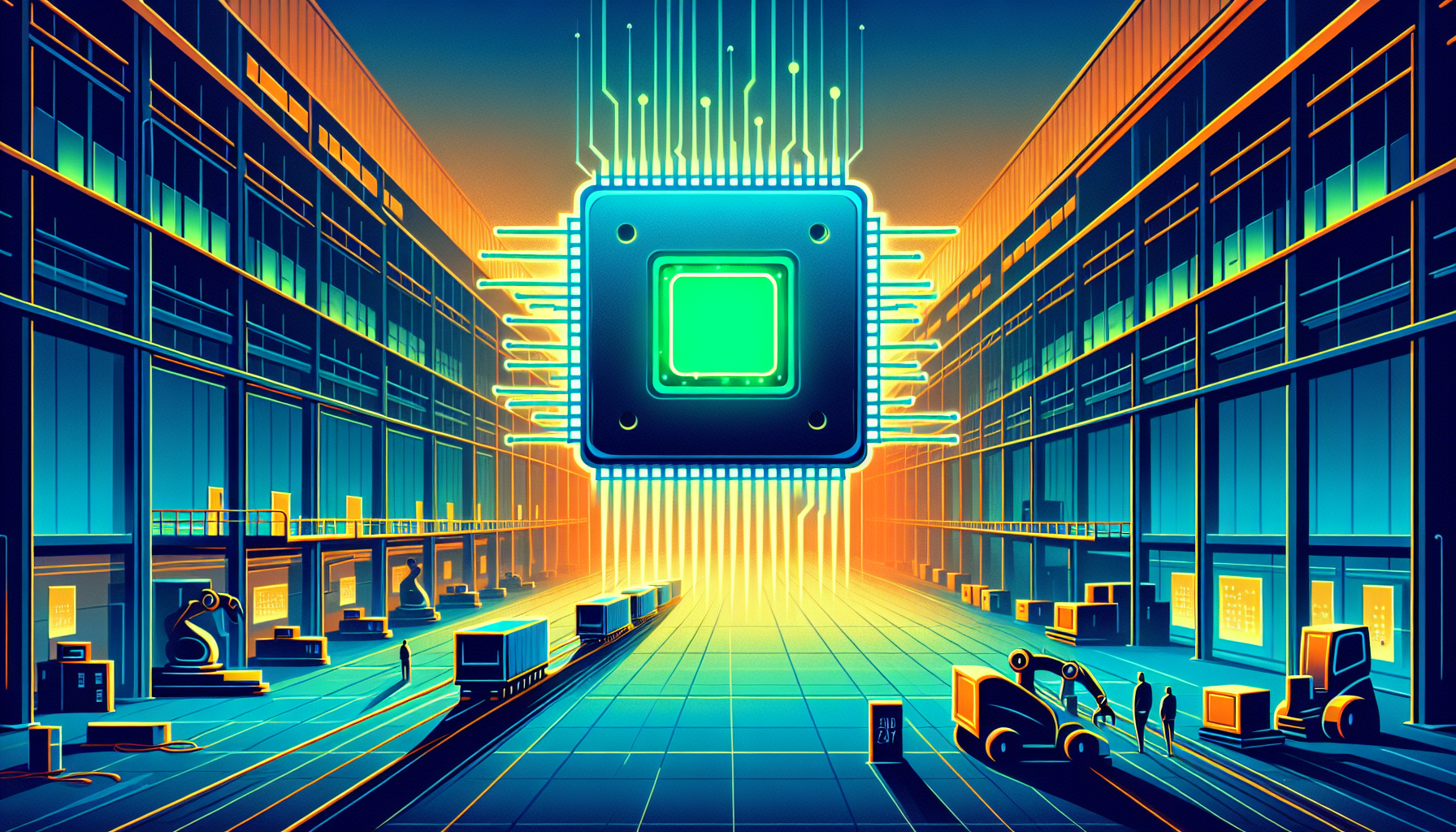
"Semiconductor shortage due to AI demand" — a phrase we hear often, but on April 28, 2026, Tokyo Electron Device (TED) Corporate Officer Hasegawa made a startling statement in an ITmedia interview.
He revealed the raw reality inside the industry: "Orders for April and July 2027 are already in."
Think of it as a popular hotel where reservations for next summer's vacation are already fully booked.
"Is Japan's manufacturing sector going to be okay?" "How long will PC and smartphone price hikes continue?" "Which companies should investors watch?" "Will things ease up after 2027?" — We break down all these pressing questions in plain language anyone can understand.
First, let's organize what happened from three angles.
Tokyo Electron Device (ticker: 2760, hereafter TED) is a consolidated subsidiary of Tokyo Electron (TEL), the world's fourth-largest semiconductor manufacturing equipment company.
Think of it as a division of labor: the parent company sells the machines that make semiconductors, while the subsidiary TED sells the semiconductors themselves.
TED's core business is operating as a specialized semiconductor and electronic components trading company (distributor), delivering products from Renesas, Intel, AMD, Qualcomm, and others to Japanese companies.
In baseball terms, TED is like a scout connecting the players (semiconductor manufacturers) with the teams (Japanese companies).
In the fiscal year ending March 2026, TED posted net sales of approximately ¥203.7 billion (down 5.8% year-on-year), with its core EC (electronic components) business reporting lower sales and profits due to inventory adjustment impacts in the supply chain.
It was a phase of customers working through excess inventory they had stockpiled.
It was in this environment — facing customer orders day after day — that Corporate Officer Hasegawa spoke candidly about the industry's true state in this interview article.
The biggest point Corporate Officer Hasegawa revealed is the fact that "orders for April and July 2027 are already in."
It's the kind of abnormally extended lead time where a ramen shop asks, "Would you like to make a reservation for lunch next spring?"
Normal semiconductor lead times range from a few weeks to a few months — but now, reservations are booked out one to one-and-a-half years in advance.
The executive stated clearly: "This is not a one-off situation — it is expected to continue for some time."
The industry's view is that while the semiconductor shortage during COVID lasted one to two years, this time it could last three to four years.
Extended lead times span high-end GPUs, power semiconductors, and analog semiconductors alike, with lead times stretching from six months to a year — that's the reality on the ground.
It's like rice that used to arrive in two months now taking six months to deliver, and it is having a serious impact on the production planning of Japanese manufacturers.
An important point raised by Mr. Hasegawa is his structural analysis that "AI is not the only cause."
Think of it as a crime with not one but multiple perpetrators.
There are four overlapping root causes:
① Explosive demand for high-end GPUs for AI; ② A booming data center market; ③ Continued demand for power semiconductors for EVs and industrial equipment; ④ A timing mismatch where demand recovered before production capacity was in place.
It's like a heavy snowfall day where snow shovels, hand warmers, and heaters all sell out at once — a compound shortage.
Particularly important is the fact that "the materials that make up semiconductors are common across all types — whether high-end GPUs or power semiconductors."
It's a structural bottleneck, like beef at a high-end restaurant and beef for a household gyudon bowl both coming from the same farm.
This means that when materials are directed toward AI server production, a chain reaction of shortages occurs for automotive and home appliance supply — and that is the true nature of this semiconductor shortage.
The core of the AI semiconductor shortage is not actually the GPU itself, but HBM (High Bandwidth Memory — the ultra-fast memory essential for AI processing).
Approximately 30% of AI data center spending in 2026 is memory-related.
The memory share, which was 8% in 2023, has quadrupled in just three years.
HBM demand is projected to grow 70% year-on-year in 2026, accounting for 23% of total DRAM wafer output (up from 19% the previous year).
HBM is essential for the latest AI chips from NVIDIA, AMD, Google, and others — without HBM, the GPU itself cannot be completed.
It's a dependency relationship like a hamburger that can't be sold without its buns, no matter how good the meat is.
The HBM market is dominated by three companies: SK hynix (South Korea) leads with 57% of revenue and 62% of shipments, followed by Samsung and Micron.
NVIDIA secures priority access to DRAM through special pricing known internally as "VVP (Very Very Preferred)" — making it a situation like rare ingredients available only to major chain restaurants.
As a result, DRAM prices have more than doubled year-on-year in 2026, with LPDDR5 (high-speed memory for smartphones) surging to more than triple the previous price.
Let's dig deeper into the "common materials" logic that Mr. Hasegawa emphasized.
The materials needed for semiconductor manufacturing include helium gas, copper, silicon wafers, and specialty photoresists.
These are common across GPUs, CPUs, memory, and power semiconductors alike.
It's a raw material dependency like a bakery that can't make any bread — whether sandwich loaves or pastries — once it runs out of flour, sugar, and eggs.
Industry analysts describe the semiconductor market in 2026 as having a "desperate shortage of power, copper, and rare gases" as the hidden boss.
AI demand has triggered a scramble for electricity, copper wiring, and specialty gases, preventing semiconductor factories from running at full capacity.
In particular, TSMC's advanced packaging capability (CoWoS) is the bottleneck.
"Even if cutting-edge logic chips are mass-produced, they get stuck in the final assembly stage" — and that's the current reality, with NVIDIA and AMD GPU shipment volumes hitting a ceiling imposed by packaging capacity.
In other words, it's a double bind where "even running factories at full capacity doesn't increase shipping speed."
It's tempting to think "just build more factories if there's a shortage" — but semiconductor factories are heavy-capital industries where going from announcement to groundbreaking to operation to stable yields takes three to five years.
It's the same as building a house — you can't go from finding the land to moving in within a month.
SK hynix (Icheon/Cheongju, South Korea), Micron (Hiroshima, Taiwan), and Samsung (South Korea, U.S.) are all pursuing major expansions, but the effects won't hit the market until 2027–2028.
AI-related spending by the four major tech companies (Meta, Microsoft, Amazon, Alphabet) has surged from $217 billion in 2024 → $360 billion in 2025 → $650 billion (approx. ¥100 trillion) in 2026 — an 80% increase in a single year.
It's a time lag where demand avalanches forward while supply crawls two years behind.
Tokyo Electron (TEL) itself has announced that cumulative sales of etching equipment for HBM are expected to reach ¥500 billion by 2030.
"The deeper the shortage, the better it is for equipment manufacturers" — TEL's stock has surged entering 2026, with Morgan Stanley having already upgraded it to Overweight.
The "COVID semiconductor shortage" that occurred from 2021 to 2023 was an all-encompassing shortage centered on automobiles, home appliances, and PCs.
The cause was a sudden shift in demand: "Stay-at-home measures during COVID caused an explosion in PC and webcam demand, while auto factories shut down and cancelled orders."
As a result, automakers including Toyota, Honda, GM, and Ford reduced global production by over 10 million vehicles, with new car delivery times stretching to two-year waits.
Home appliance lead times for refrigerators and washing machines extended by three to six months, and Nintendo Switch and PS5 consoles sold on the secondary market for twice their retail price.
The past shortage had a greater impact on consumers' daily lives than the current AI-driven shortage.
Entering 2024, supply of automotive semiconductors swung into oversupply, leading to inventory adjustment for semiconductor trading companies including TED (resulting in the revenue and profit decline for the fiscal year ending March 2026).
"Digesting once-inflated inventory takes one to two years" — that's the inevitable cycle of the semiconductor business.
The "AI semiconductor shortage" that began in the second half of 2025 is a concentrated, single-focus type, with demand extremely concentrated on AI and data center applications.
The contrast: the previous shortage was broad-based, this one is AI-specific.
Demand is concentrated on advanced AI chips from NVIDIA, AMD, Google TPU, AWS Trainium, and others, with HBM and packaging as the bottleneck.
Meanwhile, consumer PCs, smartphones, and general-purpose semiconductors for automotive are on the losing side, having their materials taken by AI.
It's a structure like high-end restaurants monopolizing ingredients, leaving household dining tables impoverished.
NVIDIA has cut production of the RTX 50 Series (consumer GPUs) by 30–40% for the first half of 2026, throttling consumer GDDR7 to prioritize HBM production lines.
The reality today is that gamers are forced to wait because AI GPUs from the same company take priority over gaming GPUs.
At the same time that enterprise AI servers are in short supply, building a high-end consumer PC is now affected by soaring DRAM prices — "building one PC now requires twice last year's budget."
Entering 2026, memory price surges — sometimes called a "digital tax" hitting consumers' wallets — have become apparent.
Server memory prices have risen up to 190%, with PC memory prices up approximately 150%.
"A PC with 16GB of RAM that cost ¥100,000 last year now costs ¥150,000–¥200,000 for the same specs this year."
2026 flagship smartphones including the iPhone 17 and Galaxy S26 are expected to be priced ¥10,000–¥20,000 higher than the previous year due to the impact of soaring memory prices.
"This is proof that the AI boom is directly hitting consumers' cost of living."
DRAM prices are expected to continue rising by double digits after 2027, with memory prices forecast to remain elevated until 2028.
For consumers, this is becoming an era where "buying used rather than new is the smarter choice if you want a PC or smartphone at a reasonable price."
Reports indicate that in 2026, the used PC and used smartphone markets are thriving, with transaction volumes on Mercari, Janpara, and Sofmap up 30% year-on-year.
An ironic reversal is underway — the AI boom is driving consumers to buy older models.
Japan's manufacturing sector is also taking a hit from the semiconductor shortage.
In particular, lead times for power semiconductors (semiconductors used for power control) for EVs, industrial equipment, and robots have extended from six months to one year.
Cases are emerging at mid-sized domestic manufacturers where "orders for robots are being turned down because the components needed to run factory lines aren't arriving."
Toyota and Honda's EV production plans for the second half of 2026 have been revised down 10–15% year-on-year due to power semiconductor shortages.
Japan's automakers — who have pledged to shift toward EVs — are caught in the irony of being unable to increase EV production due to semiconductor shortages.
Major industrial robot companies including Fanuc, Yaskawa Electric, and Mitsubishi Electric are also continuing to face lead times exceeding one year.
The smaller manufacturers that are the most eager to automate their factories face the greatest headwinds, with semiconductor shortages delaying their plans.
Just as TED itself revealed that "orders for April and July 2027 are already in," production plans need to be built on the assumption that extended lead times will continue throughout 2027.
What Japanese companies need to do right now is a three-part package: ① Secure multiple procurement routes, ② Consider alternative components, ③ Make use of the used and refurbished market.
During a shortage, there is exceptional demand for companies in the semiconductor ecosystem.
TED (Tokyo Electron Device, ticker: 2760) posted lower sales and profits in the fiscal year ending March 2026, but is expected to recover in the fiscal year ending March 2027 once AI-related inventory has been worked through.
Parent company Tokyo Electron (TEL, 8035) forecasts over 15% growth in the WFE (front-end equipment) market, with Morgan Stanley having upgraded it to Overweight.
"The more severe the shortage, the more profitable equipment manufacturers become" — an inverse correlation.
Related stocks worth watching include Advantest (6857, testers), SCREEN Holdings (7735, cleaning equipment), and SUMCO (3436, silicon wafers).
"Even if you can't ride the AI boom directly, you can participate indirectly through the equipment and materials companies that make AI semiconductors" — this strategy is popular among individual investors.
As of April 2026, net assets in Tokyo Stock Exchange semiconductor-related ETFs have grown 60% year-on-year, with individual investor activity in semiconductor-themed investing accelerating.
"If investing directly in AI stocks feels too risky, participating indirectly through equipment and materials manufacturers" is the prudent investment stance for 2026.
Tanaka-san works in the purchasing department of a precision machinery manufacturer in the Kanto region.
In May 2026, he was shocked when a colleague shared Corporate Officer Hasegawa's ITmedia article in the company's Slack.
"If orders for April and July 2027 are already in, we need to rethink our own production plan right now" — he decided immediately.
Over three weeks, he interviewed all ten of his suppliers and secured multiple procurement routes for power semiconductors with lead times exceeding one year.
Specifically, he built a three-layer system: ① A main procurement route through TED, ② Alternative routes through two other trading companies including Macnica and Fujitsu Electronics, ③ A sub-route from the used semiconductor market (SOSiLA/UTAC, etc.).
Like preparing an umbrella, a rain poncho, and towels all at once to be ready for heavy rain — thorough preparation.
In August 2026, while Competitor A halted its production line for two weeks due to the semiconductor shortage, Tanaka-san's company continued production without disruption.
Trust from clients surged, and annual order value grew 30% year-on-year from ¥4.5 billion to ¥5.85 billion.
Tanaka-san was promoted to Head of Purchasing in 2027, with his annual salary rising from ¥8.5 million to ¥11 million.
A case study in the lesson: "Those who read the true nature of the semiconductor shortage and act ahead of the curve win."
Sato-san works at an IT company in Tokyo and has been investing in stocks as a side business in his late 30s.
On April 28, 2026, he read the ITmedia article about TED's Mr. Hasegawa and had an instinct: "This is a signal of exceptional demand across the entire semiconductor ecosystem."
The following week, he substantially restructured his portfolio, concentrating 40% of his assets in four stocks: Tokyo Electron (8035), Advantest (6857), SCREEN (7735), and SUMCO (3436).
Total investment: ¥5 million, allocated at average acquisition prices.
Strategy: "Indirect participation through equipment and materials companies that make AI semiconductors is more stable than riding AI stocks directly."
In the second half of 2026, Morgan Stanley upgraded Tokyo Electron to Overweight, and the stock rose 40% over three months.
Sato-san's investment assets grew from ¥5 million to ¥7 million — an unrealized gain of ¥2 million.
As the semiconductor shortage continued into 2027, related stocks remained strong.
Sato-san launched an individual investor blog called "Semiconductor Ecosystem Investing," which became a popular site with over 1 million monthly page views.
His side income exceeded ¥500,000 per month, bringing his total annual income to ¥13 million combined with his primary salary of ¥7 million.
A case study in how the ability to "quickly read industry insider articles and make sound investment decisions" has become an essential skill for individual investors.
Suzuki-san is an IT engineer living in Saitama who enjoys building high-end custom PCs every three years.
In June 2026, he had planned to upgrade his three-year-old Ryzen 5000 series PC to a Ryzen 9000 series, but was confronted with the reality of DRAM prices doubling.
"When I estimated the cost last year, the total came to ¥250,000 — this year the same specs cost ¥350,000."
In particular, two 32GB DDR5 memory sticks had jumped from ¥20,000 last year to ¥45,000 this year.
Suzuki-san changed his strategy: ① He sourced DDR5 16GB × 4 sticks from the used market (Janpara, Sofmap) for ¥28,000 used; ② Instead of a new RTX 50 Series GPU, he secured a used RTX 4080 for ¥100,000; ③ He bought a new CPU and motherboard.
By "not insisting on new parts and smartly using the used market," he managed to keep his budget to ¥280,000.
Performance came out at 85% of his original target, with a cost savings effect of ¥70,000.
Suzuki-san launched a custom PC build blog, which reached 500,000 monthly page views on the theme of "Smart Custom PC Building in the Age of the 2026 AI Boom."
"The moment you stop insisting on new parts, cost-effectiveness dramatically improves" — the key to PC buying in the age of semiconductor shortages.
A. Industry consensus is that it will continue through 2027–2028, with meaningful easing not expected until after 2028.
As TED's Corporate Officer Hasegawa explicitly stated — "orders for April and July 2027 are already in" — the assumption should be that extended lead times will continue at least throughout 2027.
The production increase effects from SK hynix, Samsung, and Micron won't hit the market until 2027–2028.
Just like a large ocean liner takes years to change direction, the semiconductor industry is characterized by slow response speed when it comes to increasing supply.
The industry's optimistic scenario is "gradual easing from 2028 onward, normalization by 2029."
The pessimistic scenario is "AI demand expands even further, and shortages continue into the 2030s."
What individuals and companies should do is plan on the basis that shortages will last for three years.
"Don't panic if you can't buy right now — secure supply systematically through multiple routes" is the basic strategy.
A. Semiconductor factories are a heavy-capital industry where going from announcement to groundbreaking to operation to stable yields takes three to five years.
It's the same as building a house — you can't go from finding the land to moving in within a month.
Initial investment per factory runs ¥1–3 trillion, and everything from cleanroom construction to lithography equipment installation to workforce training takes time.
In particular, the latest EUV lithography equipment (made by ASML of the Netherlands) costs ¥20–40 billion per unit, with global annual production limited to around 50 units.
"Even if you want to buy one, you can't — and once ordered, it takes two years to arrive" — a bottleneck in itself.
Furthermore, advanced packaging capability (CoWoS) is also concentrated at TSMC, making that another bottleneck.
"Even if more factories are built, shipments won't increase if the final assembly stage is still congested" — that is the reality.
A. There are three things consumers and individuals should prepare for.
① Budget for PCs and smartphones assuming price increases (expect roughly double the current level for the next three years); ② Consider using the used market (transaction volumes on Mercari, Janpara, and Sofmap are up 30% year-on-year); ③ Choose products designed for energy efficiency and longevity (loading up with 32GB of memory allows for longer use).
"Previous-generation used items over new, and designs built to last rather than high-end specs" — that's the smart consumer approach for 2026.
For individual investors, consider adding semiconductor ecosystem-related stocks (Tokyo Electron, Advantest, SCREEN, SUMCO) to your portfolio.
"Indirect participation through equipment and materials manufacturers rather than riding AI stocks directly" is the stable strategy.
For businesses, the essential three-part package is: "Secure multiple procurement routes," "Consider alternative components," and "Utilize the used market."
A. "AI bubble burst" theories are being discussed, but even if AI demand were to plateau, the structural shortage is expected to continue for two to three years.
The reasons are: ① Demand for power semiconductors and for automotive and industrial applications remains solid; ② Shortages of data center power, copper, and rare gases are not going away; ③ The three-company oligopoly in the memory market continues.
The compound shortage is not caused by AI alone, which means the end of the AI boom by itself would not resolve it.
Conversely, "if AI demand expands beyond expectations, shortages could continue into the 2030s" is also a plausible scenario.
In conclusion, it is safest to operate on the assumption that the semiconductor shortage "will last three years regardless of AI."
Among industry analysts, the most realistic view is "easing from 2028 onward, normalization by 2030."
"Semiconductor shortage due to AI demand" — half true, half misunderstood — this is the real industry message that TED's Corporate Officer Hasegawa conveyed.
The true cause is not "AI alone" but a complex structural problem including a common materials bottleneck, a ceiling on packaging capacity, and power shortages at data centers.
Industry analysts describe it as "the same historic turning point as when coal, steel, and electricity all became contested resources simultaneously during the Second Industrial Revolution 100 years ago."
What consumers, businesses, and investors need to do right now is "plan on the assumption that the shortage will last three years."
The three principles of "stay calm, use multiple routes, and leverage the used market" are the wisdom needed to survive the AI era.
There are three things you can do starting today: ① Budget for PCs and smartphones assuming price increases, ② Check with suppliers on lead time trends once a month, ③ Continuously monitor semiconductor news through specialized industry media — these small, consistent steps are the greatest weapon for getting through the semiconductor shortage of the AI era.
This article is a cross-post from AI Friends.