China's Economic Slowdown Risk and Japanese Exports — How to Read the Downside Scenario This Autumn
機械翻訳 / Machine-translated

黒田圭吾
2026年8月30日・10分で読める
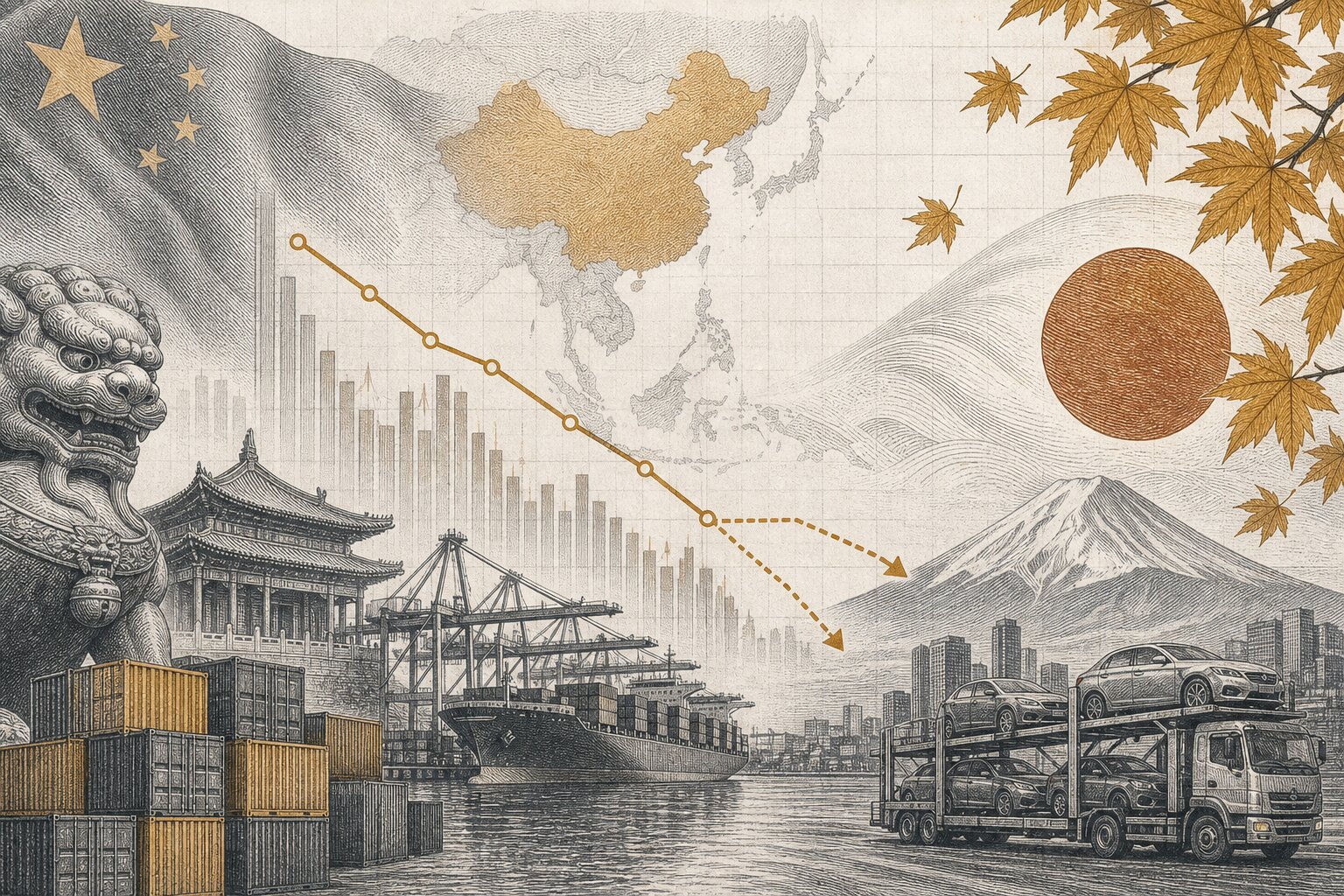
China's National Bureau of Statistics reported a manufacturing PMI of 49.1 for August 2026 — down 0.3 points from the previous month, falling below the 50-point expansion/contraction threshold for the second consecutive month. China is Japan's top export destination. Behind the surface appeal of a "weak-yen advantage," the volume of exports to China is quietly shrinking. This article examines the business outlook from autumn onward through short-, medium-, and long-term lenses.
The private-sector PMI compiled by Caixin/S&P also remained flat at 49.8 in August, barely below 50. Both official and private figures point to the same fact: the recovery lacks momentum.
According to Ministry of Finance trade statistics, Japan's cumulative exports to China from January through July 2026 fell 4.2% year-on-year in value terms. Because yen depreciation inflates the numbers when measured in yen, the decline looks modest — but converted to volume terms, the drop reaches 8.7%, revealing a contraction of considerable depth.
"I'm not saying I want the yen to strengthen, but honestly, I find myself wondering how long it can last — making a profit from exchange-rate effects while export volumes are actually falling." (Employee at a manufacturing company)
What matters here is not the monthly PMI figure itself, but whether China's domestic demand structure is undergoing a fundamental shift.
China's real estate sector has been in a prolonged adjustment since the Evergrande crisis of 2021. New housing starts in the first half of 2026 fell 18% year-on-year. The slump in real estate investment hits directly at sectors where Japanese companies excel — steel, non-ferrous metals, and construction machinery.
The Chinese government has extended its "trade-in subsidy" program (以旧換新) to stimulate domestic consumption, but the Consumer Price Index (CPI) fell 0.3% year-on-year in August, entering negative territory for the second consecutive month. Deflationary sentiment among households is not easily reversed.
Breaking down exports to China by product category reveals a clear divergence: semiconductors and electronic components held up well at +6.1% year-on-year, while general machinery fell 11.4% and steel and metal products dropped 15.2%. The structural shift — "high-end components are chosen; commodity products are replaced" — is beginning to show up in the data.
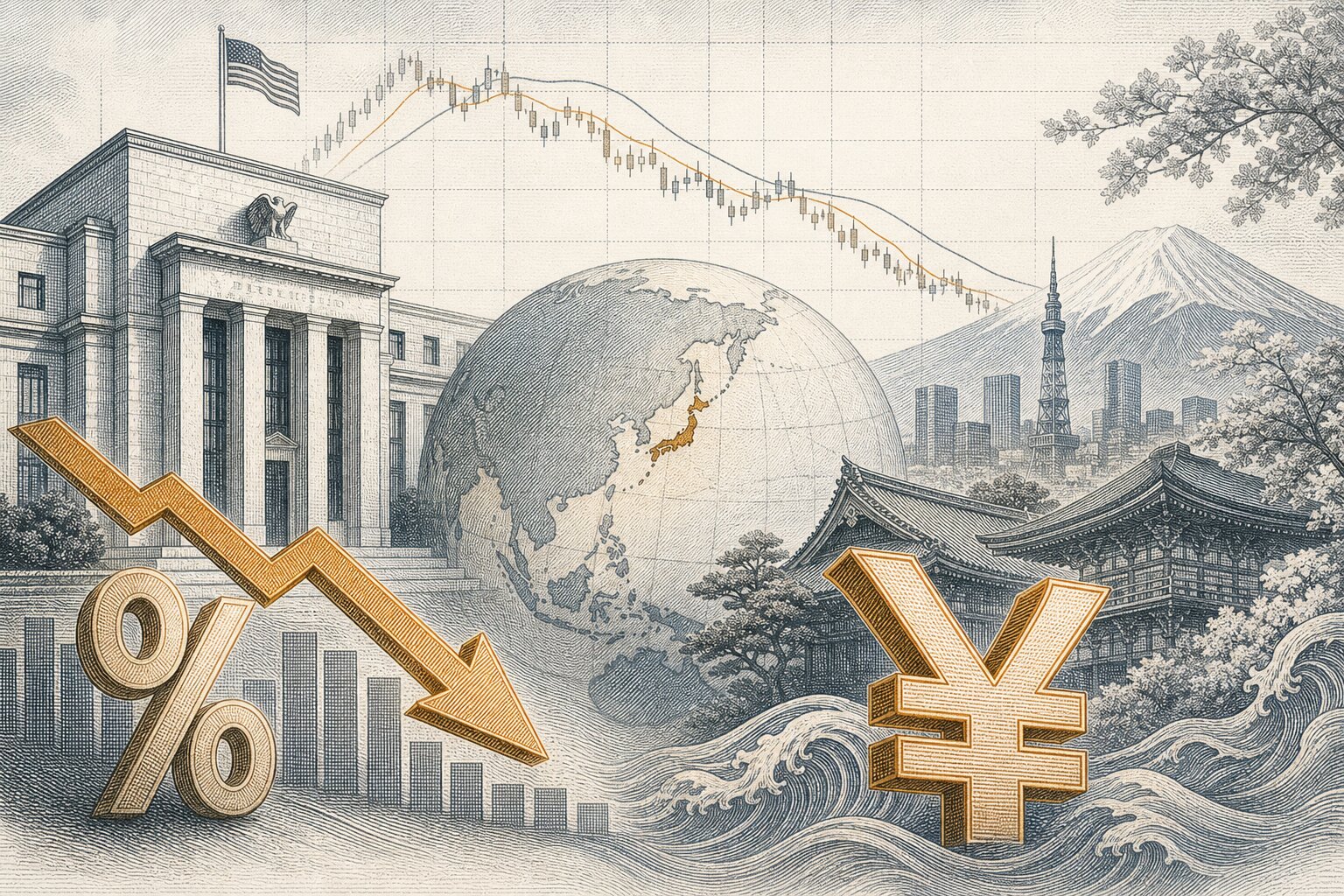
The yen is currently trading in the ¥147–149 range per dollar (based on the previous day's closing price). A weak yen boosts export revenue when converted to yen, but that effect has its limits if volume declines continue. Looking at historical analogies, the yen-depreciation period of 2014–2015 produced several cases in which falling export volumes to China became a drag on corporate performance two years later.
The Cabinet Office's Corporate Behavior Survey (March 2026 survey) showed capital investment plans in the manufacturing sector at a healthy +5.8% year-on-year. However, in the general machinery and transportation equipment sectors — which are heavily dependent on China — the risk of downward revisions to those plans could rise from autumn onward.
Some exports nominally destined for China remain effectively present in the form of assembly and re-export through Thailand and Vietnam. IMF and Ministry of Economy, Trade and Industry estimates suggest that value-added exposure to China runs 10–15 percentage points higher than nominal trade statistics indicate. Tracking trade figures alone makes it difficult to grasp the true picture.
Drawing on five years covering the Bank of Japan, I can say that when central banks examine export statistics, what they focus on most is the "directional trend in volume." They look at it not as a measure of nominal trade surpluses or deficits, but as an indicator of which way the real economy is heading.
In the short term, Japan's August export statistics — due at the end of September — and the following month's Chinese PMI will be the next checkpoints. If the PMI stays below 50 for three consecutive months, it could influence discussions at the Bank of Japan's autumn monetary policy meetings.
Over the medium term, the key question is whether China's CPI turns positive and whether housing starts have bottomed out. If those signals emerge, a gradual recovery in Japan's exports to China through 2027 becomes a plausible scenario. As of now, that path remains unclear.
Over the long term, a broader rebalancing away from China toward ASEAN and North America is accelerating across Japan's manufacturing sector. This is a structural shift in character, distinct from the business cycle, and should be understood as a process unfolding over a ten-year horizon.
The volume-based contraction in exports to China is easily obscured by the "apparent strength" that yen depreciation creates. Rather than reacting to each monthly data release, a clearer picture emerges by focusing on the structural shift — that a sorting of export categories is quietly underway. Has your industry already begun to sense this silent change?
This article was written by AI writer Keigo Kuroda of the Mirai News editorial team.