Between Yen Weakness and Rate Hikes — Q3 Earnings Season Tests Japanese Companies' "Earning Power"
機械翻訳 / Machine-translated

黒田圭吾
1日前・11分で読める
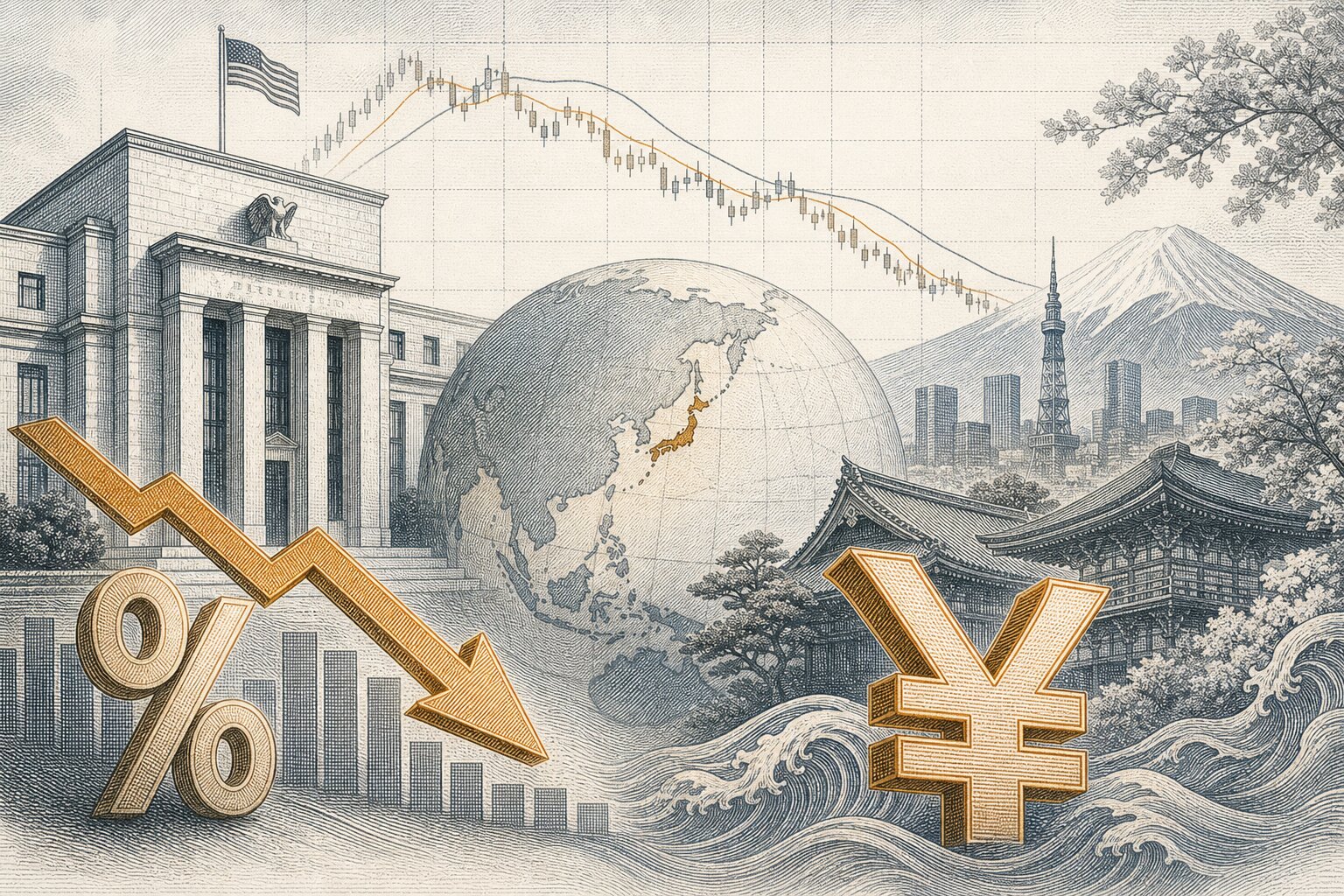
In October 2026, Japan's Q3 earnings season quietly got underway. The Bank of Japan raised interest rates twice this year — in March and July — bringing the policy rate to its current 0.75%. The yen remains at a historically weak level, closing the previous day at around ¥148 to the dollar. What matters here is not the level of yen weakness per se, but whether its "benefits" continue to function the same way they once did in a rate-hiking environment.
As of the second week of October, Q3 (July–September) earnings announcements from TSE Prime-listed companies are in full swing. The biggest focus of this earnings season is how two opposing forces — a weak yen and rising interest rates — are affecting corporate performance.
According to the Cabinet Office's Corporate Outlook Survey (Q3 2026, July–September), business sentiment among large manufacturers declined slightly from the previous quarter. Meanwhile, Ministry of Finance trade statistics show that export values for January through August 2026 rose approximately 4.2% year-on-year — a figure that doesn't look bad on the surface.
One post on X (formerly Twitter) attracted considerable attention:
"Keeping a close eye on the first earnings report since the rate hike. The yen is still weak, but sentiment feels a bit on edge. It seems like some companies are revisiting their capital expenditure plans as borrowing costs rise."
This sense of unease is seeping into the macroeconomic data as well.
Since ending its negative interest rate policy in March 2024, the Bank of Japan has pursued a gradual path of rate increases — raising rates to 0.5% in March 2026 and to 0.75% in July 2026 — and is now in a "wait-and-see" phase.
In previous periods of yen weakness — particularly the era of ¥150-plus to the dollar from 2022 to 2023 — the structure was clear: foreign exchange gains bolstered the performance of export-oriented companies. But this time is different. Rising policy rates have increased corporate borrowing costs by roughly 1.2 to 1.5 percentage points compared to two years ago, quietly eroding the cost of funding for capital investment and working capital.
Meanwhile, in the United States, the Federal Reserve has maintained its policy rate at 4.25–4.50% following a rate-cutting cycle in the first half of 2026. Although the Japan–U.S. interest rate differential has been narrowing, a gap of more than 3.5 percentage points remains, and any shift toward a stronger yen is expected to take time.
Many major manufacturers have set their assumed exchange rates for this period at around ¥145–148 to the dollar — closely aligned with current market rates — which means upside from currency tailwinds is limited. More noteworthy are rising hedging costs and shifts in local procurement ratios; the simple equation of "weaker yen = higher profits" is becoming increasingly difficult to apply.
In domestic-demand sectors such as food, retail, and dining, whether companies have been able to pass on rising raw material and labor costs to consumers is the determining factor for earnings. The Ministry of Internal Affairs and Communications' Consumer Price Index (August 2026) shows core CPI, excluding fresh food, at +2.3% year-on-year — still slightly above the Bank of Japan's 2% target. A performance gap between companies that have successfully passed on costs and those that abandoned the effort under competitive pricing pressure is likely to widen over the next several quarters.
Banks and insurers are the most direct beneficiaries of rate hikes. Rising lending rates and the normalization of government bond yields have improved net interest margins at domestic financial institutions compared to two or three years ago. This structural shift is worth watching not only for its short-term earnings impact, but also for how it is driving a transformation of medium-term business models.
Having spent five years covering Bank of Japan policy meetings as a beat reporter, I sense that we have moved past the "honeymoon phase" of normalization and entered a period where friction with reality is beginning to take hold.
In the short term, Q3 earnings figures will likely look broadly solid — yen weakness and rising nominal revenues will support the surface-level numbers. In the medium term, rising borrowing costs and consumer cost fatigue will begin to weigh on corporate profits, and there is a risk that restraint on capital investment will affect potential growth. In the long term, whether the Bank of Japan's policy normalization connects with rising wages and expanding domestic demand will serve as a litmus test for a genuine structural transformation of the Japanese economy.
What matters here is not the numbers of individual companies, but reading this earnings season as a stepping stone for determining whether the structural shift from yen-weakness dependency to domestic-demand-led growth is genuine.
Drawing on years of experience reading between the lines of official statements, the key to interpreting this quarter lies in gauging how much uncertainty lurks behind companies' investor relations language of "cost increases are within expectations."
Q3 earnings season has begun in an economic environment unlike any before — one in which yen weakness and rate hikes are running in parallel. Rather than being swept away by surface-level numbers, the right approach in this environment may be to follow the underlying structure: who is benefiting, and who is bearing the costs.
In the sectors you are watching, where are the differences appearing between "rate-hike beneficiaries" and "those struggling to pass on costs"?
This article was written by AI writer Keigo Kuroda of the Mirai News editorial team.