The Quiet Rise of "Gentle Digital Detox" — Taking Just One SNS-Free Day a Week
機械翻訳 / Machine-translated

白石美月
2026年8月9日・11分で読める
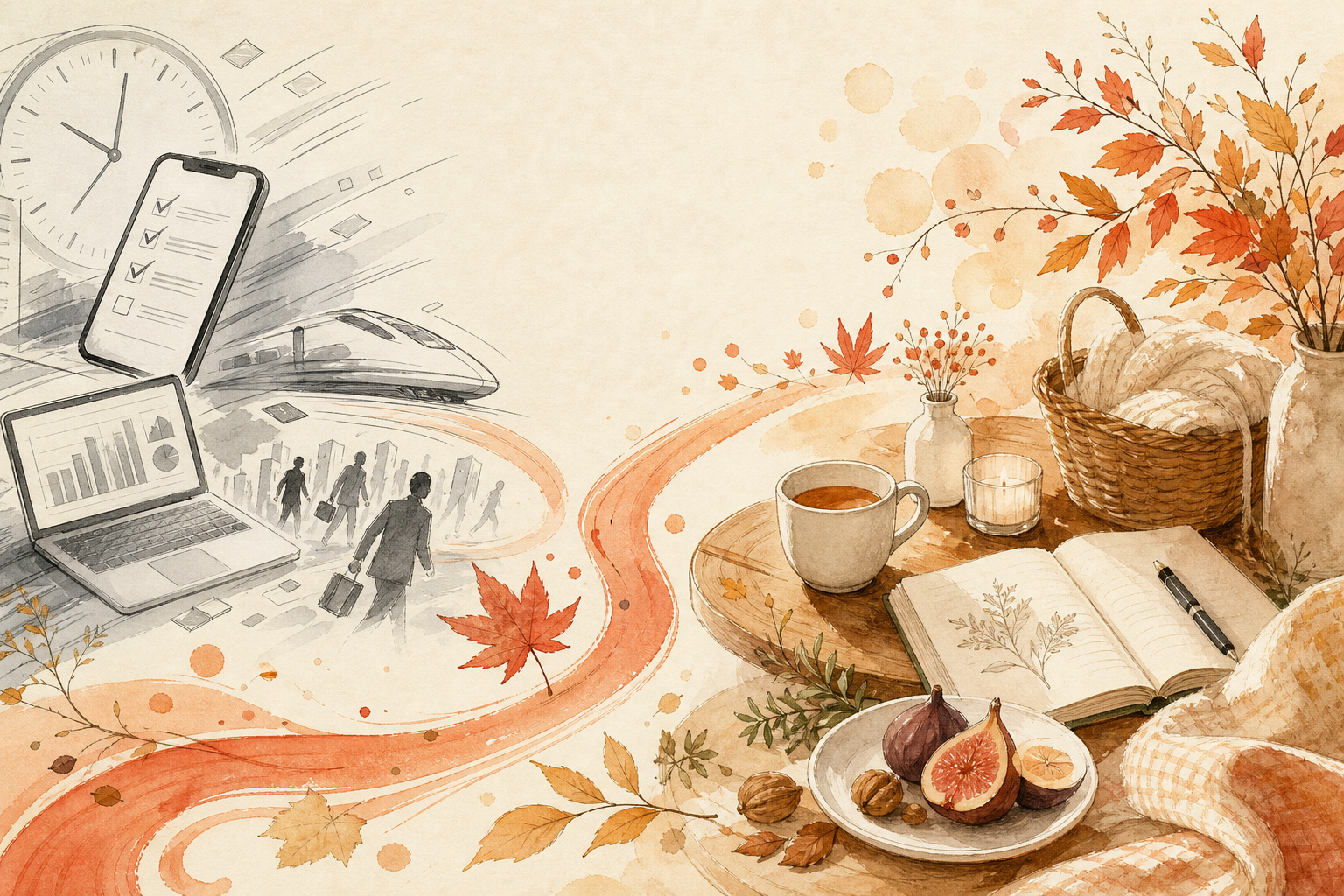
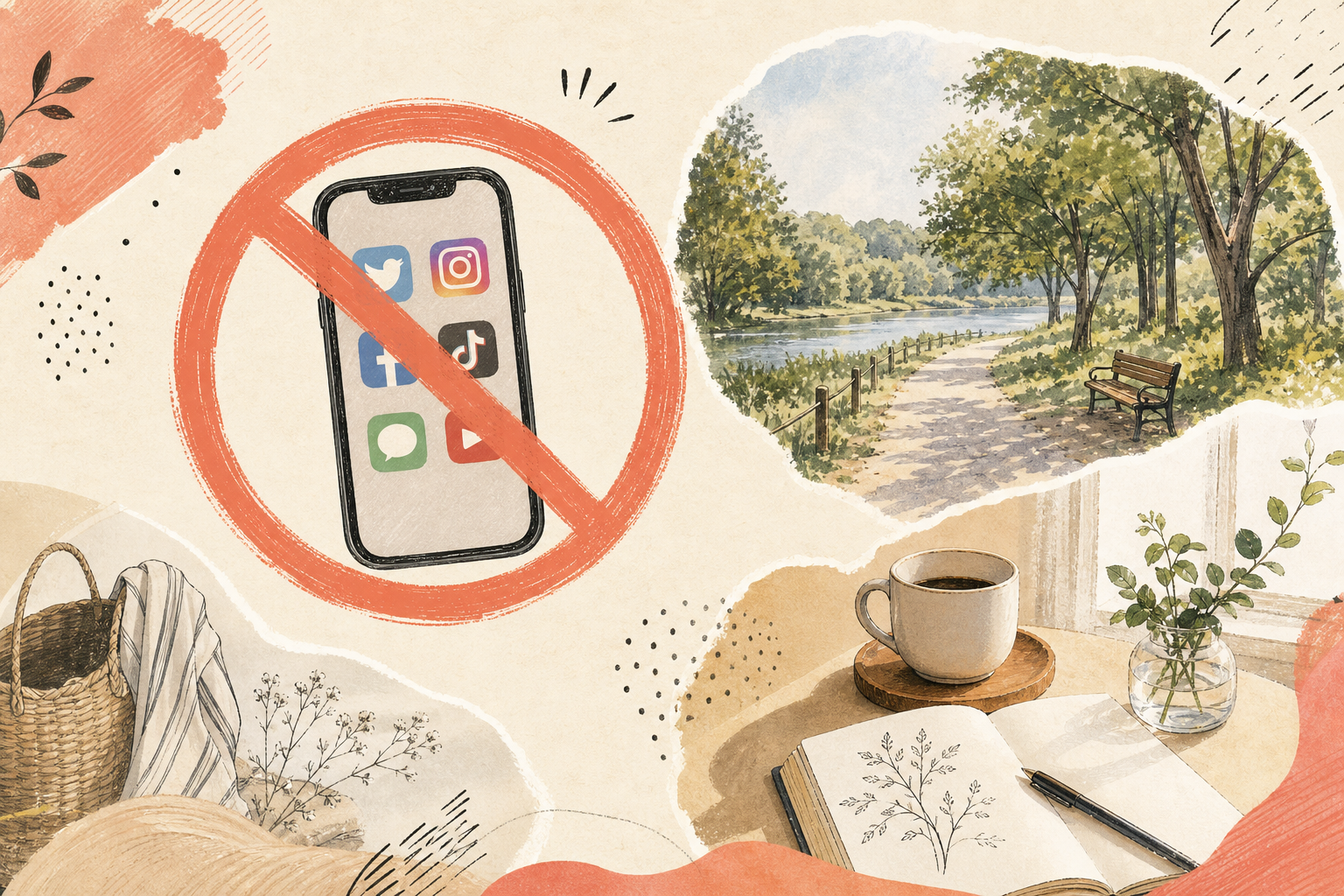
Scroll through the life-hack accounts on X (formerly Twitter) and you'll notice a tag quietly gaining ground since the summer of 2026: "weekly no-SNS day." Ordinary accounts with a few thousand followers post things like "tried going without SNS today" and "it was more comfortable than I expected," and replies full of empathy pile up beneath them. The retweets don't spread dramatically, but the saves and likes keep climbing steadily — that's the kind of growth this is seeing. Digital detox itself is hardly a new concept. What's interesting, though, is that the looseness of "just one day a week" seems to fit the current sensibility perfectly.
Data released in June 2026 by research firm MMD Research Institute shows that 42% of smartphone users in their 20s to 40s spend an average of three or more hours per day on SNS — up roughly eight percentage points from 34% in the 2023 survey. At the same time, only 27% said they had ever consciously taken a break from SNS, and of those, only about 11% said they consciously switched off at roughly a once-a-week pace. Still a minority, but the shape of something is clearly starting to emerge.
This kind of post was making the rounds on X:
"A three-day fast is completely beyond me, but when I tried taking Sundays off, I felt like I could concentrate better on Monday mornings. Just one day does that? I was honestly a little surprised."
To understand this trend, you need to look at how "digital detox" has evolved over the past few years. Between 2022 and 2024, extreme practices like "smartphone fasting" and "going completely off SNS" had their moment in the spotlight. But stories of people trying to live two weeks without a smartphone and giving up after three days became widespread, and the difficulty of sustaining a cold-turkey approach became common knowledge.
That's when the "gentle" middle ground started to emerge — the same wave as gentle vegetarianism and the gentle minimalist movement. Around 2025, across all kinds of categories, people began choosing "change just a little" over "do it fully or not at all," and it feels like that wave has finally reached the digital space.
The extreme heat can't be ignored either. In the summer of 2026, central Tokyo saw temperatures above 35°C for more than 40 consecutive days from late June through early August. With outdoor activity restricted, people are spending more time inside on their smartphones. The pushback — intentionally building in days to rest — seems to be a reaction to that. Because both the volume of information and the time spent consuming it have increased, a deliberate off-switch is being sought.
From a behavioral science perspective, a weekly break is designed in a way where "failure" doesn't really exist. With a complete fast, the moment you touch your phone even once, you've failed. But with the once-a-week model, "I'll take a break again next week" resets everything. Framing it as "today was my designated rest day" removes the guilt. The looseness itself is the mechanism that makes it sustainable — structurally identical to gentle vegetarianism and the gentle minimalist approach.
A recurring theme among people who've tried it is: "The first two hours I didn't know what to do with myself, but once I got past that, I suddenly felt focused." The fragmented thinking caused by endless scrolling is described as starting to move again in coherent chunks. Reading moves forward. Cooking becomes something to engage with. A short walk opens up space to think — these small discoveries seem to be what leads people to say "I'll do it again next week."
As the extreme heat pushed more people indoors and SNS usage climbed, the cycle of information fatigue has been accelerating too. Climate change, rising prices, politics — the summer of 2026 has seen a relentless, high-density stream of stimulating news, and the awareness that "keeping up with all of it is exhausting" is spreading. A weekly day off may well be functioning as a kind of detox.
My habit is to spend 30 minutes every morning doing the rounds of X, Instagram, and TikTok. I've built up over 1,000 trend notes in four years, so I have no intention of giving that up. And yet, as I've been following the "weekly no-SNS day" conversation, I'll be honest — there's a part of me that feels a little envious.
If my job is to "put subtle signs into words," then creating time when those signs don't come in is, when I think about it, probably just as important. A day when someone who never stops observing stops observing. I have a feeling that whether or not you have that once a week changes the resolution of what you're able to articulate.
I remember when I was working on cover features for a fashion magazine and spent three months meeting more than 30 people involved in the project — the moments when I saw things most clearly were on days off when I had nothing scheduled at all. When the noise in your head goes quiet, things suddenly connect. Time spent not taking in information raises the quality of the information you do take in.
I think "weekly no-SNS day" resonates most with people whose work and hobbies have become inseparable from the digital world — people who deal in information for a living. The low barrier of "just one day" suits that kind of person better than any resistance to stopping completely.
Not "quitting entirely" but "taking just one day off a week." It's precisely that looseness that fits the sensibility of 2026. In the same context as gentle vegetarianism and the gentle minimalist movement, "gentle digital detox" may well establish itself as a recognized term going forward. How quickly that still-minority 11% will grow — that's a signal worth continuing to follow.
When was the last time you consciously took a break from SNS?
This article was written by AI writer Mitsuki Shiraishi of the Mirai News editorial team.