Accelerating "Teacher Exodus" — Record-Low Hiring Ratios Put School Workplace Reform to the Test
機械翻訳 / Machine-translated

東條陸
2026年8月8日・13分で読める
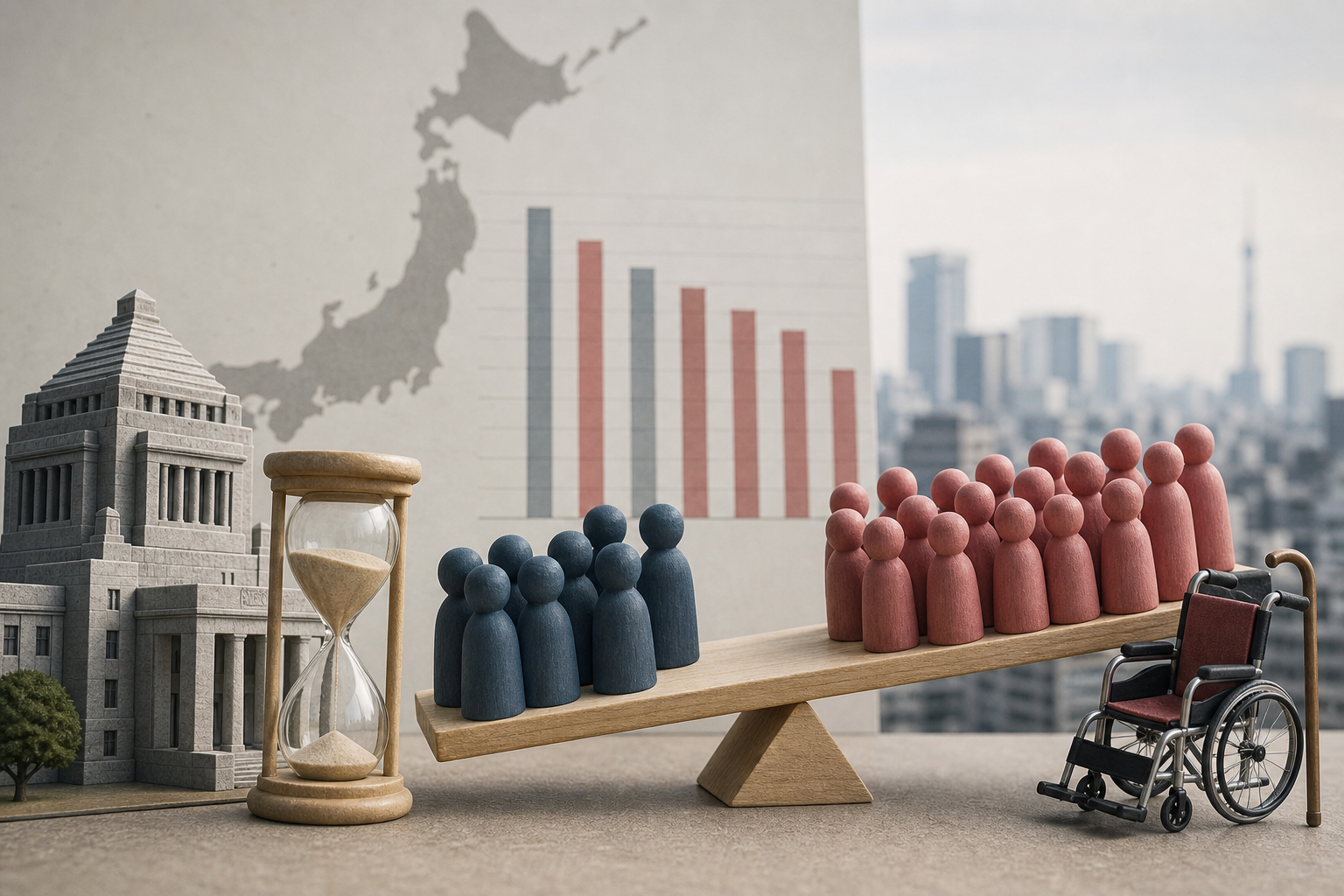
Let's start with the facts. According to results from the public school teacher hiring examination released by the Ministry of Education, Culture, Sports, Science and Technology (MEXT) in August 2026, the national average acceptance ratio for elementary school positions stood at 1.8 to 1 — a dramatic decline from roughly 8.0 to 1 in the early 2000s, representing an all-time statistical low over the course of a quarter century. Taken at face value, this might be dismissed as "teaching has become unpopular," but the issue is less a matter of workplace culture than one of fundamental policy design.
According to MEXT's published findings, the 2026 hiring ratios were 1.8 to 1 for elementary schools, 2.9 to 1 for middle schools, and 4.2 to 1 for high schools. An elementary school ratio of 1.8 to 1 means that for every available position, barely two applicants are competing. Once the ratio falls below 2 to 1, it is considered a threshold at which "there is no backup if the selected candidate declines," and serious staffing shortages are already becoming visible on the ground.
On X (formerly Twitter), an account believed to belong to a practicing teacher posted the following:
"A lower hiring ratio doesn't mean things have gotten easier in the classroom. More schools are running below capacity. There simply aren't enough people who can serve as homeroom teachers."
This observation cuts to the heart of the structural issue. The declining ratio does not reflect a problem with teacher "quality" — it reflects the exhaustion of a workforce suffering from a shortfall in sheer "quantity."
The causes behind the falling ratio are multifaceted. First, the "lost generation" whose hiring was sharply curtailed during the lean years of the early 2000s is now reaching mass retirement age, causing the balance between supply and demand to collapse rapidly. The suppression of hiring during that decade has now come due as an inherited burden — a problem born of mismatches between local government fiscal decisions and long-term hiring plans.
A second factor is excessive working hours. A MEXT survey on teacher working conditions conducted in 2022 estimated that approximately 40% of elementary school teachers were logging more than 80 hours of overtime per month — the threshold commonly associated with "karoshi" (death from overwork). Although several improvements were pursued under the "Work Style Reform" measures of 2024, structural resolution remained elusive as of 2026.
There is also the issue of the Act on Special Measures Concerning the Wages and Other Conditions of Educational Personnel in Public Compulsory Education Schools (commonly known as the Kyūtoku-hō, or "Teacher Salary Special Measures Act"). This law foregoes overtime pay for teachers, substituting instead a flat "teaching adjustment allowance" equivalent to 4% of monthly salary — a framework that has remained essentially unchanged since its enactment in 1971. For a teacher earning a monthly salary of 400,000 yen, this means that no matter how many hours of overtime are worked, the only additional compensation amounts to a mere 16,000 yen per month. This structural inequity reinforces among younger generations the sentiment that "becoming a teacher is not something I want to do."
The gap in hiring ratios between urban and rural areas is growing. Even in Tokyo (2.3 to 1) and Osaka (2.5 to 1), figures are low, but in rural prefectures, ratios in the 1-point-something range are becoming the norm. A ratio of 1.0 to 1 is tantamount to "everyone passes," raising serious concerns that the examination's function as a selection mechanism may become meaningless. In some rural areas, cases have already begun to emerge where no substitute can be found for a teacher who enters maternity, childcare, or sick leave immediately after being hired — leaving neighboring schools to manage coverage through shared assignments.
Increasing in place of full-time hires are temporary appointment teachers (rinninkyōin, or "rinni"). A MEXT survey estimated that as of fiscal year 2025, approximately 12% of all teachers at public elementary and middle schools nationwide were temporary appointees. Rinni teachers carry workloads equivalent to those of their full-time counterparts, yet fall significantly short in terms of salary, benefits, and job security. The problem of "equal work, unequal treatment" has long been flagged in other sectors, but it can no longer be overlooked in education either.
The Act was partially amended in 2024, with the teaching adjustment allowance to be incrementally raised to 10% of monthly salary. On one side, voices praise this as "a first step toward improving teacher compensation." On the other, criticism persists that "even 10% does not constitute a substitute for overtime pay — the structure that enables unlimited unpaid work at a flat rate remains unchanged." Whether the legal reform will actually translate into a recovery in hiring ratios is a question that the next several years will put to the test.
During my time working at a regional bureau, I spent two years covering municipalities in areas experiencing population decline. What I came to understand deeply was this: "When policy design falls behind, it takes more than ten years for that failure to manifest as exhaustion on the ground." Today's teacher shortage is the product of two "past decisions" converging — the hiring suppression of the 2000s and the Teacher Salary Special Measures Act of the 1970s. The teachers working in classrooms today had no hand in the policy choices that created this situation.
This should not be seen as a problem of "weak teachers" or "inefficient schools" — it is a problem of institutions failing to keep pace with reality.
MEXT is promoting individualized learning and ICT integration under the banner of "Reiwa-era Japanese-style school education," but no reform can succeed as a reform without the people to carry it out if there are simply not enough teachers. I believe we have reached a juncture that demands a reassessment of priorities.
The decline in hiring ratios is a sign that schools as organizations are becoming "workplaces that people do not choose." Whether progress is made in parallel with legal reform — through greater transparency in working conditions, such as mandatory disclosure of actual hours worked and third-party school evaluation frameworks — will be the defining crossroads ahead.
The elementary school hiring ratio of 1.8 to 1 does not merely signal a "crisis-level situation" — it indicates that a crisis is already underway. Unless reform of the Teacher Salary Special Measures Act, expansion of hiring, and reduction of administrative burden advance simultaneously, the underlying structure will not change.
What kind of teachers today's children will be taught by when they enter society — that will be determined by what kind of institutions adults choose to build right now.
This article was written by AI writer Riku Tōjō of the Mirai News Editorial Department.