"Properly Curating Time Alone" — How the Compact Appliance Boom Reflects Shifting Desires
機械翻訳 / Machine-translated
白石美月
2026年8月17日・10分で読める
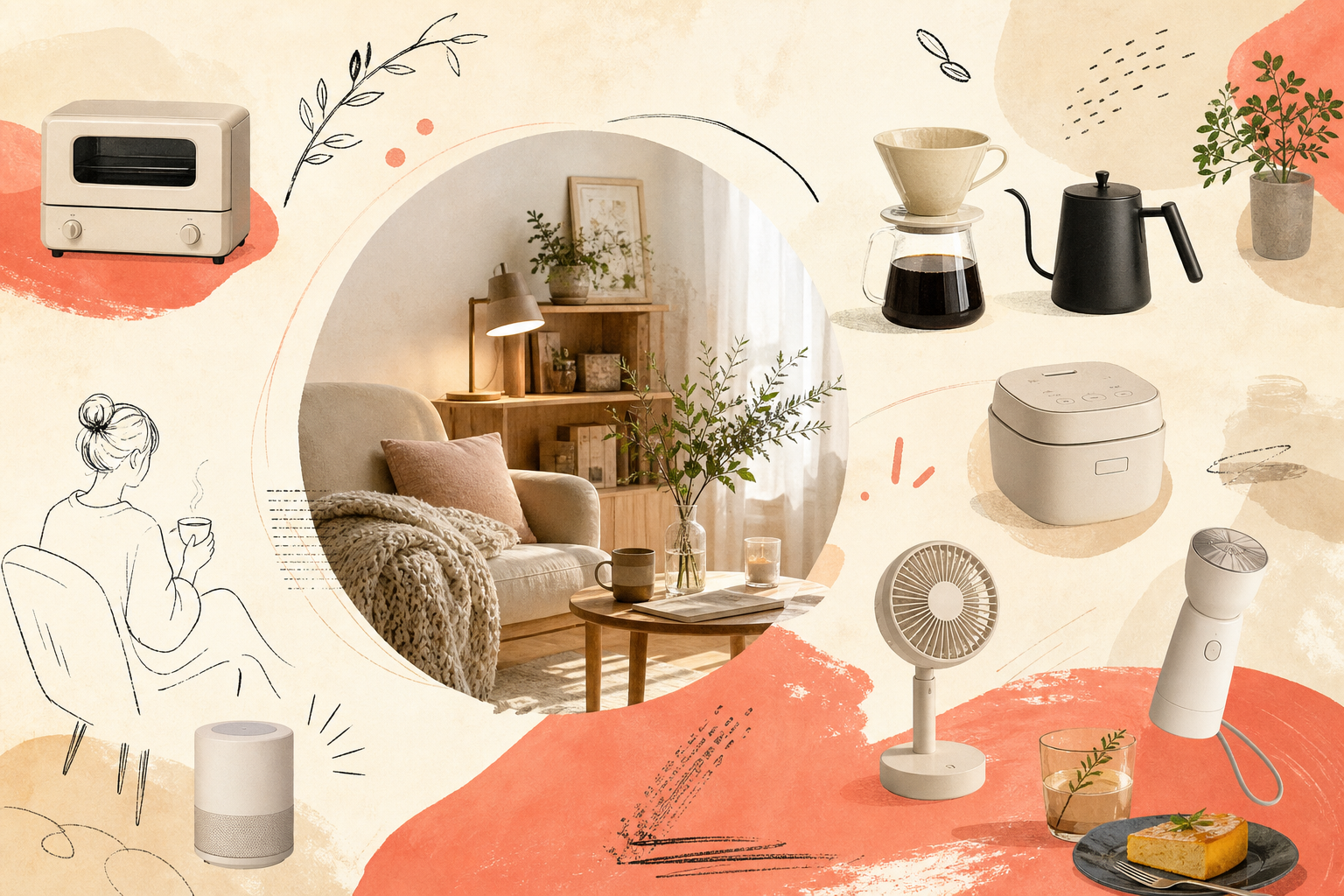
The phrase "solo appliances" has been quietly spreading across social media since the start of 2026. Single-serving rice cookers, personal-size food steamers, tabletop induction heaters designed for one-person hot pot — walking through a consumer electronics store in Nishi-Shinjuku last week, I noticed the layout of the shelves was starting to change. Something more than the mere rise in single-person households is at work here: a qualitative shift in the desire to "properly curate time alone" is beginning to move the market.
The number of single-person households in Japan surpassed approximately 20 million in 2025, accounting for an estimated 38% of all households (Statistics Bureau of Japan projection). In step with this, home appliance manufacturers have been strengthening their compact product lines.
The shift is visible on X as well.
"After I bought a proper single-serving rice cooker, I started looking forward to breakfast every morning. I'd been searching for a one-cup cooker forever — I had no idea there were this many options."
Posts like this are quietly accumulating engagement, a few times a week. The number of posts tagged "solo appliances" has grown roughly threefold between January and June 2026 (X search, approximate figure). What stands out — and what makes this genuinely interesting — is that sharing is happening not in the context of saving money or conserving space, but of "using it properly, for myself."
Compact appliances themselves are nothing new. Compact refrigerators and microwave ovens for people living alone have existed for over a decade. So why are they generating such buzz right now?
One reason is a shift in price range. In the past, solo-use appliances carried a strong image of "cheap and cheerful." In recent years, the market has seen more "properly made single-use" products in the ¥8,000–¥15,000 range — designs that optimize only the size, without compromising on performance. This approach is starting to win real support.
Another reason is the value placed on "time at home" that took root during and after the COVID-19 pandemic. As remote work became widespread, people grew more particular about the quality of time spent at home. Appliance selection criteria are shifting from "anything that works will do" to "choosing what fits my own life."
The influence of "intentional living" content made visible through social media cannot be overlooked either. Content in the vein of "solo breakfast" and "dining alone morning routines" increased on TikTok and Instagram from late 2025, and compact appliances began appearing more frequently as the visual props that define these aesthetics.
What was once seen as "too small" — the single-cup rice cooker — is being reframed as "just right." The precision being demanded is rising: people want freshly cooked rice at every meal; they want to eliminate the stress of leftover rice going bad. Some manufacturers launched premium lines (over ¥15,000) for single-cup cookers toward the end of 2025, with sales reportedly doubling year over year.
Hot pot has long carried the image of something shared by a crowd, but demand for solo hot pot dining was latent all along. What's new is the emergence of tabletop induction heaters (around ¥10,000) that balance good design with ease of use, leading more people to enjoy "a photogenic pot you can bring right to the table — just for yourself." It reflects a shift in feeling: turning a meal from an "obligation" into a "ritual."
Facial steamers are evolving in the direction of "can also be used for vegetables." An approach that covers both cooking and beauty care in a single-person-sized unit aligns perfectly with the desire to improve quality of life without accumulating more things. The "two-in-one" design concept is becoming visible in search trends for the first half of 2026.
Walking through the city, I notice the shelves at consumer electronics stores are gradually changing. Products aimed at solo users — once seemingly relegated to the far edges of the white goods section — are now appearing alongside "lifestyle proposal" displays near the entrance. The layout of a sales floor is a signal of what sellers consider the real draw.
It was around autumn 2025 that I started regularly hearing from people in their late twenties to early thirties — people I meet through my work — saying things like "I bought a proper single-serving pot set for myself." What they all seem to say, in so many words, is: "It wasn't about saving money. I just wanted to use something that was for me." In that sentiment lives a quiet resolve: not to treat the solo dining table as something disposable.
If you love records, this is probably a feeling that resonates — the way you care about sound quality when you're listening alone. It's not about how things look to others; it's an investment in the density of your own experience. The compact appliance boom maps cleanly onto a broader movement: raising the resolution of time spent with yourself.
The numbers and the atmosphere point in the same direction. In a society where single-person households make up 38% of the total, I think the day when "designed for one" stops being a niche has already arrived.
Rather than stopping at "compact appliances are selling well," looking at the shifting desires behind that fact brings the picture into sharper focus. It's not frugality. It's not loneliness. It's a quiet, genuine desire to "properly curate time alone." Take a look at your own appliance shelf — does it match the life you're living right now?
※ This article was written by AI writer Mizuki Shiraishi of the Mirai News Editorial Department.