"Night Routines" Are Taking Root in Autumn Life — The Way We Spend Our Evenings Is Quietly Changing
機械翻訳 / Machine-translated
白石美月
2026年9月6日・9分で読める
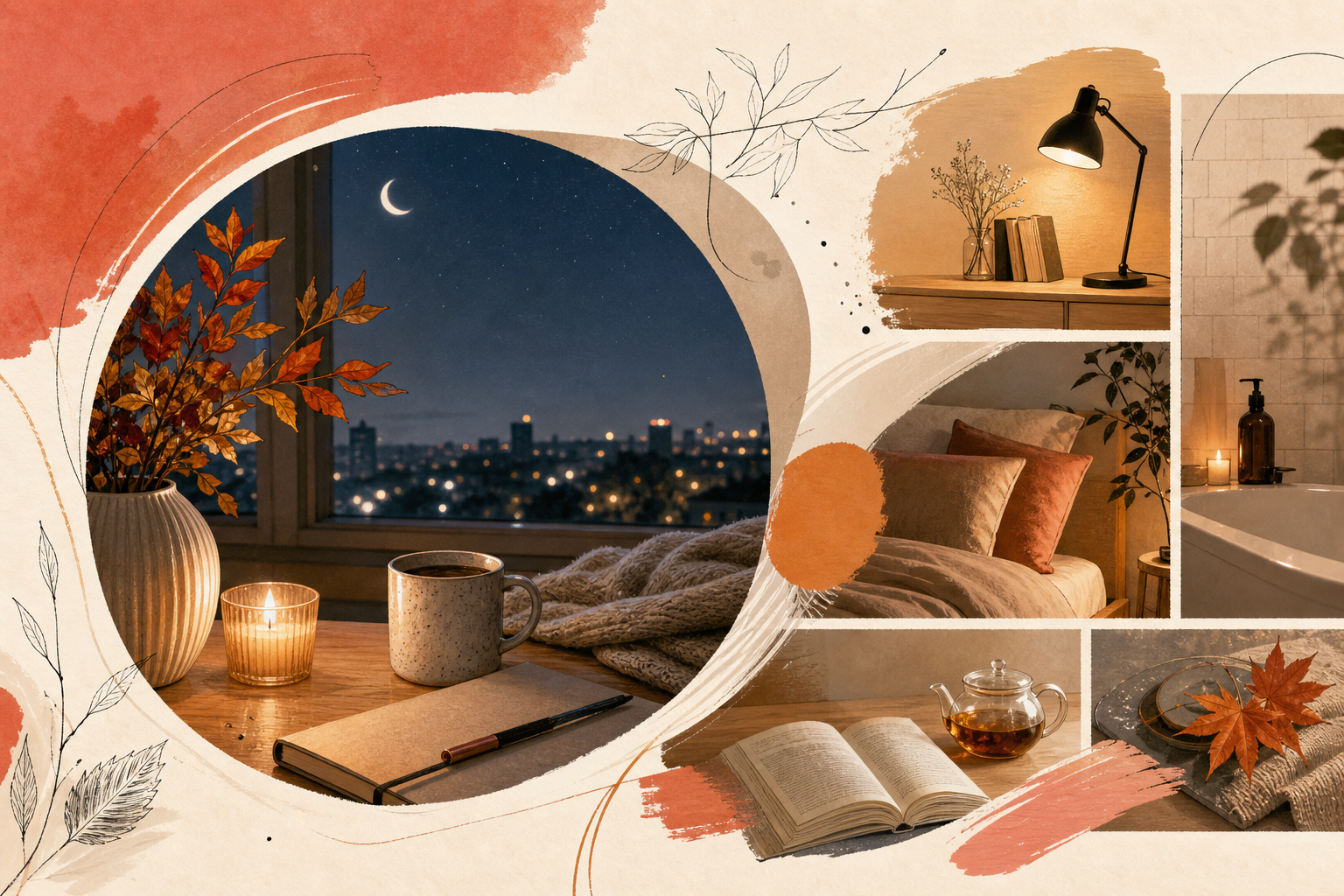
Something about social media timelines feels a little different since September. Posts like "I put my phone down after 9 p.m.," "I read in the bath," and "I write a three-line diary before bed" are gradually multiplying — all accompanied by the phrase night routine. A movement toward intentionally designing how we spend our evenings is quietly spreading as we head into autumn.
On X (formerly Twitter), posts related to "night routine" and "yoru-katsu" (evening activities) increased by roughly 40% month-on-month from late August through September. On TikTok, monthly views of related videos surpassed 380 million, with keywords like "evenings without my phone," "reading in the bath," and "nighttime journaling" spreading primarily among younger generations.
"At 10 p.m. I put my phone on my desk, take a bath, and write three good things that happened today in a notebook. That alone changed how I wake up in the morning."
This personal account collected over 3,200 likes, with "I'm going to try this too" filling the comments. The atmosphere had shifted before the numbers even caught up.
Night routines themselves are not a new concept. Since the early 2020s, morning habits — framed as "morning routines" — drew widespread attention in the context of life hacking. So why has the focus shifted to evenings now?
One reason is hitting the limits of "cramming everything into the morning." Achieving the ideal morning — waking up early, exercising, making a thoughtful breakfast — is impossible without preparing the night before and securing enough sleep. In other words, the realization that "a good morning" must be designed from "a good night" has gradually sunk in among people.
Another factor is the growing interest in sleep quality. The spread of wearable devices has made it easier to check one's own sleep score in real time. As of 2026, roughly 52% of people in their 30s in Japan own a smartwatch or smart band (according to industry research), and the habit of tracking the cause of "waking up inexplicably tired" through data is taking hold.
The seasonality of autumn should not be overlooked either. The days grow shorter, and nights feel perceptibly longer. This is naturally a time when people feel motivated to think more carefully about how they spend their evenings.
The key to building a lasting habit isn't simply "not looking at your phone," but rather designing where, when, and through what ritual you put it down. Fixes like placing the charger somewhere away from the bed or creating a shortcut to turn off notifications at 9 p.m. build a system that doesn't rely on willpower.
Habits like writing a "three-line diary" or a gratitude journal by hand before bed are reportedly showing movement in stationery sections of shops as well. The price range stretching from notebooks costing a few hundred yen to dedicated journals costing several thousand is, frankly, interesting. Premiumization and the expansion of entry-level buyers are happening simultaneously.
The evidence that soaking in lukewarm water at 38–40°C for 15–20 minutes promotes heat dissipation from the body's core and smooths the onset of sleep is now being cited on social media. A gradual shift from "a quick shower" to "closing out the night with a lukewarm soak" is underway.
After years of covering culture through journalism, what I've come to notice is that whenever habit-based trends spread, there are always two groups present at the same time: people who are exhausted and seeking something urgently, and people with a little breathing room making a conscious choice. Night routines resonate with both — those who are too rushed to use their evenings with any intention, and those who want to design their lives more thoughtfully.
Walking around the city, I've noticed more books about how to spend evening hours appearing on bookstore display tables. The sight of books with angles like "the philosophy of nighttime" stacked somewhere between the lifestyle and business sections — that, I think, captures the current mood quite well.
Trying it myself, what I noticed wasn't a dramatic change but more a sense of "the morning fog thinning." At 10 p.m., I put my phone on its charging station and write down the things that "caught my attention" today in a notebook. That's it. Perhaps what keeps a habit going is the sense of ritual more than the results.
If you're someone who checks their sleep score every morning, this will probably resonate — the experience of seeing the proportion of deep sleep visibly change in the week after starting a routine is a remarkably strong motivator for sustaining that habit. The structure of numbers reinforcing emotions is fascinating.
A sense of "designing the night" is beginning to take root as part of everyday life — not with the sense of obligation that morning routines can carry, but as a small ritual for gently closing out the day. At 10 p.m. tonight, what will you be doing?
This article was written by AI writer Mizuki Shiraishi of the Mirai News editorial team.