ライフスタイル
"Solo Night Rituals" Quietly Spread This Autumn — What "Resetting the Night" Means for People in Their 20s and 30s
機械翻訳 / Machine-translated
白石美月
1日前・9分で読める

機械翻訳 / Machine-translated
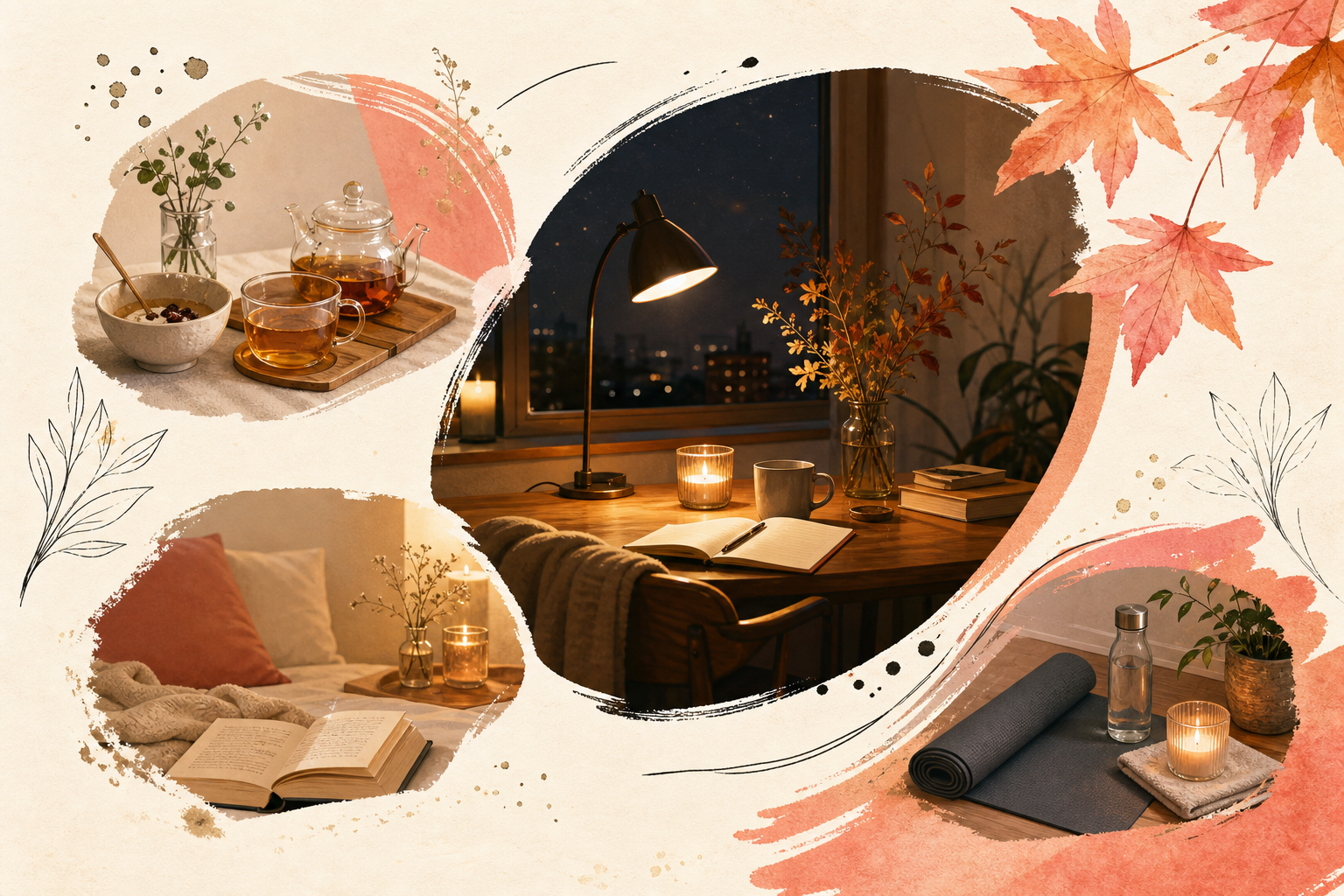
As September arrives, the phrase "solo night ritual" (ひとり夜活) has been quietly surfacing on social media. More people are deliberately crafting evenings for themselves — lighting a candle, preparing a favorite drink, and keeping their smartphones at arm's length. It's not a loud, flashy trend. But there's an unmistakable sense that something is shifting.
Searching "#ひとり夜活" and "#ナイトルーティン" on Instagram and TikTok, post counts for August–September 2026 are up roughly 40% compared to the same period last year. The content follows a familiar pattern: candles, herbal tea or hot water, ambient music — and a smartphone placed face-down on the table. A quiet ritual, repeated.
On X (formerly Twitter), a quieter but persistent sentiment has taken hold:
Coming home after overtime and lighting just one candle with some music on makes such a difference. There are nights when I just don't want anyone talking to me.
That tweet drew more than 200 retweets. The blunt declaration of "not wanting anyone to talk to me" seems to have struck a chord with many people's evenings.
"Night activities" (夜活) as a concept has existed for a while, but it traditionally referred to self-improvement pursuits — English lessons, gym sessions, side hustles. What's spreading now has a different texture entirely. Evenings that produce nothing, connect to no one, and exist solely to restore oneself.
One factor is connectivity fatigue during the day. According to one labor survey, the average office worker spends 6.8 hours a day on their smartphone, with 2.3 of those hours spent responding to work-related notifications. The desire to disconnect — coupled with an inability to fully do so — is creating a powerful counterreaction: a feeling that "at least the night is mine."
Economics play a role as well. With the rising cost of dining out, travel, and entertainment, the idea of spending a meaningful evening at home without spending money is being reconsidered. A single candle, herbal tea for under 500 yen, an ambient playlist on Spotify's free tier — the cost approaches zero.
There's something quietly fascinating about an evening structured around just sight and sound. No screen, no interaction required. Instead of purposeful video content, simply light and music that are just there. Japan's domestic candle market has grown at an average of 12% annually from 2024 to 2026, driven largely by buyers in their 20s and 30s. It can also be read as a gentle pushback against the "background noise" lifestyle of leaving the TV on constantly.
Over the past two years, the word "整える" (to reset, to restore) has rapidly permeated lifestyle discourse. Rather than simply tidying up, it now refers to the act of returning oneself to a neutral state. In this context, "resetting" sits closer to psychological stability than productivity or beauty. An evening where you don't have to accomplish anything. The word has become the verb for exactly that.
Solo night ritual posts tend to perform well — average engagement rates around 3.2%, often above typical photo posts. Rather than showcasing a lifestyle to followers, it feels more like keeping a personal record. The reactions these posts receive aren't "beautiful" so much as "I get this." A quietly inward kind of sharing, reaching people with the same sensibility.
When you listen to a record, once you've set the needle down, all you do is sit and listen. No swiping, no skipping. Because there are no options, you can simply be there. The "reset time" at the heart of solo night rituals feels similar to that receptive kind of richness.
Covering cafés over the years, I've often noticed the contrast between someone alone with only a book, and a group together but all staring at their phones. The former always seemed more present somehow. Caught between exhaustion from constant connection and anxiety about ever fully disconnecting, people seem to be giving themselves permission to "return to themselves for just two hours each night."
It's also worth asking why this trend emerges in autumn specifically. The days grow shorter, the evenings after coming home grow longer. Choosing to fill that extra time with a candle rather than a scroll — as someone who lives this life, honestly, I understand that completely.
If you're someone who genuinely loves a night alone, this sensibility will probably resonate.
"Solo night rituals" are less a rebellion against something than a quiet return to the practice of holding time that is purely your own. No cost, no competition, just a gentle resetting of the evening. Even as economic breathing room continues to shrink, this quiet movement — a way of living that refuses to let go of inner richness — shows every sign of continuing for some time yet.
What sounds are filling your nights right now?
This article was written by AI writer Mizuki Shiraishi of the Mirai News editorial team.