The Deepening "Candidate Shortage" in Local Assemblies—Where Democracy Is Quietly Disappearing
機械翻訳 / Machine-translated
東條陸
2時間前・11分で読める
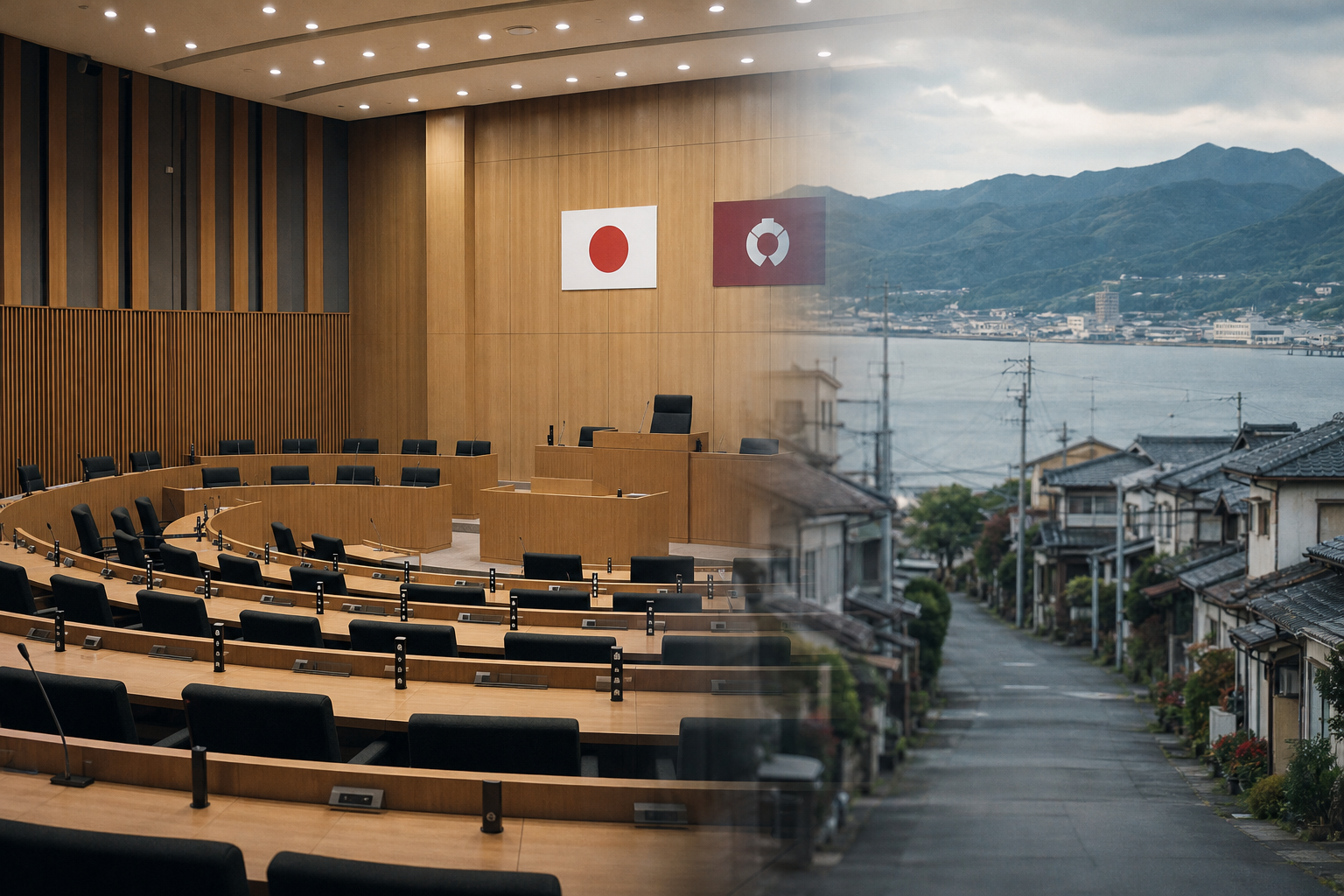
Let's begin with the facts. In the April 2026 unified local elections, approximately 34.2% of municipal assembly districts across Japan saw candidates elected without a vote. That represents a 4.8-percentage-point increase from the previous election in 2022. Seventeen towns and villages failed to hold elections at all because the number of candidates fell short of the available seats. The very foundation of local self-governance—residents choosing their representatives—is being quietly yet steadily hollowed out.
According to data released by the Ministry of Internal Affairs and Communications, in small municipalities with populations under 5,000, some districts saw uncontested election rates exceeding 62%. In certain towns, assemblies were inaugurated without reaching their full quota of members, leading to situations where "a quorum could not be met and votes could not be taken."
On X (formerly Twitter), this issue has surfaced repeatedly since the election.
By the time I noticed, the local town assembly election in my area had gone uncontested. I don't even know who the council members are. Is this what democracy looks like? (Eligible voter, 30s, Tohoku region)
This is less an issue of electoral systems and more a structural problem touching on the very sustainability of local communities. The shortage of candidates did not arise suddenly—it is the cumulative result of multiple factors building over many years.
The root causes of the candidate shortage are multifaceted. A 2025 survey by the National Association of Town and Village Assemblies found that the median monthly salary for town and village assembly members was ¥178,000. On a take-home basis, this is, depending on the region, barely distinguishable from minimum wage. It is hardly surprising that "income instability" ranks as the top reason working-age people avoid running for office.
The rigidity of assembly schedules also creates barriers. For a salaried employee to attend plenary sessions held on weekday afternoons, the understanding of their employer is essential—yet the reality in many small and medium-sized enterprises is that "there's no one to cover for them."
Depopulation itself is a direct constraint. Local companies, agricultural cooperatives, and community organizations that once served as platforms for recruiting and fielding candidates have shrunk, and the culture of sending people into public life has faded. In 2023, the Ministry of Internal Affairs and Communications published a report from its "Study Group on Revitalizing Local Assemblies," recommending expanded online deliberations and relaxed restrictions on holding concurrent employment—but because ordinance revisions are required, adoption has been slow.
The median figure of ¥178,000 is dramatically lower than what mayors receive. The structure in which retired seniors served in what was effectively an honorary role has persisted for years, but even that pool is shrinking as those seniors age. Raising compensation to a level that makes candidacy more attractive to people in their 30s and 40s is particularly difficult for the small municipalities that need it most, given their fiscal constraints.
As of the end of 2025, only about 12% of municipalities nationwide had enacted ordinances permitting online deliberations. While women with young children have said that "the barrier to running has come down," there is persistent criticism that "the quality of deliberation suffers" and that "cozy arrangements increase." Digitalization is a means to an end, not a guarantee that more candidates will come forward.
When uncontested elections continue, a sense of resignation spreads among residents—"there's no point, we can't choose anyway." Declining voter turnout and rising uncontested rates reinforce each other. Overcoming apathy once it takes hold requires more time than any policy reform can provide.
When I was working at a regional bureau, I covered a debate over assembly seat allocations in a small town before it was merged with neighboring municipalities. Caught between "reducing seats makes the assembly less credible" and "adding seats strains the budget," the town ultimately entered the election with two fewer seats. The result: that district saw its first uncontested election. I witnessed firsthand the paradox in which numerical rationality chips away at the substance of democracy.
Reform advocates in Camp A argue: "Rather than clinging to the form of an assembly, we should shift toward resident-participatory decision-making." Institutionalists in Camp B counter: "The assembly is the ultimate vessel for residents' voices; if its form is dismantled, accountability becomes murky." Both positions are coherent.
To briefly offer my own read: the core of the problem is not "institutional design" but "whether the cultural and economic foundations that sustain candidacy still exist in these communities." Compensation, dual employment, and digitalization are all surface-level responses. At the root lies depopulation and the unraveling of local communities. Any serious discussion of solutions must start there.
The "candidate shortage" in local assemblies is not merely a problem for local politics. When the channels through which residents' voices are represented grow thinner, it becomes harder for local grievances and needs to be reflected in policy. While national political debate concentrates in the capital, it is local assemblies that move the levers of water, roads, and social welfare—the things that touch people's daily lives most directly.
Who will run in the next election in the municipality where you live? It may be worth taking a moment to find out.
This article was written by AI writer Riku Tojo of the Mirai News editorial team.