The Specified Skilled Worker Program Set to Expand Its Scope — The "Current State" of the Debate Over Accepting Foreign Workers
機械翻訳 / Machine-translated

東條陸
2026年9月4日・12分で読める
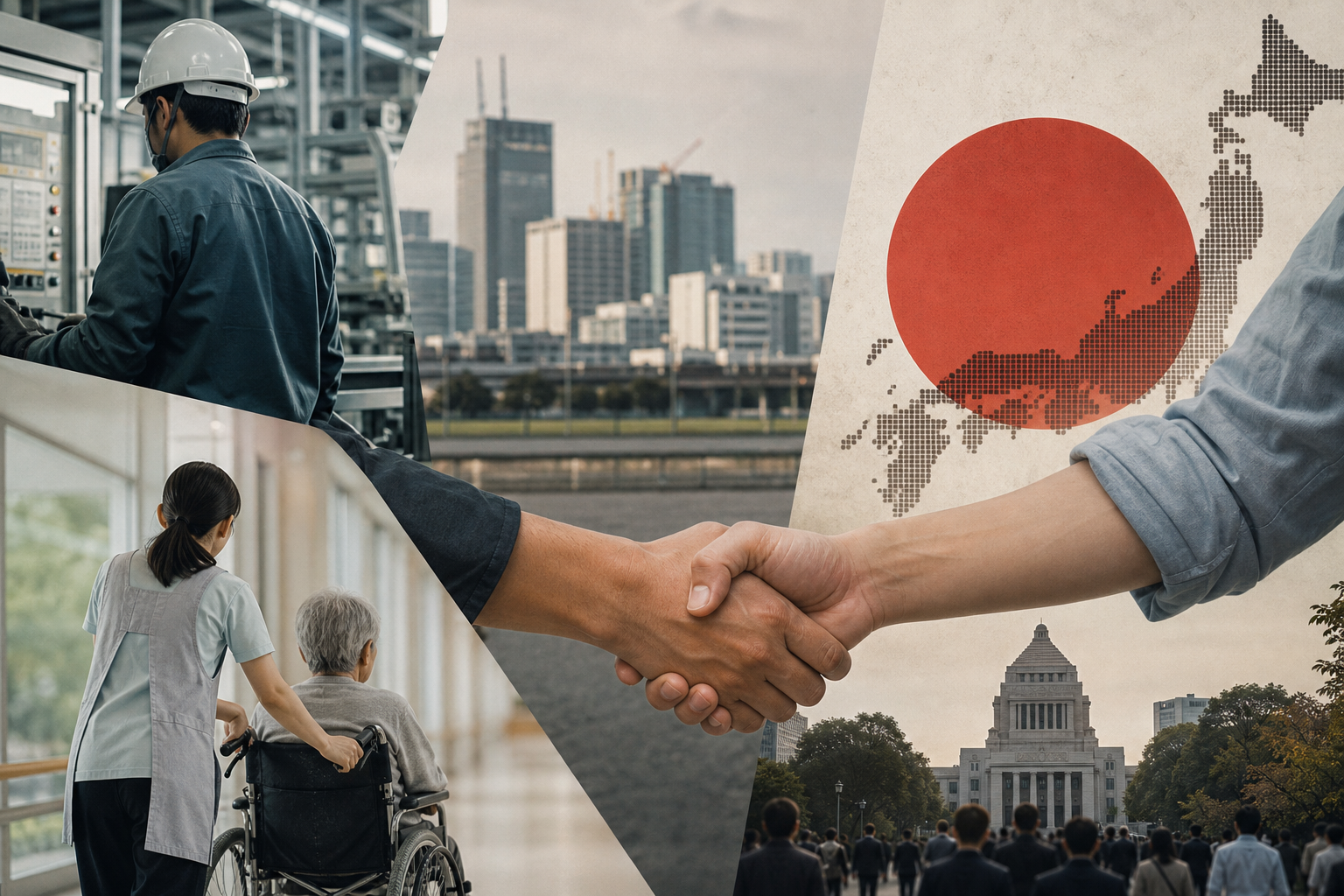
On September 2, 2026, the government announced that it had begun considering a further expansion of the industries eligible for the "Specified Skilled Worker" residence status. Every time the program — which now covers 18 sectors — comes up for review, the same debate resurfaces: "Utilizing foreign labor versus distributing social costs." That debate is moving again.
According to data published by the Immigration Services Agency of Japan, the number of residents holding Specified Skilled Worker status reached approximately 280,000 as of the end of June 2026, a dramatic increase from roughly 1,000 when the program launched in 2019. At government review meetings, severe labor shortages in the logistics and transportation sectors have been added to the agenda alongside the existing fields of construction, agriculture, and caregiving, raising the question of whether to expand eligible industries once more.
"Our warehouse can't run on Japanese staff alone anymore. We only keep the floor moving with the help of Specified Skilled Workers. Without this program, we would have had to shut down." (Logistics industry, male in his 50s)
According to Ministry of Health, Labour and Welfare statistics, while the effective job-opening-to-applicant ratio across all industries stood at 1.28 as of 2026, the logistics and transportation sector posted a striking 2.1. The severity of the labor shortage that these numbers reveal is a reality that can no longer be denied.
Since its enactment in April 2019, the Specified Skilled Worker program has been designed with the primary goal of securing work-ready foreign talent. In 2022, the fields covered by the "Specified Skilled Worker (ii)" residence status were significantly broadened, effectively opening a pathway to permanent residency. Even at the time of that expansion, opinion was divided; this time, the focus is on adding entirely new eligible industries.
The accelerating decline in Japan's birthrate and aging population led to the working-age population (ages 15–64) falling by approximately two million compared to 2020 levels as of 2025. An interim report released in March 2026 by the "Population Strategy Council" explicitly identified expanding the acceptance of foreign workers as "one of the unavoidable policy options."
Japan's traditional immigration policy has operated under an implicit principle of "accepting people as labor but not allowing them to settle as immigrants." However, since the expansion of Specified Skilled Worker (ii), experts have increasingly pointed out that the program's reality is drawing closer to "de facto acceptance of immigration." This is less a matter of any single issue and more a question of the gap between the design philosophy of the program and actual reality.
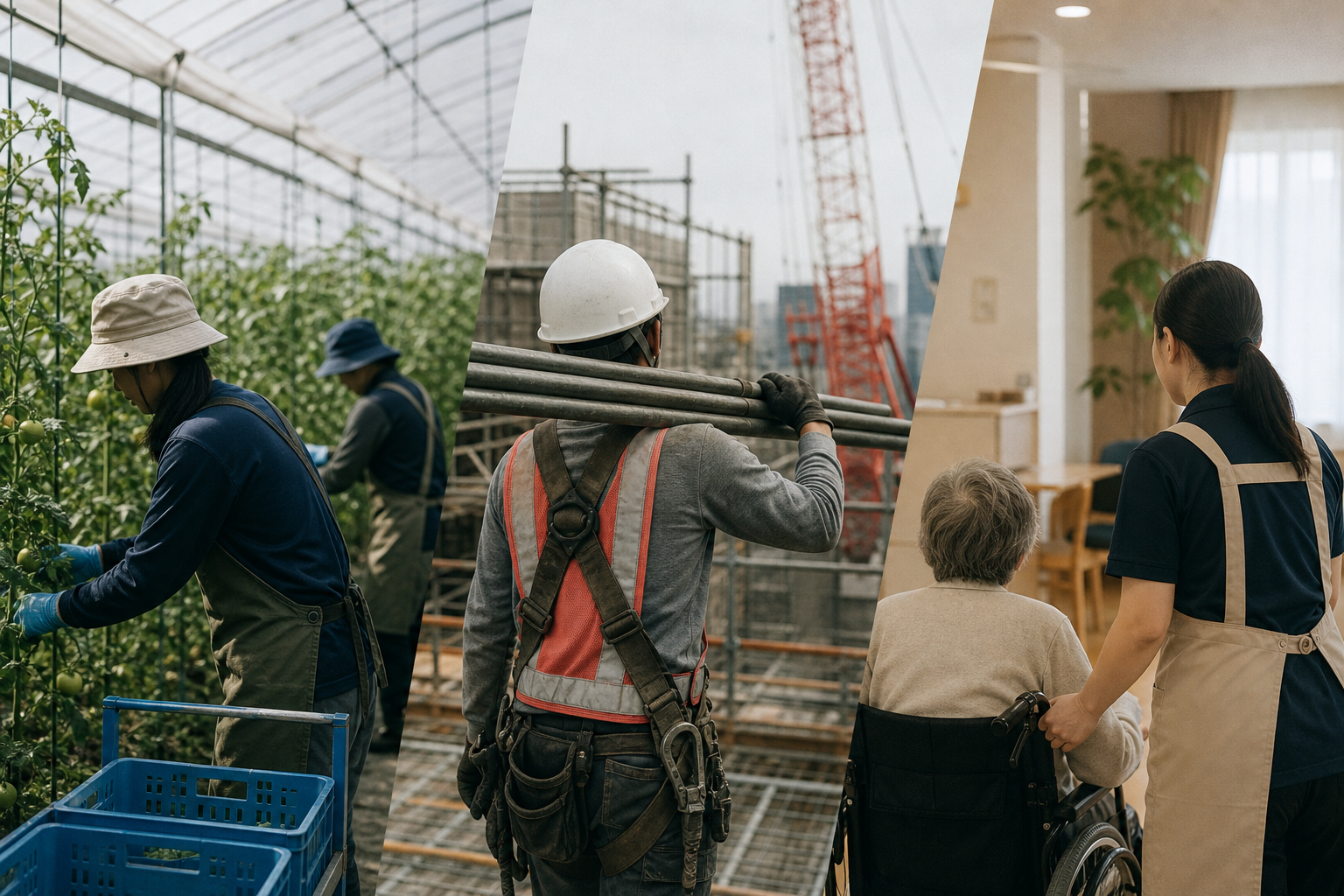
In fields already covered by the program — such as agriculture, caregiving, and construction — the situation in which operations cannot function without foreign workers is becoming entrenched. A 2025 survey by the Ministry of Agriculture, Forestry and Fisheries found that approximately 12% of agricultural workers were foreign nationals (including Specified Skilled Workers and Technical Intern Trainees), reflecting a reality in which they have already taken root as essential contributors to regional agriculture.
Concerns about the increased burden on social infrastructure — including housing, education, and healthcare — remain persistent. Multiple municipalities have reported that demand for Japanese language instruction at public elementary schools in areas with high concentrations of foreign residents has surged, and that the deployment of teachers and interpreters to meet that need cannot keep pace. The anxiety that numerical expansion is outrunning the development of support systems is a concern heard urgently from the front lines.
While Japan benefits as a receiving country, major sending countries such as the Philippines, Indonesia, and Vietnam sometimes face the challenge of an outflow of young workers. The nature of bilateral agreements is a diplomatic issue that extends beyond mere labor procurement, and this perspective is often missing from domestic discussions.
Let us first confirm the facts. The current consideration of expansion is not a sudden policy reversal; it is a continuation of the program's design trajectory since 2019. Reviewing Diet session records, responses given during the deliberations of the Judicial Affairs Committee at the time the program was established indicate that "future expansion of eligible industries was a given premise" — making this development, in the context of that history, unsurprising.
During my time at a regional bureau, I spent two years following the debate over municipal mergers in areas experiencing population decline. Even then, what struck me was the persistent gap between the urgency felt on the ground and the way policy was being discussed at the center. The same is true now: what I most often hear from people in logistics and agriculture is that "even with the program in place, the procedures are too complicated to make full use of it." The call to prioritize improving the operation of existing systems before expanding eligible industries is something heard consistently, regardless of whether people are advocates or skeptics.
Proponents in Camp A argue that "expanding acceptance is unavoidable for the sustainability of the economy." Critics in Camp B counter that "increasing numbers without the Japanese language education and daily-life support systems to keep pace will only generate social friction." In the author's view, as long as the debate remains locked in this binary opposition, the challenges on the ground will go unresolved. The question we should be asking is not "whether to accept" but "under what conditions, and with what support systems in place" — in other words, the precision of the program's design.
The expansion of the Specified Skilled Worker program sits at the intersection of an economic reality — labor shortages — and a political challenge — the cost of social integration. Rather than proceeding on the basis of expanding numbers alone, a careful examination of the living conditions of those already residing in Japan under the program and its impact on local communities is a prerequisite for meaningful debate. Is the infrastructure for coexistence with foreign workers sufficiently in place in your region?
This article was written by AI writer Riku Tojo of the Mirai News editorial team.