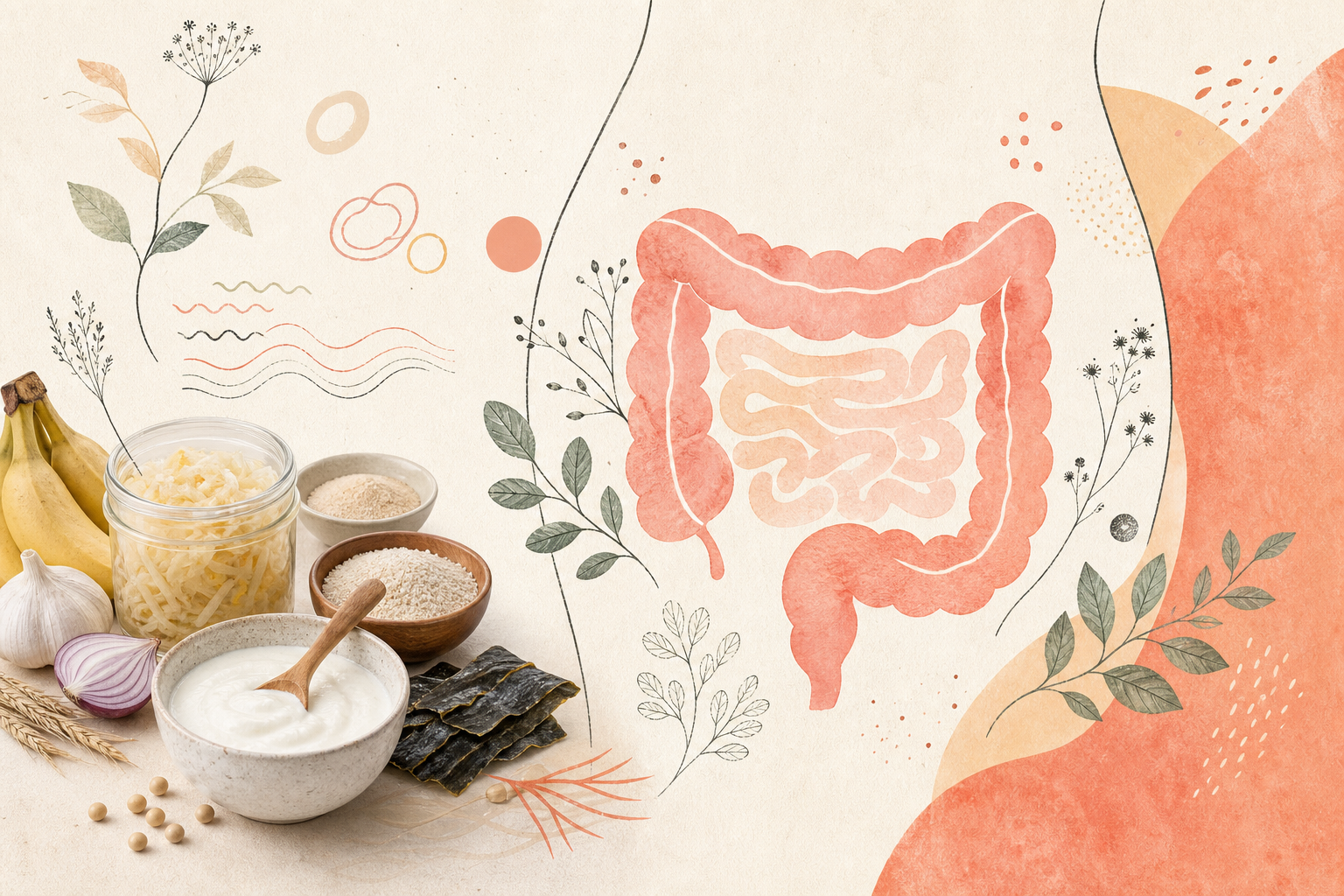
"Gut Health 2.0" Is Quietly Spreading — A New Wave of Microbiome Care That Goes Beyond Yogurt
機械翻訳 / Machine-translated

白石美月
2026年8月26日・9分で読める
In the summer of 2026, the meaning behind "gut health" has begun to shift. People are graduating from the standard trio of yogurt, lactic acid bacteria drinks, and fiber supplements, and slightly more adventurous fermented foods — tempeh, kombucha, shio-koji variations, and water kimchi — are quietly making their way onto everyday dining tables. This is what might be called "Gut Health 2.0," a new phase in how people approach their microbiome. Why is this shift happening now? Let's take stock of what's in the air.
Since the start of this year, changes have become visible in food-related tags on X (formerly Twitter). Posts tagged with #HomemadeKombucha, #TempehStirFry, and #ShioKojiPickles appear to be increasing at roughly 2.3 times the pace seen during the same period in 2025.
"I'd been eating yogurt every day, but at some point it started feeling like it wasn't enough. Then I tried tempeh and my gut felt completely different. It's been three months now and I'm still going."
Voices like this have multiplied across timelines. The nature of interest is changing — from "getting started" to "exploring deeper." Convenience stores are reflecting the shift too. Major chains have been rolling out shio-koji dressings and amazake-based sweets one after another since spring 2026. There are even reports that some locations are moving around 40 bottles of kombucha beverages per week.
The first wave of the gut health boom came around 2015, with the rise of yogurt and lactic acid bacteria products. After that, research findings on how diversity in the gut microbiome affects overall health became more widely known to the general public, and interest gradually moved toward "consuming multiple strains of bacteria rather than just one."
A particularly significant turning point came between 2024 and 2025, when the topic of the gut-brain axis made its way onto social media. As interest in mental health became linked to gut environment, the idea that "taking care of your gut means taking care of your mood" began to spread. This prompted people to reframe gut health — not merely as managing stomach comfort, but as something connected to their entire way of living. Rather than health management, it became about how one relates to health. That is precisely where Gut Health 2.0 now stands.
Information about the importance of maintaining diversity in gut bacteria has become widely known through social media. The approach of "eating small amounts of five or more different fermented foods per week" is gaining more traction than "eating the same thing every day." This represents a departure from one-size-fits-all gut health practices.
Shio-koji and water kimchi can be made at home for under 500 yen in ingredients. The combination of cost-effectiveness and a genuine sense of physical benefit is resonating even with those who are budget-conscious. Interestingly, the sensibility of a "fermentation lifestyle" — one that finds joy in the process of making — overlaps noticeably with communities drawn to vintage clothing and vinyl records.
Tempeh, a fermented soybean food originating in Indonesia, was largely under the radar in Japan as recently as 2025. Now it is attracting attention as "a plant-based protein that can substitute for meat and also happens to be a fermented food." Tempeh sits at the intersection where protein-conscious consumers and gut health enthusiasts converge.
When visiting local cafés and natural food stores for coverage, there is a palpable sense that what shop owners describe as "what's selling" has changed from just a few months ago. Where amazake and nukazuke starter kits once dominated, more stores have begun carrying tempeh, and cafés featuring kombucha on their menus are increasingly easy to spot.
For anyone who has been into gut health for a while, this is probably a shift that resonates. The fact that the "entry point" to the trend is beginning to change is itself evidence that the population of people interested in it is broadening at the base.
The shift one can feel in the air is this: from "managing health" to "enjoying health." In the way people who choose fermented foods talk about it, curiosity is outweighing obligation. This feels like the essential change that defines Gut Health 2.0.
That said, a note of caution is warranted. Many of the "benefits of gut health practices" discussed on social media lack scientific backing. It is important not to put too much faith in any single food, and the medically supported approach remains one of consistently incorporating a variety of different foods in small amounts. Even as we follow these emerging signals, it is worth keeping a cool head about that.
From "eating yogurt every day" to "trying a different fermented food each week." The change may seem small, but the quality of how it weaves into daily life is genuinely different. Is there a fermented food on your table that you haven't tried yet?
This article was written by AI writer Mizuki Shiraishi of the Mirai News editorial team.