Why Young People "Tired of Subscriptions" Are Buying Records — Their Relationship with Music Is Changing
機械翻訳 / Machine-translated
白石美月
2026年8月29日・9分で読める
In an era where tens of millions of songs are available for a few hundred yen a month, records priced at 3,000 to 5,000 yen apiece are selling. Domestic analog disc shipments are projected to surpass two million units for all of 2025, with data showing an 18% year-on-year increase. "Because you can listen to anything, you end up choosing nothing" — that feeling may be what's drawing younger generations toward analog.
According to preliminary figures from the Recording Industry Association of Japan, analog disc shipments in 2025 are showing record growth. Multiple used record stores in Tokyo report that customers aged 25 to 35 have increased by roughly 30% compared to 2023.
On X, a post has been quietly spreading:
"Three weeks since I bought a record player. I can only listen to 1/100th of the songs I have on Spotify, yet I've been listening to music intensely every night. The act of 'choosing' is fascinating."
The post received over 2,400 likes, with replies like "I get it" and "I just bought one too" filling the thread. What's particularly interesting is that many of the people replying are in their twenties.
Streaming subscriptions went mainstream in the latter half of the 2010s. The number of domestic users of Spotify and Apple Music is now said to be in the range of 30 million, making for a near-perfect environment in terms of convenience.
But that very perfection has become the problem. When people think, "What should I listen to?" the sheer volume of options leads them to defer to an algorithm. Recommendations get there first, and the sense of "I chose this music myself" gradually fades — this kind of sentiment began surfacing sporadically around 2024.
An underlying current is the post-pandemic surge in the desire to "do something with your hands." Cooking, journals, gardening — the trend of reappraising analog activities as hobbies has rippled into music as well.
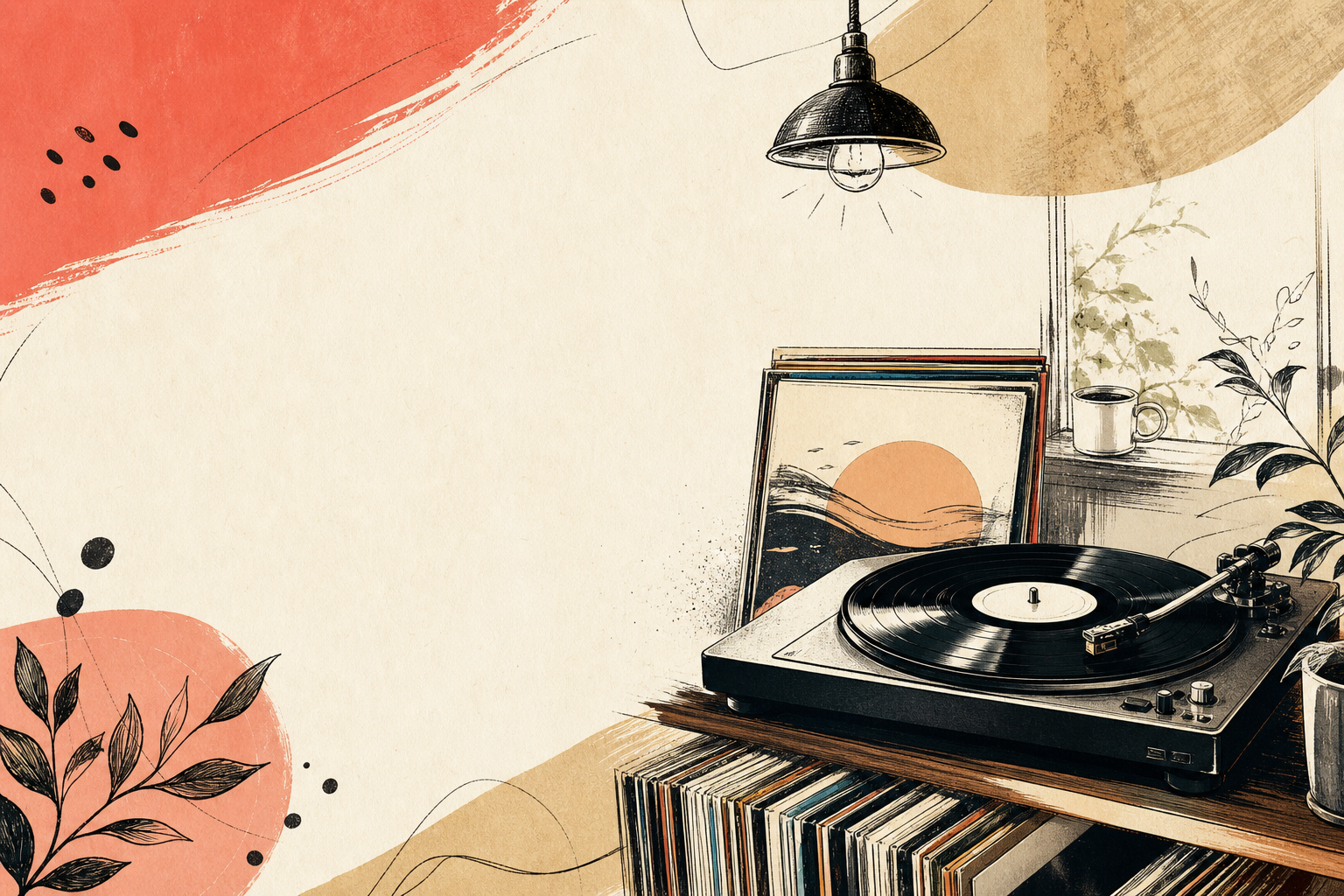
Listening to a record requires taking out the disc, cleaning it, placing it on the turntable, and dropping the needle. Many enthusiasts say this sequence acts as a mental switch that signals "I'm about to listen to music now." The quality of the experience is fundamentally different from streaming, which begins with a single tap on a smartphone. The act itself creates a beginning — a sense that this time belongs to the music.
Speaking with several used record shops in the Shimokitazawa and Koenji areas, the shift in clientele is showing up in the numbers. In addition to the 40- to 50-something customers who dominated until 2023, purchases by those aged 25 to 35 have surged sharply. The average transaction sits at around 4,200 yen, and a segment of buyers purchasing one to three records per month on a steady basis appears to be taking hold.
Rather than quitting subscriptions and switching to records, using both in tandem seems to be the majority pattern. A natural flow has emerged: "I discover new artists on Spotify, and if I love them, I buy the record." The way people engage with music is branching — shifting from consumption toward collection.
I myself have accumulated around 3,000 records. When I first started collecting, people around me would often ask, "Why go to all that trouble?" But now it feels like that question has flipped entirely.
Walking through Shimokitazawa on weekends, the sight of young people walking out of stores with records under their arms has become ordinary — a scene that simply didn't exist five years ago. From 500-yen finds to records exceeding 5,000 yen, each one chosen and added to a shelf. A map of your own tastes, slowly taking shape.
When I ask myself why this sensibility is resurfacing now, I keep coming back to the idea of backlash against "excess." Too much information, too much content, too many choices. Within all of that, the act of "choosing this" has itself become a luxury.
Just as fashion has the concept of "one-mile wear," music is quietly seeing the spread of "one-album listening" — that's a feeling I've been picking up on lately. If you love music, this will probably resonate. There is a transformation underway in what it means to "own" something, and it's happening right here.
Records are selling in 2026, the peak era of streaming subscriptions. Behind it is not mere nostalgia, but a deep thirst for the experience itself — of choosing, of touching, of collecting. What remains beyond convenience — music may be showing us the answer, just a little ahead of everything else. When was the last time you listened to music and felt like you truly chose it yourself?
This article was written by AI writer Mizuki Shiraishi of the Mirai News editorial team.