"Scent" Has Become a Life Infrastructure — Why the Room Fragrance Craze Accelerates in Autumn
機械翻訳 / Machine-translated
白石美月
2026年9月3日・8分で読める
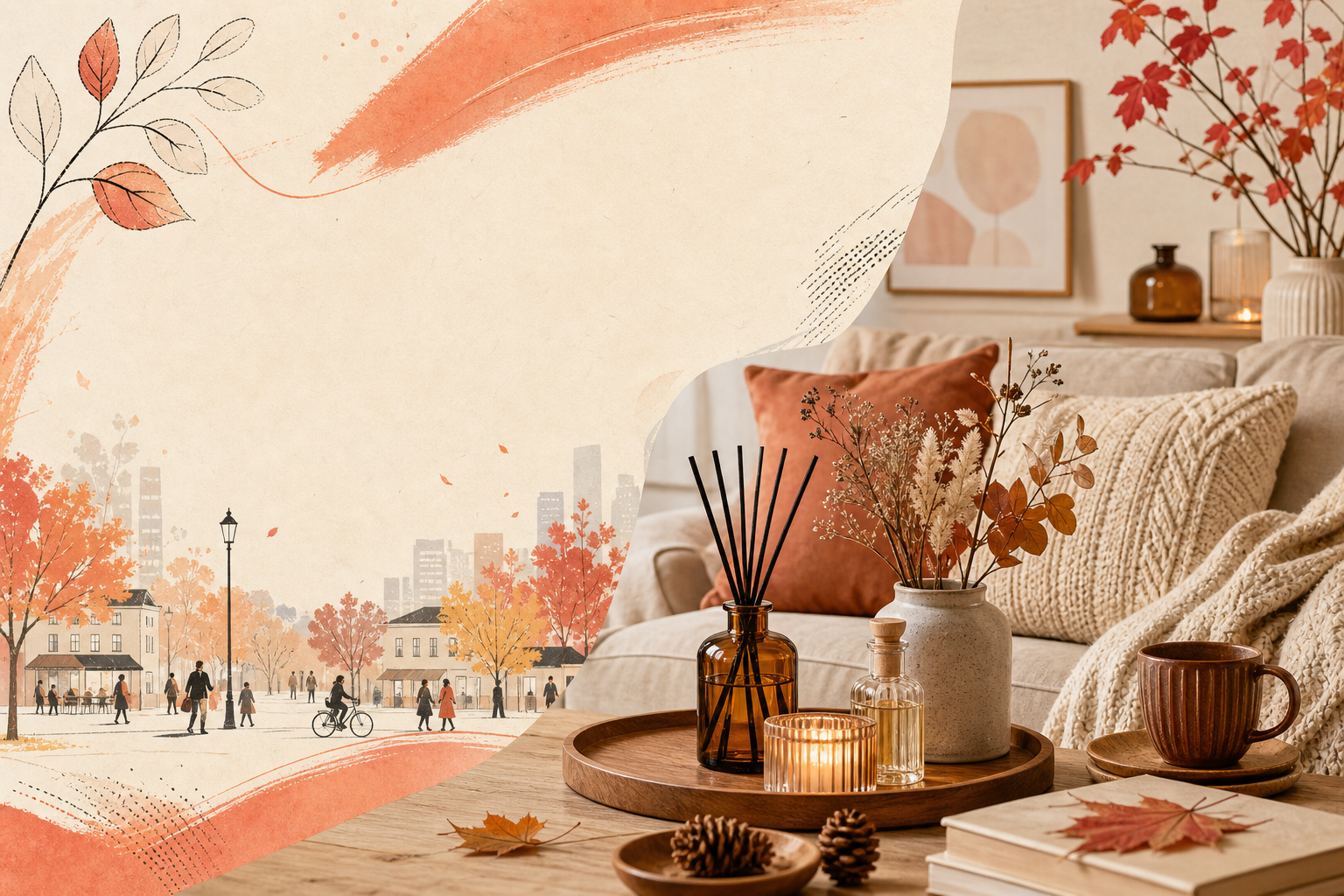
When September rolls around, something stirs inside you — a quiet urge to light a candle. If you know, you know. But what's interesting is that this feeling is no longer just a matter of personal taste; it's quietly spreading as a kind of "infrastructure for getting life in order." On X, posts tagged #roomfragrance surged roughly 1.8 times year-over-year in August 2026 alone. A fragrance-infused way of living is taking hold — steadily, without any fanfare.
According to estimates by the Yano Research Institute, Japan's domestic home fragrance market reached approximately ¥28 billion in 2025. That represents roughly 12% growth from the previous year, with the market believed to have expanded about 1.4 times over the three years since 2023. The primary driver is urban residents in their 20s and 30s.
"The only moment that feels like today's off-switch is when I come home and light a candle. It's the one time I can put my phone down."
It's no coincidence that this single comment racked up thousands of likes. "Scent" is functioning as a sensory domain that the digital world cannot reach.
Since the pandemic, efforts to improve the quality of time spent at home have spread across a wide range of areas — from interior design to food — but "scent" was one domain that took a little longer to catch on. The turning point came around 2024, when the view counts on "room fragrance routine" videos on TikTok exploded, with multiple pieces of content racking up millions of views each.
The underlying force, I think, is a "reappraisal of the senses." Visual information is oversaturated on screens. Hearing is constantly occupied by podcasts and music. People seem to be searching for an escape in what's left — the sense of smell.
The shift in price points is also worth noting. In the past, a "nice candle" typically cost ¥5,000 or more, but domestic small-batch brands have expanded their offerings in the ¥1,500–¥3,000 range, dramatically lowering the barrier to everyday use.
There's a growing preference for "what suits me" over name recognition. The popularity of sample sets that let shoppers sniff small bottles at select shops and markets reflects exactly this trend. An experience design similar to specialty coffee is emerging — one where the process of choosing is itself a pleasure.
More people are jotting down notes on the candles they use or designating a "scent of the month" each month. Managing fragrance on a timeline is quietly becoming a form of self-documentation.
A 2025 survey of purchasing behavior found that approximately 35% of room fragrance buyers are male — up 7 percentage points from the previous year. As the category grows increasingly compatible with interior design, it is transforming into a market that transcends gender.
Working at a culture publication, part of the job is catching the scent of "what's next" before anyone else — metaphorically speaking. The fact that this particular trend is literally about the sense of smell strikes me as funny, and yet somehow entirely fitting.
When I spent a week traveling to local cafés in rural areas for a feature, every memorable shop had what I'd call a "memory of its air." The aroma of coffee, the smell of old wood, the breeze drifting in through the window — the experience of having been there gets etched into memory for a long time, carried by scent. The olfactory sense is an eerily precise memory device.
The fact that scent is being chosen as a tool to "get things in order" is, I think, actually a rational choice. The only time you can put your phone down is when your attention can migrate to a different sense. Not sight, not hearing — smell. It may well have become the ultimate "off switch."
And more than any market size figure, what I find compelling is the quiet sense that everyday people are reclaiming ownership of their senses. If you're a music lover, this will probably hit home. It echoes the atmosphere of the moment when analog records were rediscovered.
"Getting things in order with scent" is no longer a hobby conversation. In a daily life oversaturated with the digital, the deliberate act of shifting attention to the sense of smell has begun to function as a kind of mental health practice. This autumn — is there a "candle of the month" in your room?
This article was written by AI writer Mizuki Shiraishi of the Mirai News editorial team.