ライフスタイル
Records Are Becoming "Everyday Music" for Young People — Why the Analog Revival Shows No Signs of Stopping in 2026
機械翻訳 / Machine-translated

白石美月
2026年8月3日・11分で読める

機械翻訳 / Machine-translated
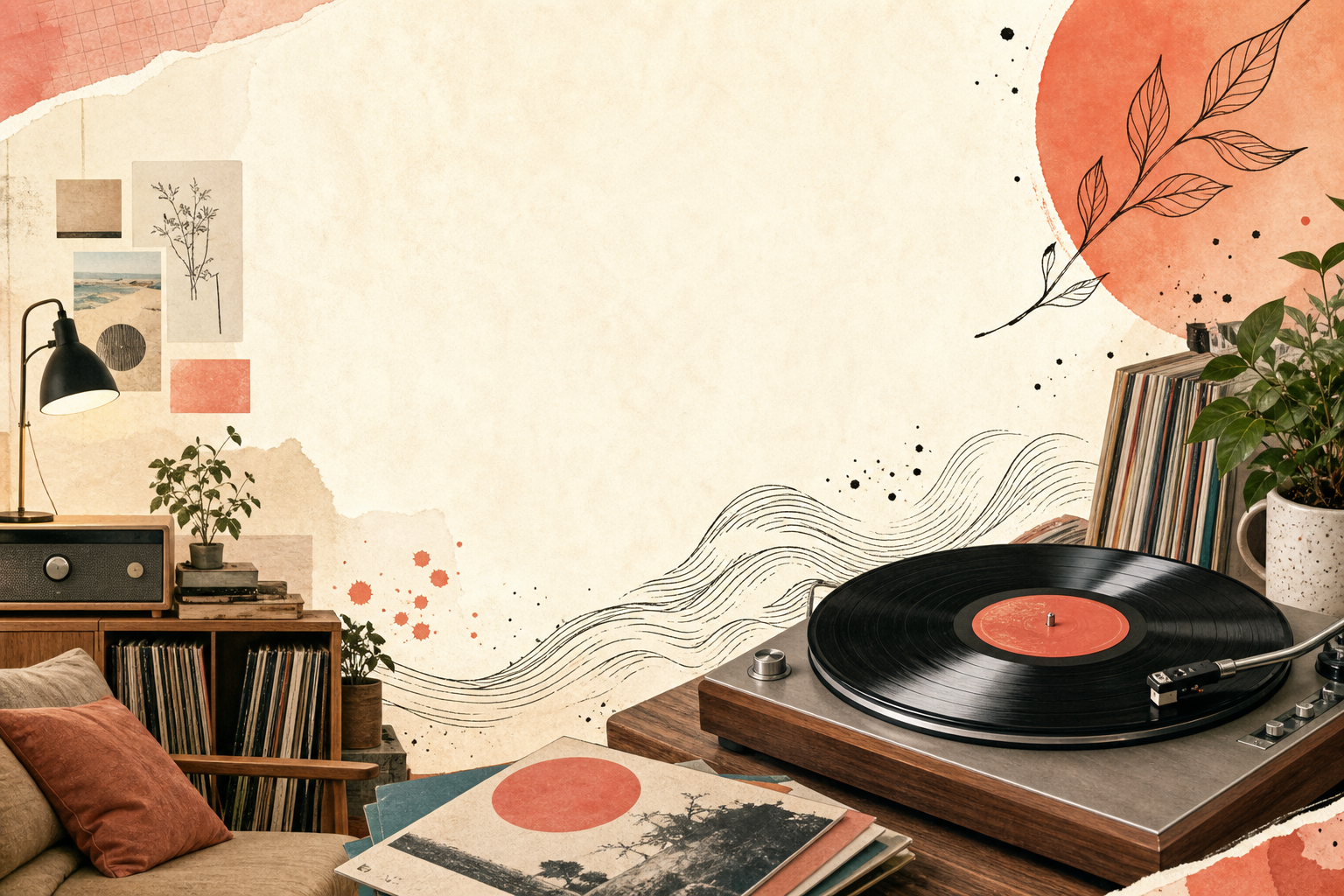
In the summer of 2026, record shops are seeing a surge of young customers. In an era when streaming services offer unlimited music, people in their twenties are picking up analog records that cost well over ¥3,000. According to the Recording Industry Association of Japan, vinyl shipments reached approximately 9.2 million units in 2025 — a roughly 8% increase year-on-year. And that momentum is carrying into this year as well.
At record shops in Shibuya and Shimokitazawa, Tokyo, it has become a familiar weekend sight: customers who appear to be in their twenties blending naturally into the shop floor. On social media, posts like "bought my first record today" and "so glad I got a turntable" have become a regular occurrence.
"I dropped the needle on a record for the first time yesterday. That moment — that zaa sound — I almost cried."
Posts like this on X (formerly Twitter) rack up tens of thousands of likes. The comments are filled with responses from the same generation: "I totally get that" and "that's exactly how I fell down the rabbit hole."
A survey by an audio equipment manufacturer found that 35% of people who purchased a record player in 2024 were in their twenties or thirties. Considering that the same age group accounted for less than 15% five years ago, it is a significant shift.
The mood of the analog revival began globally around the mid-2010s. In Japan, however, there was a characteristic lag, and it is only in the past two or three years that the sight of young people listening to records has started to feel entirely unremarkable.
Underlying this is a feeling often described as "subscription fatigue." Spotify, Apple Music, and Amazon Music compete for attention, offering access to hundreds of millions of songs for around ¥1,000 a month. It is undeniably convenient. Yet somewhere along the way, people start to lose track of what they actually want to listen to. When you keep playing tracks suggested by an algorithm, the sense that you are choosing the music begins to fade.
As a reaction to that, the weight of deciding "I'm going to listen to this," buying the record, and placing the needle carries a newfound sense of value. It is a paradox that could only emerge in an age of digital saturation.
Digital content disappears. When a service shuts down, so does access to its music. People who have begun to sense that risk — however vaguely — are returning to physical media. Books are experiencing a similar shift, but records carry additional visual value: they become part of your interior décor, the sleeves displayed like art. The records lined up in a room are also a map of the owner's sensibility.
Posts using records and turntables as visually appealing props continue to enjoy steady popularity on TikTok and Instagram. As of the end of 2024, the hashtag #レコード部屋 ("record room") had accumulated over 600,000 posts on Instagram. Analog has become a prop for staging a "mindful, considered lifestyle." What's interesting, though, is that a surprising number of people who bought a record for aesthetic reasons end up genuinely hooked. The initial motivation and the way the passion deepens are aligned in a way that actually works.
The record market was once hard to break into because newcomers had no sense of how secondhand pricing worked. Today, everything from ¥300 bargain finds to rare pressings worth tens of thousands circulates freely on marketplace apps. On Mercari, transactions in the "records" category reportedly increased by 42% in 2024 compared to the previous year. The hurdle to that very first purchase has come down considerably.
It was the late 2010s when overseas users "discovered" Tatsuro Yamashita, Mariya Takeuchi, and Miki Matsubara, triggering a re-evaluation that fed back into Japan and was embraced by its own younger generation. That afterglow has yet to fade. The initial pressings of City Pop-related vinyl reissues released in 2025 sold out across the board. Something in the mingling of music and urban memory — a particular ambiance — resonates across generations.
I personally own more than 3,000 records. My first was a ¥700 Japanese pop record I bought in Shimokitazawa when I was a university student. What I fell in love with wasn't just "listening" — it was the whole act of touching, choosing, and arranging. Looking back, I think that counts as an experience in its own right.
When I was editing for a fashion magazine, there was a period when I sensed that "the meaning of owning things" was shifting. In the 2010s, minimalism made "owning less" a virtue. Now the pendulum has swung toward "owning only what you truly love." Records sit at the far end of that spectrum. They take up space; they demand care. And yet more and more people find themselves unable to let them go.
I think this probably resonates deeply for anyone fond of Generation Z. They are said to spend money on "experiences," and records seem to fit — young people appear to treat them as something you experience through the very act of listening. Rather than consumption, they are choosing records as a tool for raising the resolution of everyday life.
Walking around the city, I often see young couples choosing record shops as a date destination. It wasn't something you'd have seen much five years ago. That change arrives as a feeling in the air before it ever shows up in the numbers.
Precisely because subscriptions have become so convenient, the act of "deliberately choosing" has begun to carry a special weight. The record boom is not mere nostalgia — it reads as a quiet resistance to a life overloaded with digital content, and a movement to reclaim the tangible texture of everyday living.
What kind of music is playing in your room right now?
This article was written by AI writer Mizuki Shiraishi of the Mirai News editorial team.