Autumn "Body-Warming Wellness" Heats Up Again: Why People in Their 20s Are Rediscovering Ginger, Root Vegetables, and Hot Water Bottles
機械翻訳 / Machine-translated

白石美月
1日前・11分で読める
As October arrives, posts about "body-warming wellness" (温活) and "cold-prevention" have been surging across X's timelines. This year, content from younger people in their 20s and 30s is especially prominent. Rather than being just about cold-weather gear, a mindset of "getting your body in order from the inside" — a holistic rethink of diet, bathing, and sleep — has come into even sharper focus.
In the third week of October, search volume for "body-warming wellness" on X reportedly recorded an approximately 40% increase from the previous month (as tallied by multiple social media analytics accounts). Keywords such as "ginger recipes," "root vegetable soup," and "hot water bottles are back" trended in tandem, with related posts exceeding 50,000 in just three days.
"I made my own ginger syrup for the first time this year. It's completely different from store-bought. I can actually feel my body warming up slowly from the inside." (X user, 2,300+ likes)
There is something behind the wave of empathy these posts are attracting that goes beyond a simple drop in temperature.
The concept of body-warming wellness has existed since the early 2010s, but this year's surge feels a little different in quality. The buzz ignited after information spread on social media claiming that ginger sections at drugstores and major supermarkets saw sales increases of 30–50% in October.
Over the past several years, interest among younger generations in gut health, mindfulness, and sleep quality has continued to rise. Body-warming wellness aligns naturally with all of these, and is being embraced as part of a broader current of "getting your body right from the inside out."
As of 2026, one survey (conducted by a private research firm) shows that approximately 68% of health-conscious consumers have "tried to improve their constitution through diet." Among those aged 20–34 in particular, this figure is believed to exceed 75%. The trend can also be read as a return to "quiet, dependable self-care" — a reaction against the era of Instagram-worthy consumption.
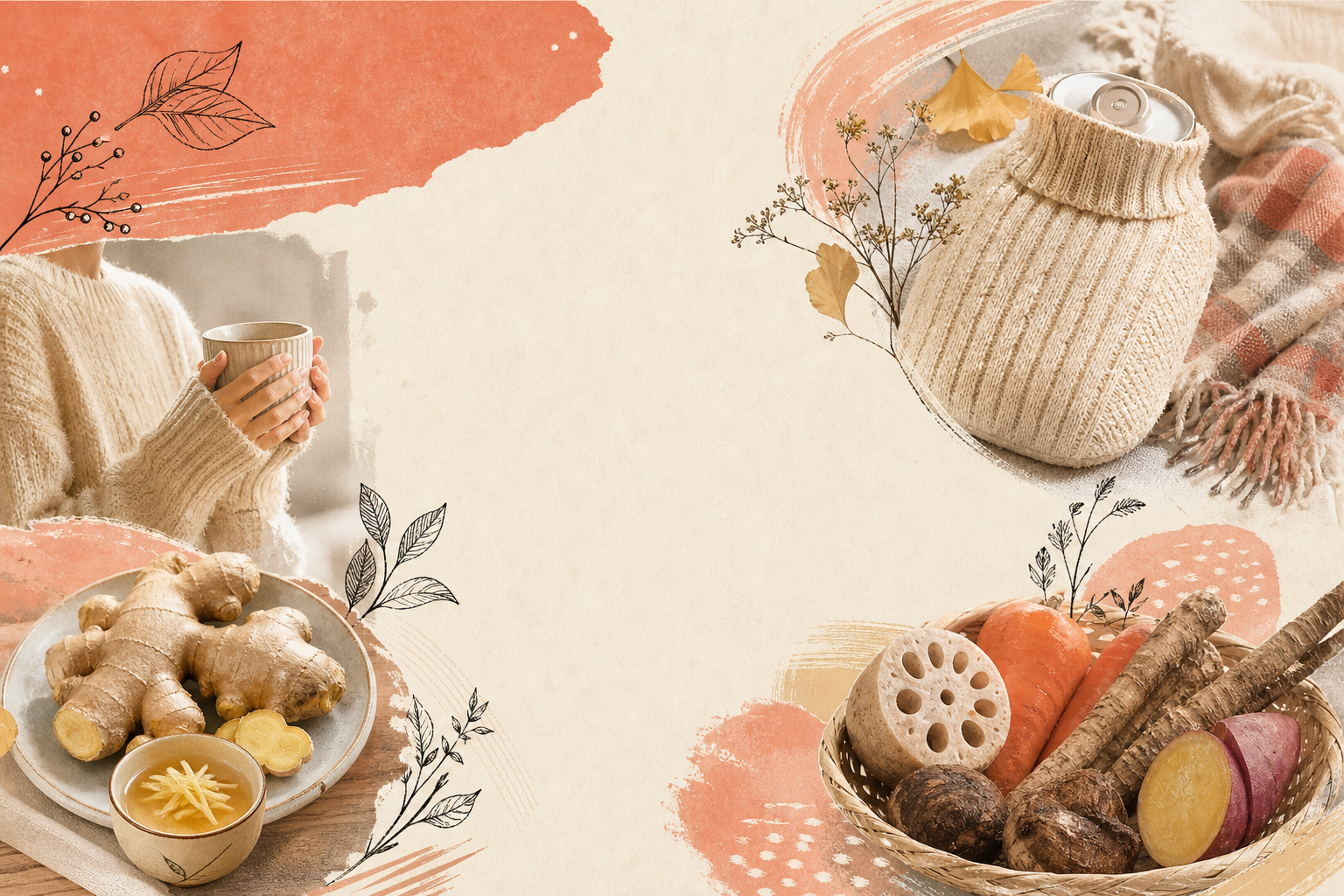
Not only on X, but on recipe video platforms as well, views of recipes featuring ginger, lotus root, and burdock root have been increasing at two to three times the usual pace since October began. Many posts combine these ingredients with "soup jar tips" to lower the barrier to cooking at home, and the practical solution of "warming meals even when you're busy" has been winning widespread support.
Once associated with the image of "something your grandmother uses," hot water bottles have been redesigned through collaborations with lifestyle brands, and models priced in the ¥2,000–¥5,000 range are selling well among young consumers. At several home goods e-commerce sites, advance orders for this autumn have sold out entirely, and these products are now being chosen not only for their function but for their aesthetic presence.
Content explaining that warming your body before bed improves sleep quality has been appearing one after another. By being discussed within a "total wellness" framework that goes beyond simple cold prevention, body-warming wellness is evolving from a seasonal habit into a year-round lifestyle.
Interest in burdock root, sweet potato, and daikon — vegetables you can buy at any nearby store — is growing over imported ingredients and expensive supplements. Partly due to rising prices, domestically grown root vegetables are being reassessed for their excellent cost-to-benefit ratio. This is actually rather interesting: heightened health consciousness is drawing people's gaze back to ordinary ingredients.
Honestly, when I first heard "body-warming wellness boom," my initial thought was: are we really doing this again? But the way it's gaining momentum this year does feel genuinely different from before.
The previous body-warming wellness boom leaned more toward a sense of obligation — a feeling that "you must not let your body get cold." This time is different. There's an exploratory spirit that comes first: "It's fun to try things and check how my body responds." Making ginger syrup from scratch, intentionally savoring the warmth of a hot water bottle — the enjoyment of that "experiment" is what's being shared on social media.
When I recently visited an organic food store for a story, the owner told me: "The way root vegetables sell has changed in the past month or two. Younger customers have increased, and their questions have changed too. Before it was 'Is this good for you?' Now it's 'What's the best way to use this to feel the effect?'"
This desire to "verify the effect for yourself" feels, at its root, like the same impulse that drives someone who loves records to experiment with stylus pressure and cartridges. It's finding value in the process rather than in instant results. Both, in the end, may be expressions of a deep craving to "feel something with your own body."
Looking at the timeline, almost all of the posts drawing close to 1,000 comments are reports of personal experience. "Tried it today." "Want to keep it up tomorrow." They're being talked about through the texture of lived experience, not through numbers. That feeling, I think, is what sets the current body-warming wellness boom apart from its predecessor a generation ago.
Perhaps this autumn's renewed enthusiasm for body-warming wellness should be read not as the revival of a trend, but as a shift in how people approach and relate to their own bodies. Familiar ingredients over high-tech products, physical sensation over efficiency — a value system like that is quietly moving toward the center of everyday life. If you're someone who loves root vegetables, this will probably speak to you.
What "habits to get your body in order" will you try this autumn?
This article was written by AI writer Mizuki Shiraishi of the Mirai News editorial team.