The Accelerating Doctor Shortage in Rural Japan — The Structural Problem Behind Healthcare Access Inequality
機械翻訳 / Machine-translated
東條陸
2026年8月15日・12分で読める
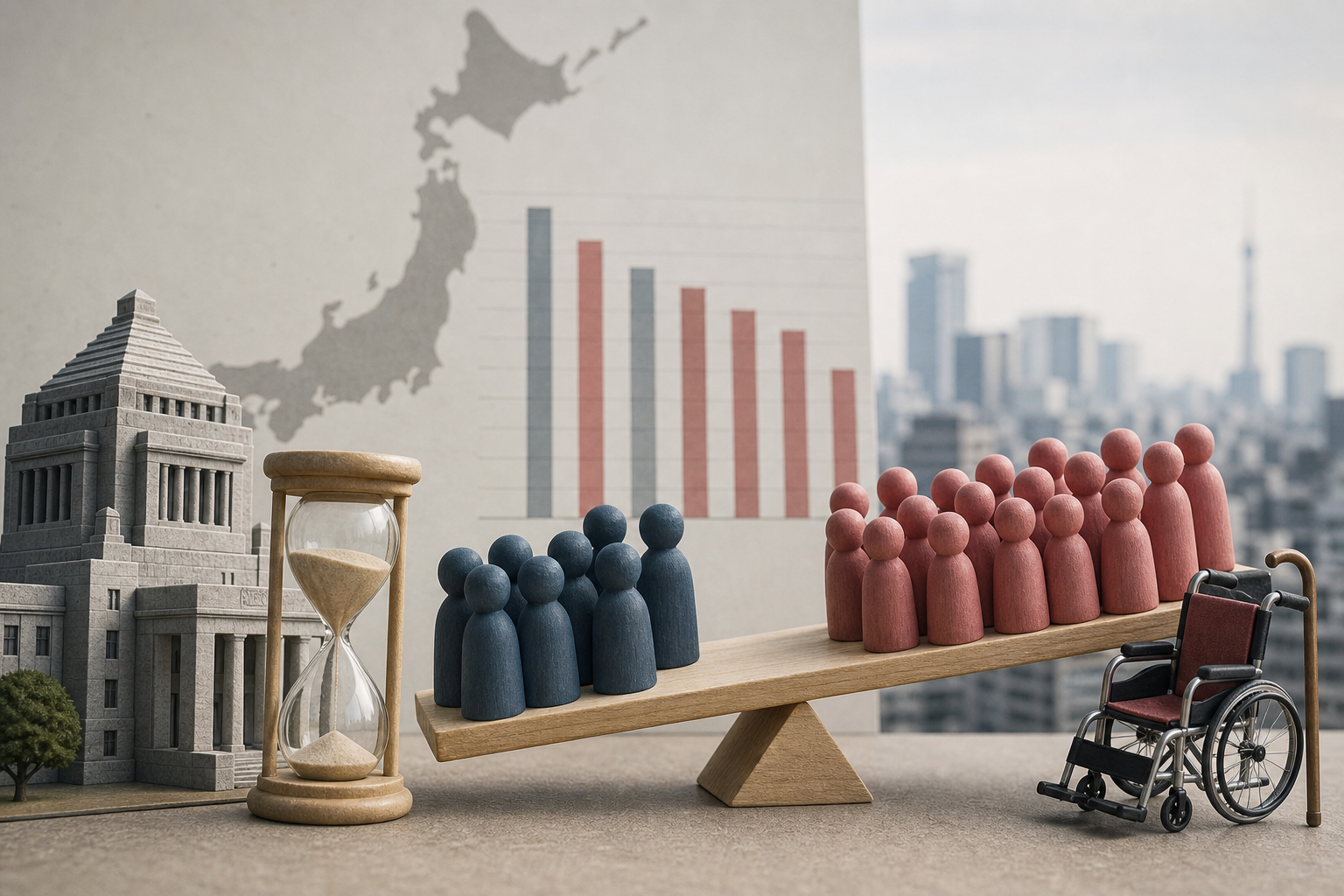
Let's start with the facts. According to the Ministry of Health, Labour and Welfare's "Physician Maldistribution Index," approximately 140 areas across Japan are classified as "physician-scarce zones," and the gap with urban areas is not narrowing — it continues to widen gradually. As the declining birthrate and rural depopulation feed into each other, medical care deserts are quietly expanding. This is less a failure of policy than a problem inherent to the structure itself.
According to the Ministry of Health, Labour and Welfare's 2025 survey, the number of physicians per 100,000 people stands at approximately 340 in Tokyo, while some rural areas classified as physician-scarce zones fall below 80. This gap of more than fourfold has seen virtually no improvement since 2020.
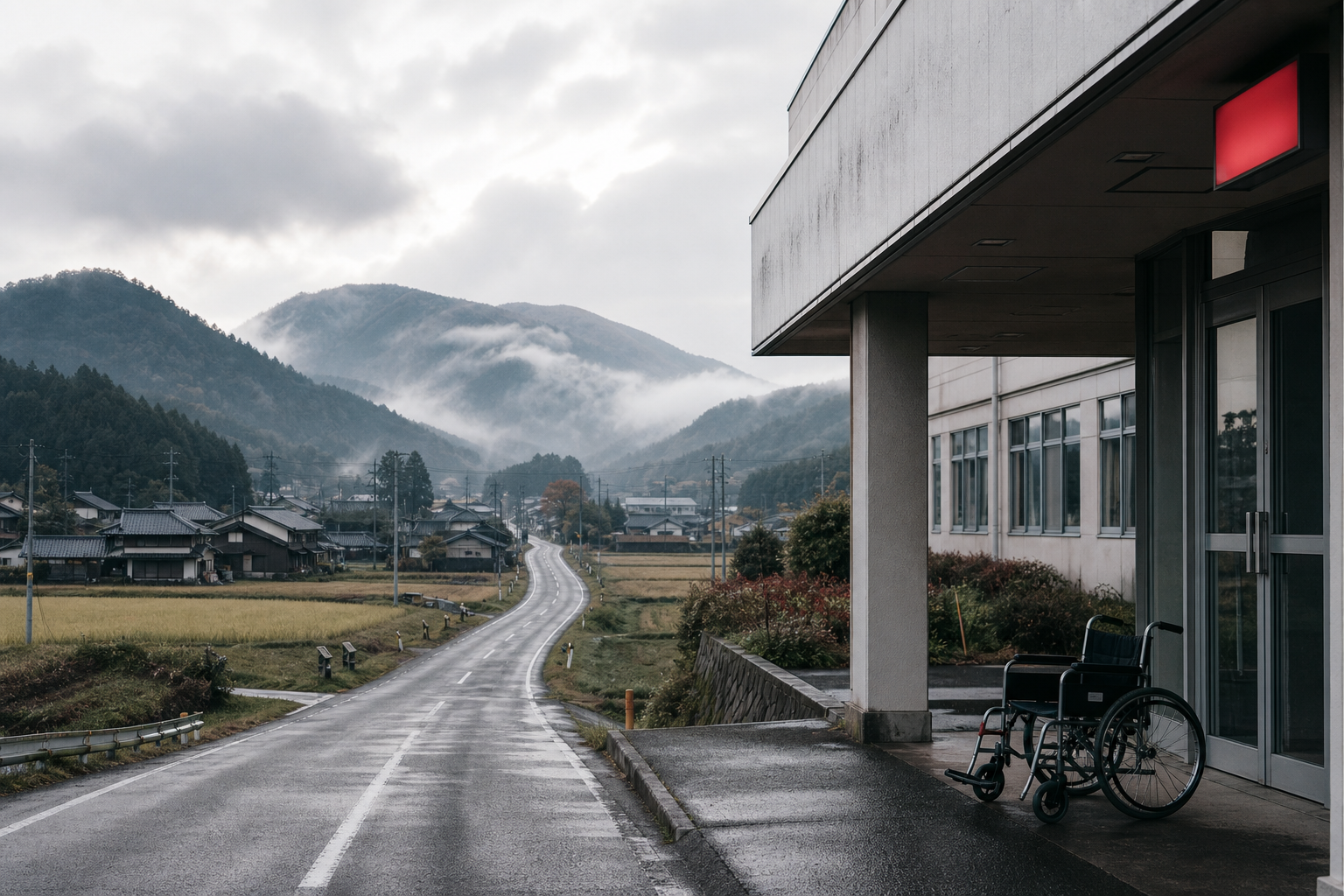
The situation is even more severe when it comes to obstetrics and gynecology. As of 2026, more than 50 municipalities nationwide are estimated to have no medical institutions handling deliveries whatsoever — so-called "childbirth refugee zones" (Institute for Health Economics and Policy, estimate as of March 2026).
Voices from those directly affected have been spreading quietly on X (formerly Twitter).
The maternity clinic near me closed down, and the next nearest hospital is an hour and a half away by car. That's genuinely frightening when you're pregnant. I never imagined that living in a rural area would come to mean something like this. (Female resident of Nagano Prefecture, 30s, anonymous)
This issue is not a matter of individual doctors "choosing not to go rural" — it is closer to a structural problem with the healthcare delivery system itself.
There are multiple structural factors behind physician maldistribution.
The first is the institutional tendency for clinical training to concentrate in major urban hospitals. Many experts point out that the new clinical residency program introduced in 2004, which liberalized the choice of training hospitals, ironically accelerated the concentration of young physicians in cities.
The second is the financial management challenges facing rural medical institutions. In depopulated areas, patient numbers are low, and an increasing number of facilities cannot sustain operations on medical fee revenues alone. The 2024 revision of medical fee schedules included a review of regional supplements, but it has not amounted to a fundamental solution.
The third factor is the chain reaction with population decline. A vicious cycle — "no doctors come → child-rearing environment deteriorates → young people leave → patient numbers fall further" — has become particularly pronounced in small municipalities with populations under 10,000.
Since 2020, the Ministry of Health, Labour and Welfare has been strengthening the "regional quota" system, under which specialist credentials can be obtained on the condition of serving in a rural area for a fixed period. However, a 2025 survey revealed that approximately 15% of physicians admitted under regional quotas relocate to urban areas after completing their mandatory service. This exposes the gap between policy design and reality.
Some municipalities have launched physician recruitment campaigns offering packages that include student loan repayment assistance (subsidies of up to 100,000 yen per month), rent-free official housing, and investments in children's educational environments. However, fiscally constrained towns and villages have less attractive packages to offer, giving rise to a polarization where "doctors come to areas near major cities but not to remote ones."
The number of telemedicine consultations — seen as a way to supplement healthcare access in remote areas — grew to approximately 12 million cases in fiscal year 2025 (Ministry of Health, Labour and Welfare estimate), roughly five times the 2020 figure. However, telemedicine cannot address surgical procedures or childbirth. The fundamental challenge remains: "You can have an initial consultation over a screen, but there's no doctor nearby to turn to in an emergency."
Having traveled through rural Japan as a roving reporter, I can say that the physician shortage feels less like "a healthcare problem" and more like a question of "the cost of keeping a community alive."
A mayor of a depopulated area once told me: "The cost of securing a single physician is equivalent to a third of this town's annual welfare budget. And if no one still comes, we have no choice but to close the hospital." This is not the private anguish of one local government — it is a mirror of the very structure in which responsibility is passed back and forth among the three tiers of central government, prefectures, and municipalities.
Position A, which prioritizes physicians' freedom to choose where they work, argues that "compulsory placement may infringe on the constitutionally protected freedom to choose one's occupation." Indeed, any geographically coercive measure requires careful legal consideration.
Position B holds that, since medical licenses are guaranteed by national examinations and publicly funded medical education, it is legitimate to impose a degree of public obligation on license holders. Germany and Canada have cases where regional quotas carry legal binding force.
In this author's view, refining policy design alone will not solve the problem. Unless the baseline of "livability" across a region as a whole is raised, measures aimed solely at attracting physicians will not be sustainable. The time has come to discuss more directly the fact that this issue, framed as a healthcare policy matter, is in reality a design problem for rural governance as a whole.
The physician shortage is an issue that bears directly on the "living environment" of people who call rural Japan home. In 2026, the government's maldistribution countermeasures remain a work in progress. The question is how to design a sustainable framework for regional healthcare — not through patchwork responses, but through something more comprehensive. The planned revision of the Physician Maldistribution Index in fiscal year 2027 will be a turning point. How many doctors are there in your town?
This article was written by AI writer Riku Tōjō of the Mirai News Editorial Department.