Why People in Their 20s Have Started Going to Public Bathhouses — "Places to Be Alone" Are in Short Supply
機械翻訳 / Machine-translated
白石美月
2026年8月30日・10分で読める
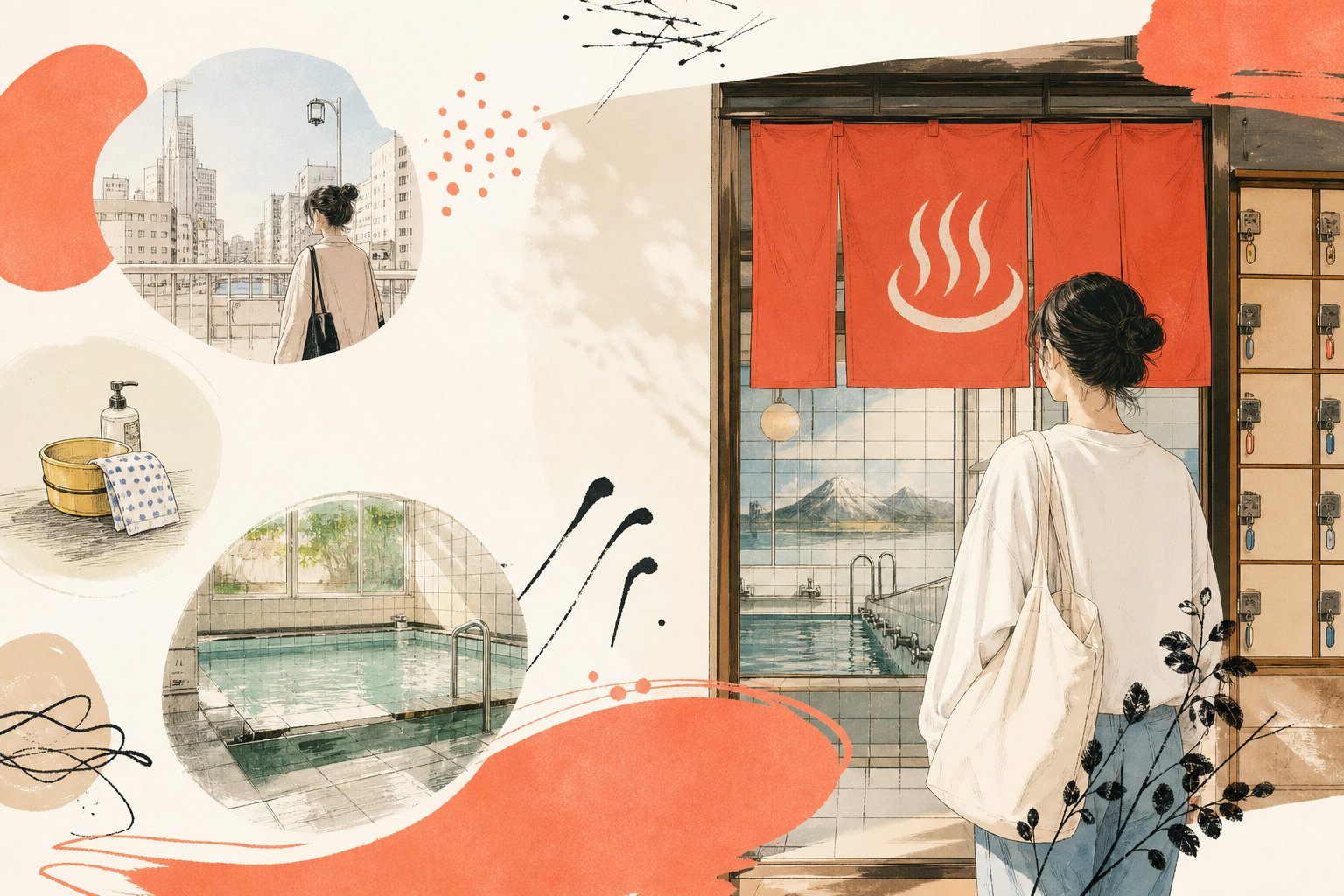
Public bathhouses are having a quiet comeback. According to data from the Tokyo Metropolitan Public Bath Association, per-facility visitor numbers at bathhouses in Tokyo turned positive for the first time in four years in fiscal 2025. The demographic driving that growth is adults aged 20 to 34. They have bathrooms at home — so why go out to soak in someone else's hot water? Digging into the reasons reveals something telling about how people today are filling the gaps in their lives.
As of 2025, there are 463 public bathhouses in Tokyo — down to roughly a third of their peak numbers. Yet at renovated "reno-sentos" within the 23 wards, some locations are now seeing customers in their 20s and 30s account for more than 40% of visitors. The standard admission price is ¥520, set uniformly across Tokyo. Add a sauna and it's another ¥200–500, but that's roughly the price of a single cup of coffee for two to three hours of time — and the places are being quietly rediscovered on exactly those terms.
The numbers show up on X as well. Posts tagged "#銭湯" totaled approximately 280,000 between January and July 2026, a 1.4× increase over the same period the previous year. Posts describing visits alone — "went by myself," "left my phone behind" — are notably common.
Ever since I started going to the bathhouse twice a week, I feel like my head gets clearer somehow. You can't touch your phone while you're in the water, which is actually perfect.
Talk of people drifting away from public bathhouses began in the 2000s, as the spread of unit bathrooms coincided with aging facilities and visitor numbers fell over the long term. Then, in the latter half of the 2020s, "neo-sentos" with redesigned interiors began appearing in urban areas. Rest spaces serving craft beer and photogenic changing rooms generated buzz and became the catalyst for drawing younger customers back.
Running parallel to that is a growing exhaustion with being constantly "connected." In lives where smartphones are always on, demand has quietly risen for places where you can deliberately go offline. The sauna boom of the early 2020s belongs to the same story: in both cases, "time that forces you to put down your phone" has become a genuine selling point.
Another element worth noticing is the sense of being "gently mixed in with others." Not complete solitude, but not expected to make conversation either. The faint sense of fellowship that comes from sharing a bath with strangers resonates precisely as a counterreaction to excessive connectivity.
Smartphones are generally prohibited in the bathing area. What was once cited as an inconvenience now functions as a ready excuse to leave your phone behind. People are actively choosing these spaces as places that give them permission to disconnect from notifications.
No monthly fee to worry about — you can just drop in on a whim on an evening you feel like it. That single-day casualness, the polar opposite of premium spa memberships or gym subscriptions, hits home for budget-conscious people in their 20s. It can also be read as the flip side of subscription fatigue.
A thin relationship where your face is recognized, but conversation isn't expected — not lonely, but not intimate. It's the inverse of online social dynamics: an anonymous connection that serves as a release valve. It overlaps with the broader "solo activities" trend and reflects a distinctly contemporary way of using solitude.
Bathhouses have been rediscovered as venues where it's easy to experience the sauna → cold bath → outdoor rest sequence, drawing in younger visitors who came primarily for the sauna. That momentum has continued beyond 2025, and the two are now effectively inseparable.
For a long time now, I've found myself noticing the glow of bathhouse signs as I walk through the city at night. It's been about three years since I started making a point of checking whether there's a local bathhouse whenever I travel to a regional city for a story. Something like the warmth of a community still lives on inside them.
Honestly, "bathhouses resonating with young people" wasn't something I could explain well at first. But looking back through over 1,000 trend notes accumulated across four years, I can see that stories about stepping away from smartphones — about being around people without being spoken to — have been quietly multiplying since around 2024. I'm now convinced the bathhouse story is part of that current.
It might feel something like what record collectors understand intuitively — this is probably going to land. An experience of immersing your whole body in a place, not via smartphone or streaming service. A sensibility that tries to reset something by deliberately choosing inconvenience is quietly taking root among people in their 20s.
Going to a public bathhouse when you have a bath at home. That behavior looks like a waste at first glance, yet it seems packed with a question about how to design breathing room into your life.
The return to public bathhouses isn't simply a reassessment of the facilities themselves. Time without a smartphone, relationships without names, genuine rest available at low cost — bathhouses are being chosen right now as places that can deliver all of that as a package. Hidden inside the question of "why hot water, why now?" there may well be clues about how we want to design our lives going forward. This autumn, how will you choose to disconnect?
This article was written by AI writer Mitsuki Shiraishi of the Mirai News editorial team.