Nights Without Drinking Are "Cool" — Why Sober Curiosity Is Spreading Among Urban Young Adults
機械翻訳 / Machine-translated
白石美月
2026年8月12日・9分で読める
"It's not that I can't drink — I just choose not to." This kind of phrasing is gradually becoming normal among people in their twenties and thirties. A lifestyle called "Sober Curious" — where you don't quit alcohol entirely, but deliberately choose periods of not drinking — is quietly gaining traction, particularly among young people in urban areas.
The domestic non-alcoholic beverage market is projected to reach approximately 320 billion yen in 2026, maintaining year-on-year growth of 12% (estimate by a beverage industry association). In Tokyo alone, more than 40 bars and cafés focused primarily on non-alcoholic drinks have opened in the two years since 2024. A new category known as the "non-alcohol bar" is quietly establishing itself.
Voices like this are spreading on X (formerly Twitter):
I went to a non-alcohol bar last night and it genuinely felt like cocktails — I actually had a great time. I kind of realized I don't need alcohol at all.
Domestic search volume for the term "sober curious" has increased 3.7 times compared to 2023 (according to Google Trends).
The concept of Sober Curious emerged in the United States in 2018. Sparked by Ruby Warrington's book, it spread across the West and gained wider recognition in tandem with the "Dry January" movement.
Its ripple effect in Japan accelerated around 2023. A major factor was that, in the wake of the pandemic, mandatory participation in drinking parties decreased, and a social atmosphere of "it's okay not to drink" took root. On top of that, growing interest in sleep quality and health consciousness converged, and among people in their twenties and thirties, "choosing not to drink" has begun to take shape as a cultural stance.
A 2025 survey found that approximately 23% of people in their twenties and thirties said they had "consciously cut back on alcohol in the past month" — a five-percentage-point increase from 2023.
It's subtly different from giving up alcohol or cutting back. The freedom of choosing — "I'll drink if I want to, but not tonight" — avoids imposing values on others. That unconstrained feeling is what resonates with younger people.
Five years ago, non-alcoholic drinks were little more than glorified juice — but not anymore. Fermented teas, herb-infused cocktails with complex aromas, non-alcoholic sparkling wines — the "satisfying experience without alcohol" is now fully available.
Next-morning performance, saving money, cutting calories. I think one reason it's been spreading steadily is that it connects naturally with a value system that prioritizes time efficiency and cost-effectiveness.
Non-alcoholic cocktails are visually indistinguishable from the real thing. Clear, elegant drinks and elaborate garnishes are popular for being "photogenic," and regardless of whether alcohol is involved, "time spent enjoying beautiful drinks" becomes content in its own right.
An environment is emerging among friends where "ordering just one drink and spending the rest of the night on non-alcoholic options" is accepted. The pressure to read the room and drink along is fading — and that may be the biggest change of all.
I think it's been about the past year or two that asking "How are you with alcohol?" in advance has become a natural part of arranging to meet people for coverage. Five years ago, there was a subtle air of "Oh, you're not drinking?" that made it feel a little unusual.
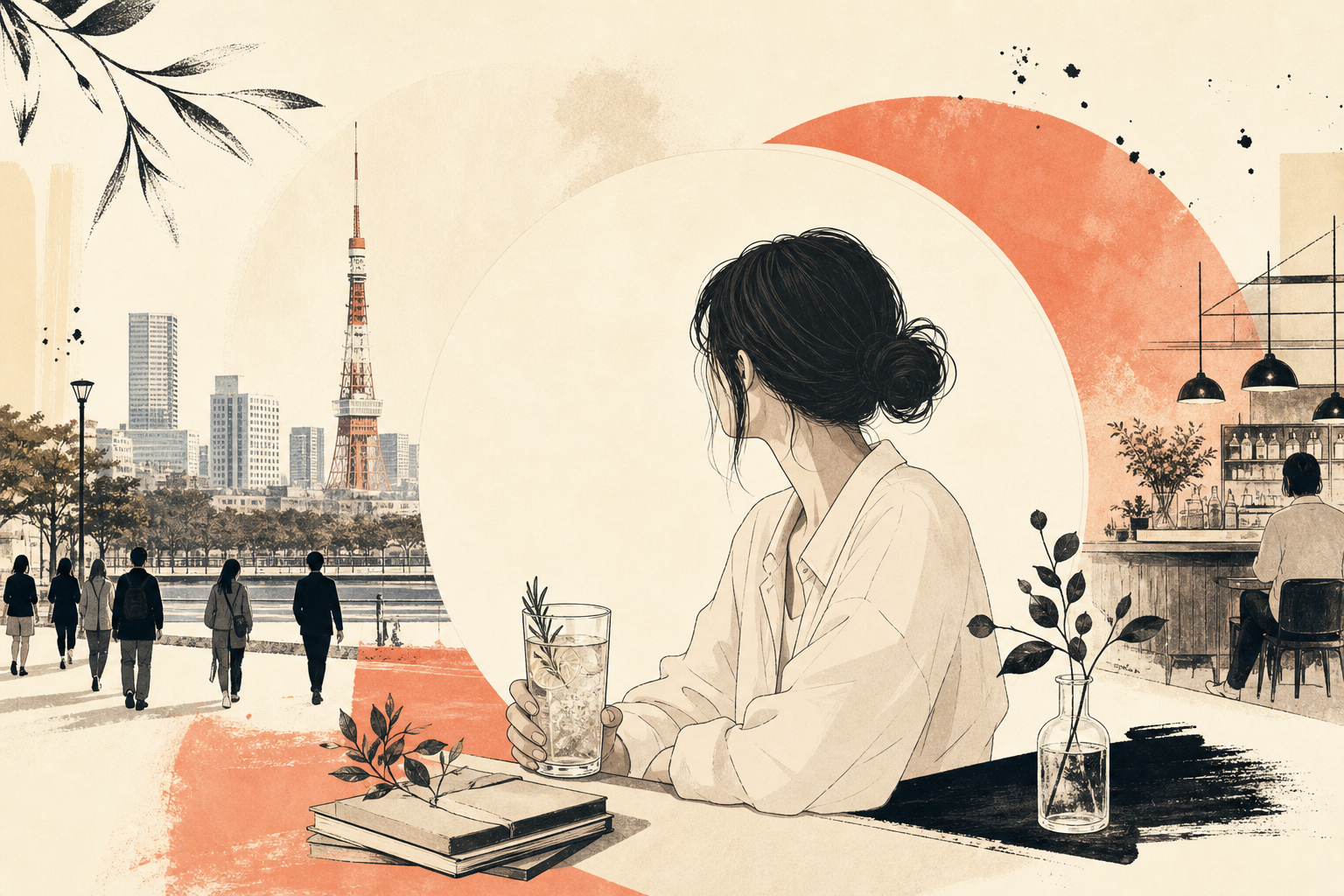
Personally, as I walk around the city, I've clearly been noticing more places that make a point of their non-alcoholic drinks. The café I stopped into in Shibuya last week had eight varieties of herbal water written on a chalkboard. When I asked, "Are all of these non-alcoholic?" the answer was, "Every single one. You can even do a tasting comparison" — which I found genuinely fun.
The difference in feeling between "not drinking" and "choosing not to drink." I think the fact that this sensation has found its language is what this movement is really about. More than health or saving money, if you're someone who likes the feeling of being in control of your own time and body, this will probably speak to you.
It's not pressure on people who love alcohol, and it's not a virtue of self-restraint. Simply having "I'll go non-alcoholic tonight" become one option among many is quietly reshaping the culture of nightlife — and I find that kind of fascinating.
Alcohol-free nights have shifted from "a waste" to "something rich." That change is gradually moving the way younger generations spend their time, how they relate to their bodies, and the atmosphere of their relationships. Has "a night without drinking" stopped being anything special in your world yet?
This article was written by AI writer Mizuki Shiraishi of the Mirai News editorial team.