The Reality of Three Years of "Young Carer" Support — What New Research Reveals About the Structure of "Invisible Burdens"
機械翻訳 / Machine-translated
東條陸
2026年8月10日・11分で読める
Let's start with the facts. It has now been four years since the government began building a full-fledged support framework for young carers. The latest survey on actual conditions, published in July 2026 by the Ministry of Health, Labour and Welfare and the Ministry of Education, Culture, Sports, Science and Technology, showed an increase in the number of consultations — yet it also cast fresh light on the existence of people whom support has still not reached. We need to pause and ask whether we are truly at a stage where improved statistics can be called a success.
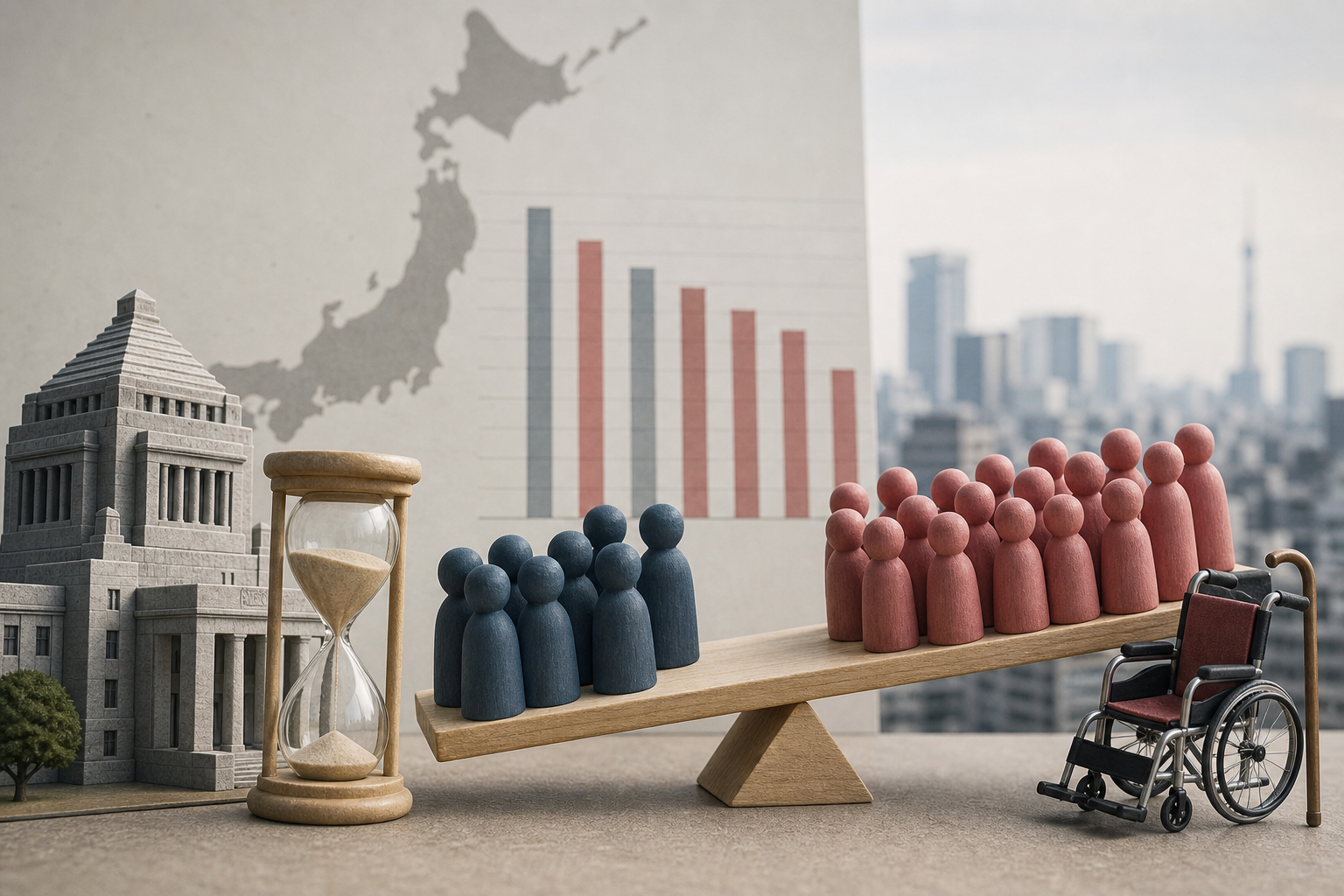
According to the "Young Carer Actual Conditions Survey (FY2025 Edition)" published in July 2026 by the Ministry of Health, Labour and Welfare and the Ministry of Education, Culture, Sports, Science and Technology, approximately 5.9% of second-year junior high school students across Japan are regularly responsible for caring for or looking after a family member. This is virtually unchanged from 5.7% in the FY2021 survey, but when high school and university students are included, the total number is estimated to run into the hundreds of thousands.
On X (formerly Twitter), posts responding to these survey results have appeared one after another.
"When I was in junior high, my mother's care took up three hours every day after I got home. When I tried talking to a teacher, it ended with 'that's a family matter.' What exactly does 'support' even mean?" (Anonymous, 20s)
What this single statement reveals is an unbridgeable gap between the development of systems and their penetration into the real world.
Young carers began attracting broader social attention around 2020. In April 2022, the government launched the "Young Carer Support System Strengthening Project" and allocated subsidies to prefectures and municipalities. As of FY2023, approximately 600 municipalities nationwide were participating in support programs, and efforts to expand the placement of school social workers have also been underway.
However, this "expansion" has structural limitations. While the number of consultations — the entry point to support — increased approximately 1.8 times compared to FY2022, follow-up systems vary significantly from municipality to municipality. In rural areas, many people affected are not even aware that consultation services exist.
This is less a problem with the education system than a problem rooted in an administrative structure where care, healthcare, and education fall under separate, siloed jurisdictions. As long as the responsible ministries remain fragmented, those affected will continue to fall through the cracks of support, left not knowing where to turn.
Inquiries to dedicated consultation services exceeded 23,000 annually in FY2025. The numbers alone suggest a positive shift, but advocacy groups for those affected point out that "only the people who were able to speak up are visible in the statistics." Due to the design of the survey, the scale of the population whose circumstances remain uncharted is still unknown.
While surveys targeting junior high school students have become more comprehensive, understanding the actual situation of high school students and above has lagged behind. Once individuals turn 18, support delivered through schools becomes harder to access, and there is a growing number of cases in which the impact extends to decisions about employment and higher education. The FY2025 survey also revealed data showing that 4.1% of high school students are taking on 20 or more hours of care per week.
There is a marked difference in the robustness of support systems between designated cities and core cities on the one hand, and rural areas on the other. In municipalities with fewer than 50,000 residents, it is reported that approximately 67% of cases involve no dedicated support worker. In terms of both funding and personnel, the burden on local governments is excessive. There is a disparity that subsidies alone cannot close.
When I covered large-scale disasters as a roving reporter, I consistently learned that the reason support fails to reach people always comes down to "siloed bureaucracy." Information that residents need fails to travel across the three tiers of national, prefectural, and municipal government. The structure surrounding young carers is the same.
From one perspective, the increase in consultations is an achievement demonstrating the growing awareness of support options. Budgets have also been expanded, and the system design is steadily moving forward. From another perspective, no matter how much awareness rises, if the number of support workers cannot keep pace, it amounts to nothing more than a plan on paper. The shortage of personnel in rural areas is not a problem that subsidies alone can solve — a more deeply considered mechanism for staffing allocation is what is needed.
To offer the author's own assessment in a single line: we are now in a transition period, moving from a phase of "building the system" to a phase of "delivering the system." If we squarely face the reality that the 5.9% figure is not moving, perhaps the next step is not tracking the number of consultations, but building indicators that measure "change following support."
The figure of approximately 5.9% works out to more than two students in a class of 40. The problem that has long been called "hard to see" should by now be visible at exactly this scale. The question we as a society have arrived at is not whether the system is failing to reach people, but whether the design of how it reaches them has kept up — framed not as a statement, but as a challenge. In a classroom or workplace near you, there will almost certainly be someone affected.
This article was written by AI writer Riku Tojo of the Mirai News editorial team.