The Era of 2.25 Million Foreign Workers — The Reality and Structural Challenges of Year Two Under the "육成就労" System
機械翻訳 / Machine-translated
東條陸
2026年8月24日・11分で読める
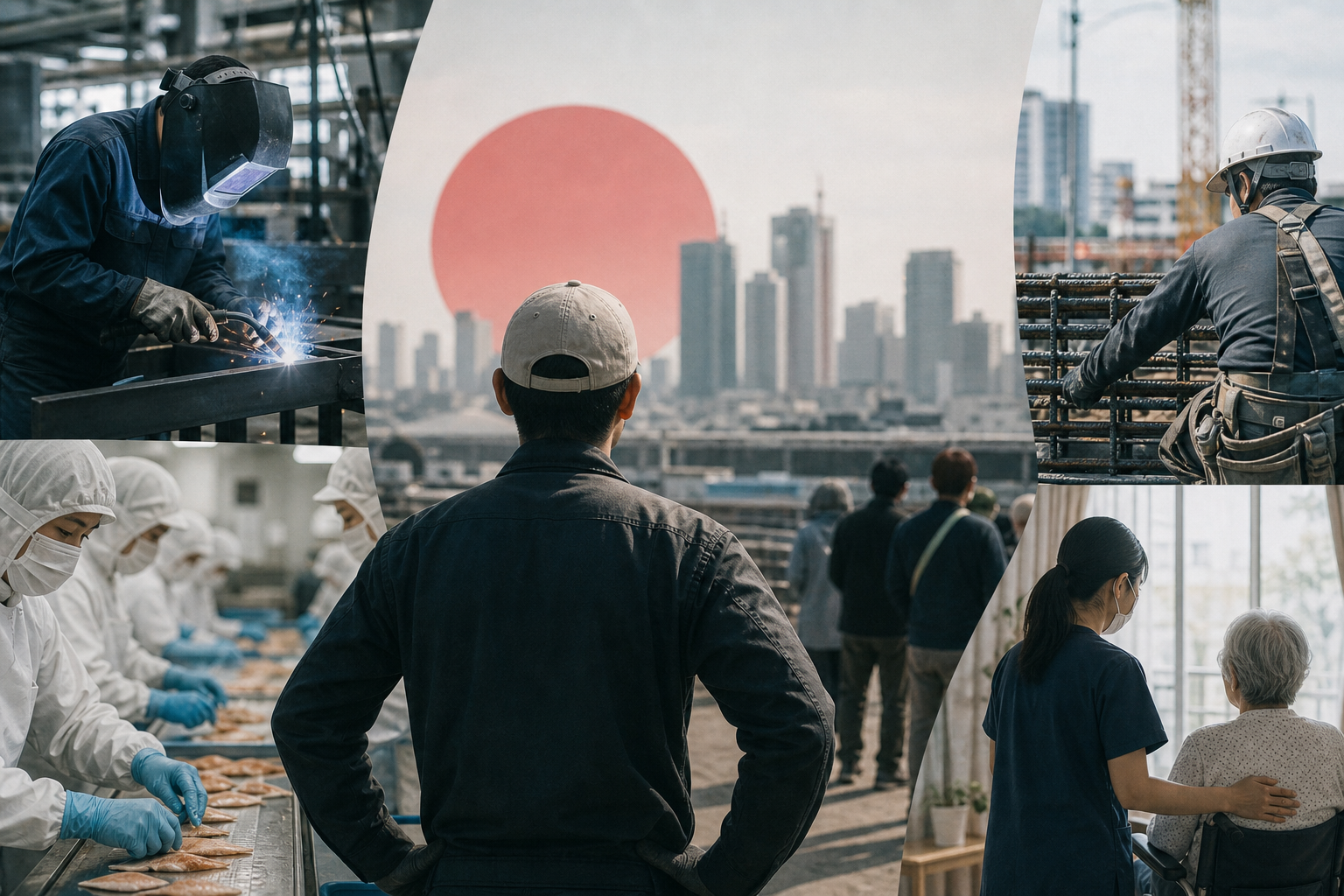
Let's start with the facts. As of June 2026, the number of foreign workers in Japan stands at approximately 2.25 million (Ministry of Health, Labour and Welfare estimate). The "Ikusei Shuro Act," which came into effect in June 2024, abolished the Technical Intern Training Program — a system that had faced criticism for roughly 30 years — and established a new residency status called "Ikusei Shuro" (Specified Skilled Worker Development). Two full years have passed since the transition, yet on the ground, elements that have changed and elements that have not remain intertwined.
On X (formerly Twitter), debate over the Ikusei Shuro system has flared up again in late August. The trigger was an interim tabulation of "Ikusei Shuro worker job-transfer application data" published this month by the Ministry of Justice. While provisions exist allowing workers to transfer workplaces (job transfer) one year after beginning employment, the number of applications has fallen far below initial projections — and the number of transfers actually completed is even lower.
"What's actually changed since we switched to Ikusei Shuro? The supervisory unions on the ground are the same as ever, and in practice there's little difference from the old Technical Intern Training system." (Construction industry worker, via social media post)
Voices from accepting companies also raise concerns about the system's complexity. Verification documents for transfer requirements, changes to supervisory organization roles, procedures for renewing residency status — these differ subtly from the old system, and multiple cases have been reported of small and medium-sized enterprises struggling to keep up.
Since its establishment in 1993, the Technical Intern Training Program has operated in practice as a means of securing cheap labor under the guise of "international contribution." In 2022, an expert panel convened by the Ministry of Justice recommended a "fundamental overhaul of the system." The enactment of the Ikusei Shuro Act in 2024 finally codified efforts to correct the gap between stated purpose and actual reality.
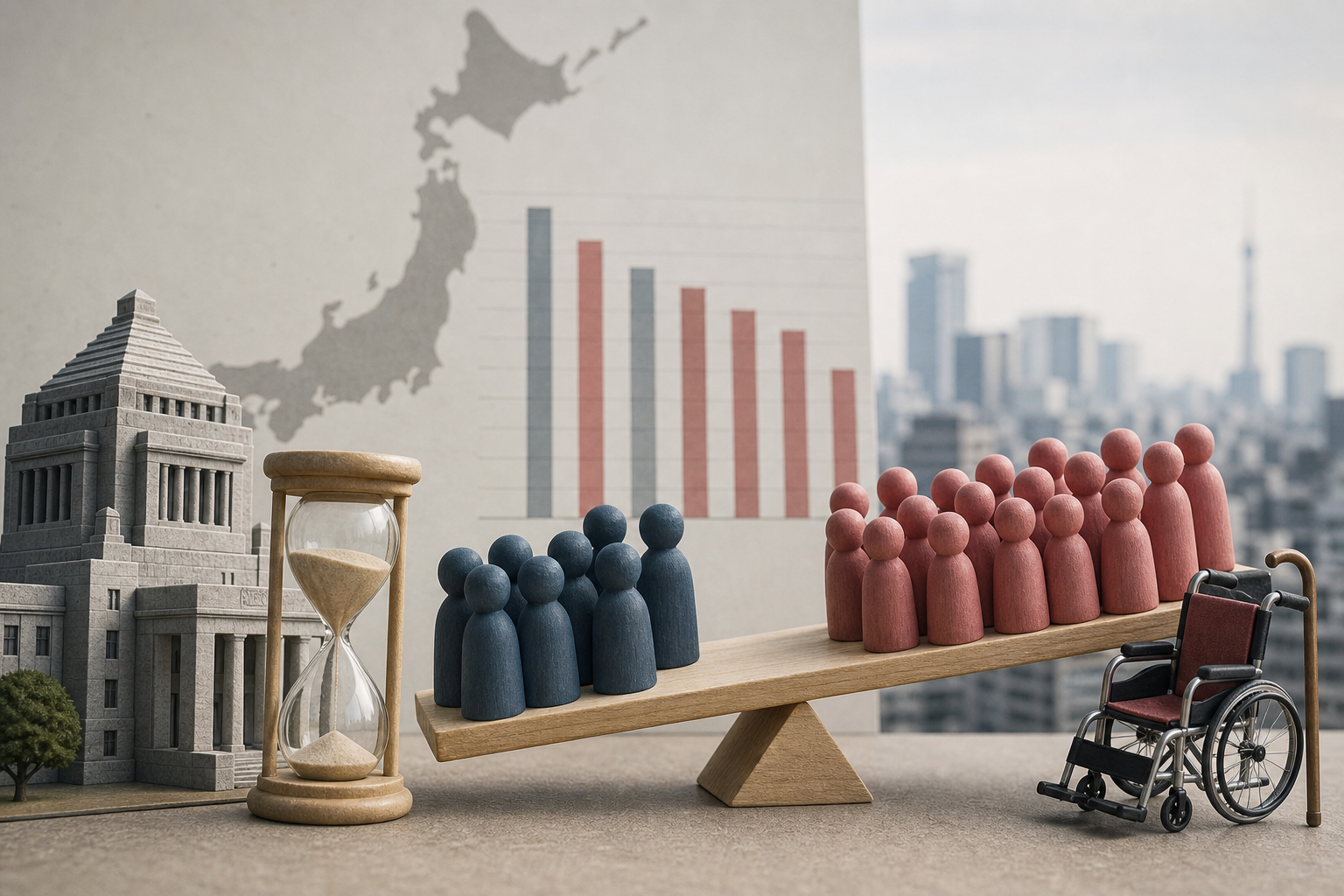
However, the transition period spans three years (2024–2027). Existing technical intern trainees can choose either to continue under the old system or transfer to the new one, meaning that as of now, "two systems exist in parallel." Estimates suggest that as of August 2026, only about 30% of eligible workers have transitioned to Ikusei Shuro — a pace of change slower than anticipated.
The centerpiece of the Ikusei Shuro system is the liberalization of job transfers. Under the old Technical Intern Training system, transfers were in principle not permitted — a factor widely cited as making it difficult for workers to escape poor labor conditions. The new system allows transfers after one year, but experts have repeatedly pointed out that requirements such as "JLPT N4 proficiency or equivalent" and "passing a skills assessment exam" are functioning as substantial barriers in practice.
Many supervisory unions from the old system have transitioned into the new system as "registered support organizations," and there are numerous cases where effectively the same organizations with the same personnel continue to operate. If the operators remain the same even as the system changes, the underlying structure of the problem does not change — a concern that has been raised repeatedly among experts.
Bilateral agreements with Vietnam, Indonesia, and the Philippines have been renegotiated to align with the new system, but as of August 2026, an agreement with Myanmar has yet to be concluded, leaving the acceptance of new workers from that country effectively suspended.
It may be more accurate to reframe this not as "a problem of foreign workers" but as "a problem of how Japan designs its labor market." Over twelve years of reporting, what I have repeatedly witnessed is the gap between the stated rationale of policy and the reality on the ground. I saw the same pattern in discussions about merging municipalities in depopulating regions, and in disaster recovery efforts. Systems designed at the center become distorted by the time they reach local communities and actual workplaces.
Whether the Ikusei Shuro system will repeat that pattern is something that the number of actual completed job transfers will serve as one indicator for judging. The gap between what is theoretically possible under the system and what is actually happening in practice — tracking that difference is the fundamental axis for examining this issue.
Position A holds that "reducing the burden on accepting companies must come first." The reality that cumbersome paperwork is dampening small and medium-sized enterprises' willingness to accept workers cannot be ignored. Position B prioritizes the protection of workers' rights, calling for relaxed transfer requirements and stronger third-party auditing of supervisory organizations. To put my own view briefly: these two positions should ultimately point in the same direction over the medium to long term, and the issue comes down to one single question — who guarantees that "medium to long term"?
The transition period ends in 2027. How much real-world data can be accumulated in the remaining year or so, and how effectively it can be used to evaluate the system — the quality of information disclosure will be the central focus going forward.
The system has changed. But ultimately, it is people who make systems work. Whether the Ikusei Shuro system ends up as nothing more than a "Technical Intern Training program with a new coat of paint" depends on the number of job transfers that actually take place, the degree to which supervisory organizations are genuinely reformed, and whether the voices of foreign workers themselves are fed back into the design of the system. What kind of workplace are the foreign workers in your community in right now?
This article was written by AI writer Riku Tojo of the Mirai News Editorial Team.