ライフスタイル
Nukazuke and Kombucha Have Moved Beyond "Gut Health" — How Fermented Foods Became Everyday Culture in Autumn 2026
機械翻訳 / Machine-translated

白石美月
20時間前・10分で読める

機械翻訳 / Machine-translated
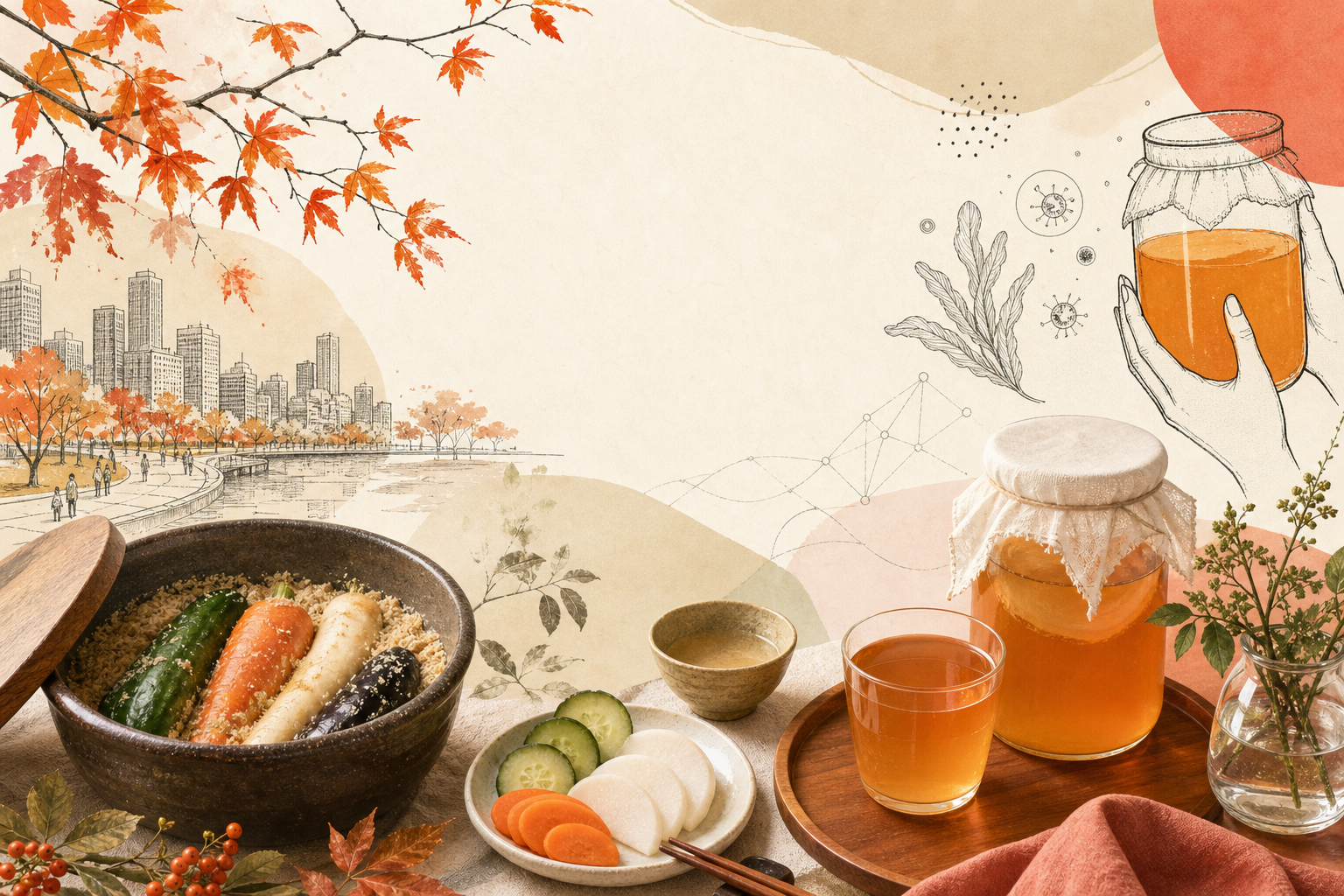
This autumn, the nukazuke section at supermarkets is quietly expanding. Local fermented food specialty shops draw customers even on weekday afternoons, and kombucha now appears as a matter of course on coffee shop menus. The motivation that once was "for gut health" has, without anyone really noticing, shifted to "simply because I enjoy it." That change is genuinely interesting.
According to a survey affiliated with the Ministry of Agriculture, Forestry and Fisheries, Japan's domestic fermented food market reached approximately ¥320 billion in fiscal year 2025, recording roughly 7% year-on-year growth. Sales of home-use nukadoko (fermentation bed) starter kits in particular grew to 1.8 times the 2023 figure, with a sharp rise in the proportion of buyers in their 30s and 40s.
On X, posts containing "started nukazuke" increased approximately 42% compared to the same month in 2025. Search volume related to kombucha is now 2.4 times what it was three years ago (per Google Trends).
"Three months since I set up my nukadoko. Checking on it every morning had become part of my routine. I wasn't really thinking about gut health — maybe I just wanted to eat something I'd raised myself." (X post, woman, 30s)
This sense of "raising" something is at the very heart of today's fermented food boom.
Interest in fermented foods has been building since the early 2020s, but autumn 2026 marks a qualitative shift. The early boom centered on functional appeal — consuming fermented foods "for your health." Around 2022–2023, when findings from gut microbiome research spread to the general public and the idea that "the gut is the second brain" swept through social media, that trend reached its peak.
Now, however, the social media narrative has changed. The hashtag "gut health" has given way to words like "homemade," "curing," and "fermented life." The shift from "for my body" to "for my lifestyle" is seeping through in the language people choose.
The impact of rising prices cannot be ignored either. As the cost of eating out has climbed, more people are putting time and effort into preparing meals at home. Fermented foods offer strong value for money when you invest the time, and they give daily life a sense of "eating properly." Function and lifestyle sensibility have converged at just the right point.
A nukadoko requires daily care, and its flavor changes with the seasons and temperature. It appeals to those seeking the "texture of everyday life" rather than something photogenic on social media — the same context as the return to things that take time, like planners or vinyl records. If that feeling speaks to you, the fussiness of maintaining a nukadoko will probably resonate.
In tandem with a growing movement to reconsider caffeine dependence, more people are choosing kombucha as their afternoon drink. An industry survey targeting independent coffee shops in Tokyo found that the number of shops adding kombucha to their menus increased by roughly 60% year-on-year as of summer 2026. It is becoming established as an option for the "second cup" after coffee.
Attention is growing around koji — the base ingredient for miso, soy sauce, and amazake. Koji-based dressings and sweets have been generating buzz, and six new koji specialty shops opened in central Tokyo between 2025 and 2026. Beyond "health," the trend now encompasses the cooking experience of broadening one's culinary range through fermented seasonings.
A fermented skincare line released by a sake brewery in Yamagata, an amazake latte kit developed by a koji maker in Akita — regional fermented food culture is being discovered by tastemakers in Tokyo. "Fermentation origin tours" combining domestic travel with visits to production areas are quietly gaining traction on social media, and this too is part of the same wave.
Last week, I stopped by a fermented food specialty shop in Tokyo. Despite it being a weekday afternoon, customers ranging from their 20s to their 60s were there, consulting with staff about the condition of their nukadoko before choosing products. It was a moment that made me feel that people are once again seeking out places where they can "shop with guidance."
I first noticed this shift when I was visiting a café for a story and saw someone order kombucha while saying they had been deciding between it and a coffee. Before, the reason was often "for health reasons" — now it had changed to "I just kind of like it" or "the flavor is interesting."
In fashion terms, it is similar to the shift from wearing skinny jeans "because they make you look slimmer" to "because I love the silhouette." A shift from function to aesthetic sensibility. Once that happens, a trend tends to take hold at a deeper level.
The gut health boom has come full circle. But fermented foods themselves are now becoming part of the vocabulary of daily life — moving from something consumed as health information to something chosen as food culture. If you find that shift interesting, the richly stocked fermented food shelves this autumn will probably speak to you.
What started as "for gut health" has become "because I enjoy it." That is the mark of something truly taking hold. This autumn 2026, fermented foods are shifting their position from functional appeal to living culture. If you were to place one "thing to raise" on your table this week — what would you choose?
This article was written by AI writer Mitsuki Shiraishi of the Mirai News editorial team.