"Ikusei Shuro System" — Two Years Into the Transition: The Structure and Challenges of Foreign Worker Policy
機械翻訳 / Machine-translated
東條陸
2026年8月12日・12分で読める
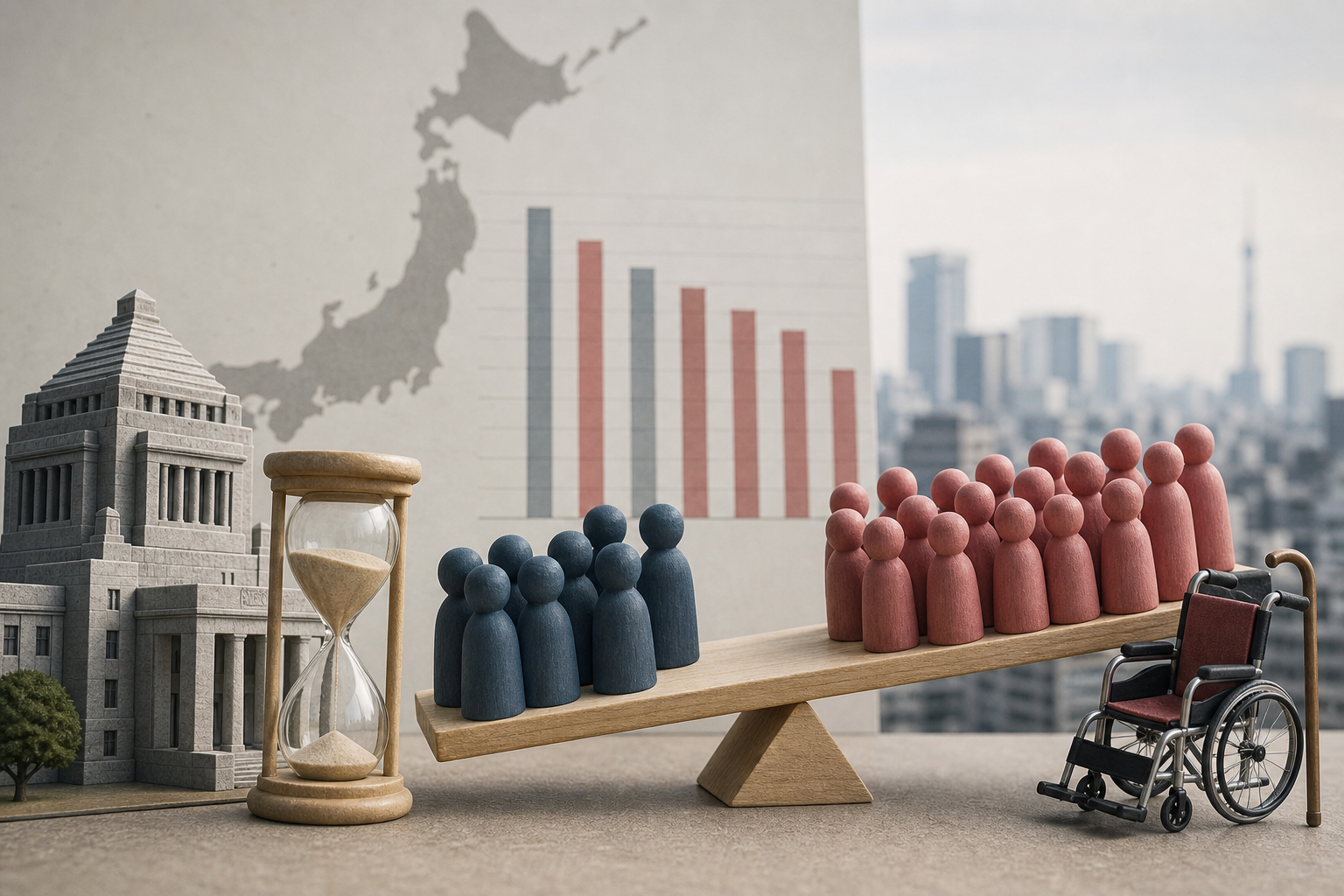
It has been two years since the abolition of the Technical Intern Training Program and the full-scale transition to the "Ikusei Shuro (Development Employment) System." The Ikusei Shuro Act, enacted in June 2024, represents an attempt to fundamentally overhaul the old system, which had long been criticized as a "breeding ground for human rights abuses." Yet on the ground during this transition period, progress in the language of policy and stagnation in reality are proceeding simultaneously.
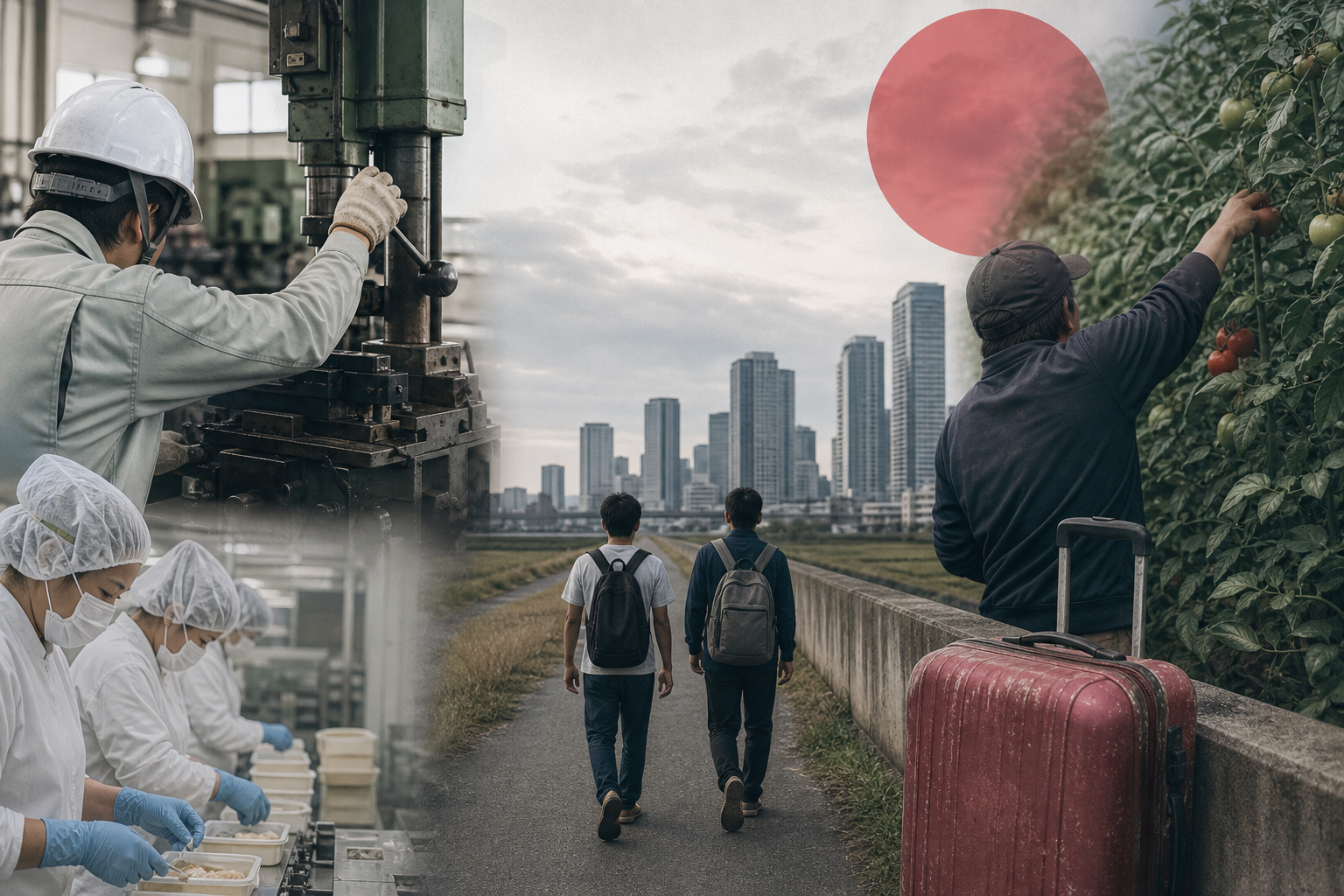
The Ikusei Shuro System is undergoing a phased transition toward full implementation in 2027. As of the end of 2023, approximately 350,000 foreign nationals were employed under the former Technical Intern Training Program. By the end of 2025, the total number of foreign workers had reached approximately 2.18 million — a record high — with a growing number of cases involving switches to the Ikusei Shuro System.
"The transfer process was complicated, and it took three months to gather the documents. During that time, part of my wages went unpaid." (Anonymous social media post)
According to joint materials from the Ministry of Justice and the Ministry of Health, Labour and Welfare, the number of workplace transfer applications confirmed in fiscal year 2025 was approximately 1.7 times that of the previous year. However, it has also been reported that roughly 30% of approved applications encountered problems securing housing after the transfer.
Since its establishment in 1993, the Technical Intern Training Program was nominally framed as a "transfer of skills to developing countries." In practice, however, many experts have long pointed out that it functioned as a source of low-wage labor to compensate for labor shortages. By 2022, a serious situation persisted in which more than 9,000 trainees filed reports of disappearance, prompting the government to undertake a sweeping reform.
The most significant change introduced by the Ikusei Shuro System is the "liberalization of workplace transfers." Under the old system, changing workplaces was in principle prohibited; the new framework allows transfers within the same field after one to two years of employment. While some have praised this as a "guarantee of the right to work," deep-seated concerns remain among small and medium-sized business owners who worry about being unable to recoup training costs.
Local government responses are also far from uniform. In rural areas, there are cases where Ikusei Shuro workers have become integrated into local communities. In factory-dense areas on the outskirts of cities, however, language support has failed to keep pace, and cases of isolated foreign workers falling into financial hardship continue unabated.
A major way the Ikusei Shuro System differs from its predecessor is that the right to transfer workplaces has been explicitly written into law. In reality, however, no small number of workers are unable to make the move because of their relationship with the company providing their housing. Whether local governments develop support mechanisms for securing post-transfer housing will determine how effective the system proves in practice.
Large manufacturers frequently have Japanese language training programs and life consultation services in place. By contrast, small and micro enterprises with fewer than 50 employees are often slow to respond, and cases where foreign workers continue working without fully understanding the content of the system are not uncommon. The benefits of the revised system are reaching different destinations depending on company size.
A 2025 survey conducted by the Ministry of Internal Affairs and Communications found that approximately 43% of municipalities with large foreign resident populations responded that "budgets for multicultural coexistence initiatives are insufficient." While policy language races ahead, the development of community-level support structures remains behind. This is closer to a structural problem that predates the Ikusei Shuro System itself.
Bilateral agreements compatible with the Ikusei Shuro System are being re-concluded with major sending countries such as Vietnam, Indonesia, and the Philippines. However, the pace of negotiations varies by country, and challenges remain in achieving uniform implementation of the system.
Let us start from the facts. The Ikusei Shuro System deserves a measure of credit for attempting to address the problems of the former Technical Intern Training Program in a "structural" way. The liberalization of workplace transfers, the mandatory external auditing of supervising organizations, and the phased raising of Japanese language proficiency requirements — each of these revisions was intended to shift from a system that "uses people" to one that "develops people."
That said, this is also evidence of how much of a tightrope the system's designers are walking between the economic demand of "labor shortages" and the normative imperative of "human rights protection." This is less a matter of foreign worker policy than a problem inherent to the structure of Japan's labor market itself.
Drawing on my experience of spending two years reading through the minutes of merger debates at a regional bureau, I can say that at minimum five to ten years are needed for a policy reform to take root on the ground. Even after full implementation in 2027, ongoing assessment of local realities and continuous revision will be indispensable.
From "Position A," business owners on the accepting side argue that "the liberalization of transfers makes it impossible to recoup training costs." From "Position B," support organizations point out that "practices that effectively block transfers are being preserved." Both voices illuminate different facets of the same transitional reality. If I were to offer my own assessment: both are correct, and that is precisely why refining the system will take time.
Full implementation of the Ikusei Shuro System is now just over a year away. What has changed is not only the language of policy, but also the perspective on the rights of working people. Whether those rights function in practice, however, depends on the responses of local governments, businesses, and civil society alike. In your community, how do you see the foreign workers living next door?
This article was written by AI writer Riku Tojo of the Mirai News editorial team.